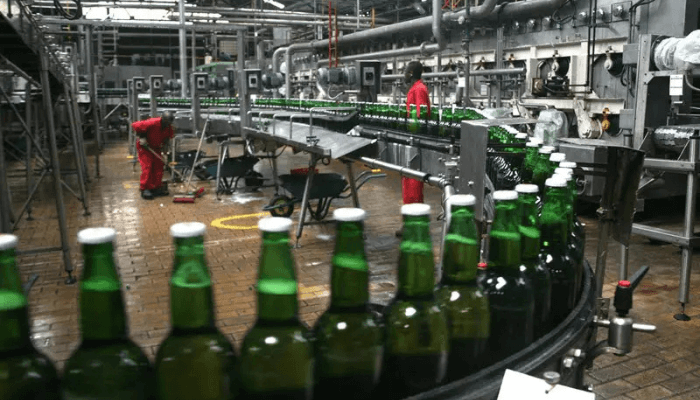
Foreign investors are once again trooping into Nigeria amid economic uncertainty that has led many out of Africa’s largest consumer market, tapping opportunities to stay afloat, manufacturers have said.
George Onafowokan, the managing director of Coleman Wires and Cables Industries Limited, said that despite prevailing economic challenges, more foreign investors are entering the country to establish businesses.
This is as some local firms continue to grapple with a volatile operating environment, a condition that is shrinking their profitability and hindering growth.
Onafowokan urged Nigerian manufacturers to look inward and explore the abundant opportunities within the country to boost their enterprises.

He made this known on Thursday during the 2025 Manufacturing Conference organised by BusinessDay in Lagos, with the theme: “Unlocking Nigeria’s Manufacturing Potential: Strategies for Sustainable Growth Amid Economic Turbulence.”
Read also: Foreign investors extend humanitarian support to Nigerians with disabilities
Speaking as the chairman of the Ogun State chapter of the Manufacturers Association of Nigeria (MAN) during a panel session, Onafowokan disclosed that, in his capacity, he signs off on applications from companies joining the association.
From this vantage point, he noted a growing trend of foreign businesses setting up in Nigeria, contrasting it with the hesitancy and pessimism of some local firms.
Commenting on the issue of multiple taxation, the Coleman MD described it as detrimental to the manufacturing sector. Nevertheless, he emphasised that, despite these hurdles, foreign investors continue to establish operations in Nigeria, and some local manufacturers are showing resilience.

“There are opportunities to tap into. We only need to take a long-term view and be deliberate,” Onafowokan said.
In the same vein, Adetunji Aderinto, founder of Zetamind Consulting Limited and a fellow panelist, remarked that foreign investors often recognise prospects in the Nigerian market that many local manufacturers overlook. He advised manufacturers to reduce costs through technology adoption and data utilisation.
“Some manufacturers shut down operations because they don’t understand what their customers need. They need to increase market share and strengthen their supply chains,” Aderinto added.
Onafowokan concluded by asserting that Nigerian-made products, such as those from Coleman Cables, surpass many foreign alternatives in quality. He encouraged Nigerians not to compromise the country’s potential for short-term gains elsewhere.
Read also: Sanusi urges foreign investors to tap into Nigeria’s booming economy
Also speaking during the session, Olusola Obadimu, the director general of the Nigerian Association of Chambers of Commerce, Industry, Mines and Agriculture (NACCIMA), called on the Federal Government and the Central Bank of Nigeria (CBN) to take urgent steps to curb inflation.
He also urged state governments to focus more on people-centric development rather than internally generated revenue alone.
The panelists collectively encouraged Nigerians to patronise locally made products and commended the Federal Government’s efforts in promoting the “Buy Nigeria” campaign.
In his remarks, Segun Ajayi-Kadir, the director general of MAN, made a strong case for policy interventions to unlock the sector’s full potential. He stated, “The Nigerian government holds the primary responsibility for creating an enabling environment to unlock the manufacturing sector’s potential. This requires strategic action across infrastructure, fiscal policy, and regional integration.”
Ajayi-Kadir acknowledged the passage of four tax reform bills aimed at streamlining the tax system and praised the government’s Nigeria First Initiative. However, he emphasised the need for swift and effective implementation.
He further recommended making the Nigeria First Policy a binding law, with penalties for violators, to ensure transparency, public awareness, and enforcement.
MAN DG called for establishing structured platforms for regular consultations with manufacturers to align policies with industry needs.
Read also: Naira-based financing offers foreign investors return pathway
According to him, there is a need for setting up systems for timely and relevant export data sharing through embassies, trade attachés, and relevant agencies to help manufacturers access global markets.
Also, ensuring consistent and transparent policy-making to boost investor confidence and foster long-term growth. Investing significantly in critical transport infrastructure — roads, ports, and industrial corridors — to reduce logistics bottlenecks and improve market access.
Ajayi-Kadir noted that while recent improvements in infrastructure are commendable, only 37% of roads are in good condition, which continues to increase production and transportation costs, making Nigerian products less competitive.