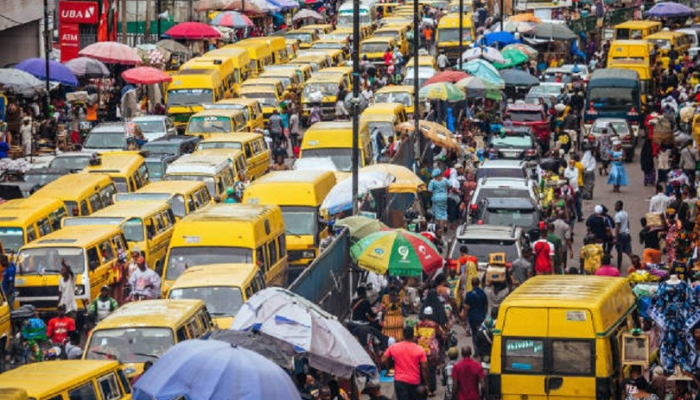
Traffic crises in Nigeria, especially in cosmopolitan cities like Lagos, Abuja and Port Harcourt, and other major cities in the country, expose more than simple traffic situations; they have laid bare a profound governance crisis. Often, what residents endured is not merely traffic gridlock but a failure of systems, communication, and foresight—a humanitarian emergency demanding urgent introspection.
As these states, by extension Nigeria, contend with the traffic crisis and its associated challenges, the crisis mirrors broader struggles faced by rapidly urbanising African cities. Yet, this moment also presents an opportunity to reimagine urban mobility through lessons from global innovators and regional pioneers.
“With no clear communication, no alternative routes activated on time, and no coordinated emergency response, what should have been a manageable disruption escalated into a full-blown urban paralysis, according to various reports.”
While precise annual figures for the cost of traffic gridlock across Nigeria in 2024 are not publicly available, it is estimated that Lagos alone loses billions of naira annually due to lost productivity, wasted fuel, and delays in the movement of goods and services. The overall cost of traffic congestion extends beyond economic implications, impacting commuters’ mental and physical health and contributing to environmental pollution. Public transport users and car owners experience higher transportation costs due to traffic delays and increased fuel consumption. Painfully, commuters experience stress, fatigue, and potential respiratory problems due to prolonged exposure to vehicle emissions as consequences of traffic congestion.
Effective crisis management begins long before emergencies arise. Singapore’s Smart Traffic System, which integrates real-time data from road sensors and Global Positioning System (GPS), an accurate worldwide navigational and surveying facility based on the reception of signals from an array of orbiting satellites, to dynamically adjust tolls and routes, offers a model of proactive governance. Contrast this with Nigeria, where bridge closures are announced without parallel investments in alternative routes or real-time updates — a misstep that amplified chaos.

Rwanda’s approach to Kigali’s transport overhaul illustrates the value of preparation: the accreditation of 18 new operators and 200 buses in March 2024 was paired with clear route expansions and digital payment systems, ensuring minimal disruption. These examples underscore that crises are mitigated not by ad-hoc reactions but by institutional rigour and transparent communication.
Confusion, when decoded, becomes a roadmap for reform. Singapore’s shift from static toll booths to a satellite-based Electronic Road Pricing system by 2025 exemplifies how confusion — in this case, congestion patterns — can inform innovation.
Read also: Top 5 African cities with severe traffic at the start of 2025
Similarly, Dakar’s all-electric Bus Rapid Transit (BRT) network, projected to cut travel times by 30 per cent, emerged from decades of traffic paralysis.
Regularly, gridlocks in Nigeria reveal critical data: overstretched infrastructure, poor inter-agency coordination, and a lack of public trust. The solution lies in treating every complaint and contradiction as actionable insights. Leadership in times of crisis requires resisting the allure of quick fixes.

Johannesburg’s Rea Vaya BRT system prioritised long-term sustainability over short-term convenience, integrating renewable energy and AI-driven logistics to future-proof its network. For Nigeria, this means asking foundational questions: Is the goal merely to unclog roads or to redesign a mobility ecosystem that prioritises equity and resilience? Kigali’s answer included non-motorised transport lanes and e-mobility investments — a holistic vision that reduced congestion while advancing climate goals.
The April 2 and 3, 2025, traffic crisis in Lagos, Nigeria’s economic hub known for its fragile transport infrastructure, brought the state’s business district to a sudden halt. The abrupt closure of the Independent Bridge, without proper prior notice to motorists and residents, caused a massive gridlock that left commuters stranded for hours, with several getting to their homes early the next day. While details of the initial closure were unclear, it was reported that its aftermath crippled movement across one of the country’s most important economic corridors.
With no clear communication, no alternative routes activated on time, and no coordinated emergency response, what should have been a manageable disruption escalated into a full-blown urban paralysis, according to various reports.
“Commuters were trapped for hours. Parents couldn’t reach schools. Workers missed critical meetings. Tragically, a seven-year-old boy died in traffic because the car rushing him to a hospital couldn’t break free of the gridlock. A commuter with an ulcer nearly lost consciousness. Others resorted to ferries or simply turned back home, exhausted and bewildered,” according to an article by Dr Joachim Adebayo Adenusi (Ogarisk). These are the only ones known, as we are sure there are several others not reported with various illnesses associated with gridlocks.
Of a necessity, Nigeria must treat the traffic crisis as a catalyst for transformation. First, adopt smart traffic technologies, such as adaptive signal control and GPS-enabled public transit, to optimise flow. Second, foster public-private partnerships to expand infrastructure, mirroring Dar es Salaam’s BRT success. Third, institutionalise transparency through platforms providing real-time updates, building public trust. Above all, prioritise sustainability by electrifying bus fleets, as seen in Nairobi and Addis Ababa.
Nigeria’s traffic managers are advised to embrace data, collaboration, and foresight. By learning from some African cities redefining mobility and global leaders like Singapore, Nigeria can overcome gridlocks to emerge as an example of urban innovation.