As we know, small businesses play a vital role and contribute to economic expansion, and a strong economy typically has a strong small business sector. In Nigeria, small and medium-scale enterprises (SMEs) account for 96 percent of businesses and 84 percent of employment. Therefore, a well-managed SME will sustain a larger proportion of the Nigerian workforce and, above all, reduce poverty.
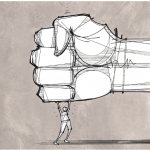
“Owing to this harsh economic situation, some businesses have reduced their workforce or changed the workforce status from permanent to casual.”
According to the Small and Medium Enterprises Development Agency of Nigeria (SMEDAN), over 41 million medium and small enterprises (MSMEs) exist in Nigeria, but a large percentage shut down within their first few years. A 2023 report by the Nigerian Bureau of Statistics (NBS) found that 80 percent of small businesses do not survive beyond five years.
Data by both SMEDAN and the International Labour Organisation show that 80 percent of small businesses in Nigeria do not survive beyond five years, higher than the African average of 54 percent.
As the Nigerian economy is not smiling on many fronts, business capital often goes for meeting family expenses at short notice.

The lack of finance is a common challenge for small- and medium-scale enterprises (SMEs), but lopsided financial appropriations and budgeting could cause a bigger challenge if business founders ignore the culture of consistent financial documentation and bookkeeping.
A dedicated business account opened in the name of the business and also ensuring that all business transactions go through that account; obtaining source documents for business transactions; and getting an automated SME-focused accounting tool are steps to transforming your financial record. Jovita Madojemu, managing director of Pundit Bookkeeping Services, a Lagos-based accountant, once noted.
The accountant encouraged businesses to issue invoices, collect expense receipts for purchases, and keep dedicated folders for different categories of transactions. Accounting tools will also reduce errors and easily tell you how you are performing.
Many solutions targeting SMEs usually revolve around funding. They either provide or help SMEs with seamless sources of finance. But not many solutions support this category of businesses with tracking the spending of the funds.
With proper bookkeeping, looking after the finances of small businesses will be easier, as every SME needs to make financial decisions from an informed standpoint. Bookkeeping is not only about recording, tracking, following the money, and identifying what the money is doing for the business. It enables business owners to know how much money they are spending from what is coming in.

Furthermore, with effective bookkeeping, SME owners get to see at a glance how their business decisions are translated to money, and owners are better guided in making an efficient budget in subsequent periods, as it establishes a baseline.
Additionally, where there has been mismanagement, bookkeeping will reveal it, with the business owner having the opportunity to change course; and it also makes it easier to hand over a business’ financial activities to the next generation.
Read also: How SMEs can survive and thrive in 2025’s tough economy using AI and other new technologies
The rude realities of the current Nigerian economy call for a drastic adjustment in all aspects of the business. Owing to this harsh economic situation, some businesses have reduced their workforce or changed the workforce status from permanent to casual. This follows outsourcing some of the business functions to keep every aspect afloat, especially when you have a large clientele.
There are records where the clients are happy that they can get their business performance updated month-on-month for half the cost of keeping a full-time, in-house, qualified and experienced workforce, like the telecoms services providers.
Consequently, adjustment brings about more prudent-keeping expenses as low as it could. It lets go of some of the staff members, as the running cost could only be sustained for a short time.
Additionally, business owners can allow clients to pay on an instalment basis as a way of managing uncertainty in cash flow and also keep exploring new ways to improve their competencies and increase visibility. As a business owner, constantly look out for better deals in terms of dealing with vendors. Consider instalment plan options for major expenses to avoid being stifled. Then, improve on your business competencies and transfer knowledge.
As Nigeria is increasingly becoming difficult to do business in, insecurity, poor and expensive power supply, corruption, rash and often poorly thought-out government policies, lack of adequate infrastructure, and access to funds constantly deprive entrepreneurs of sleep.
With these, the business owner needs to understand that the business is different from him/her. The business has a life of its own. It is important that you do not try to force the business to fund your lifestyle if it cannot.