



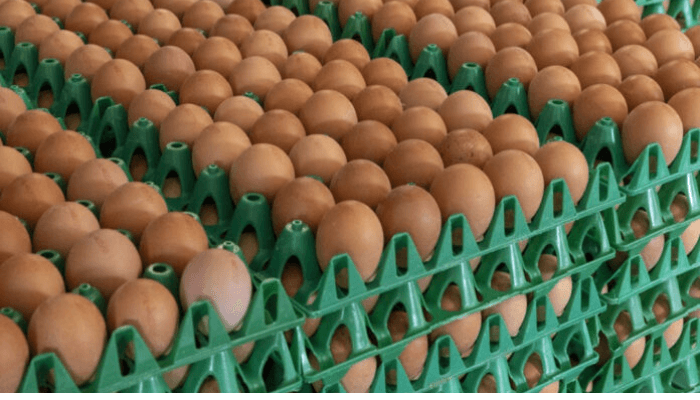
Prices of eggs and other poultry products have remained elevated despite a significant fall in the cost of maize – a major component in feed formulation.
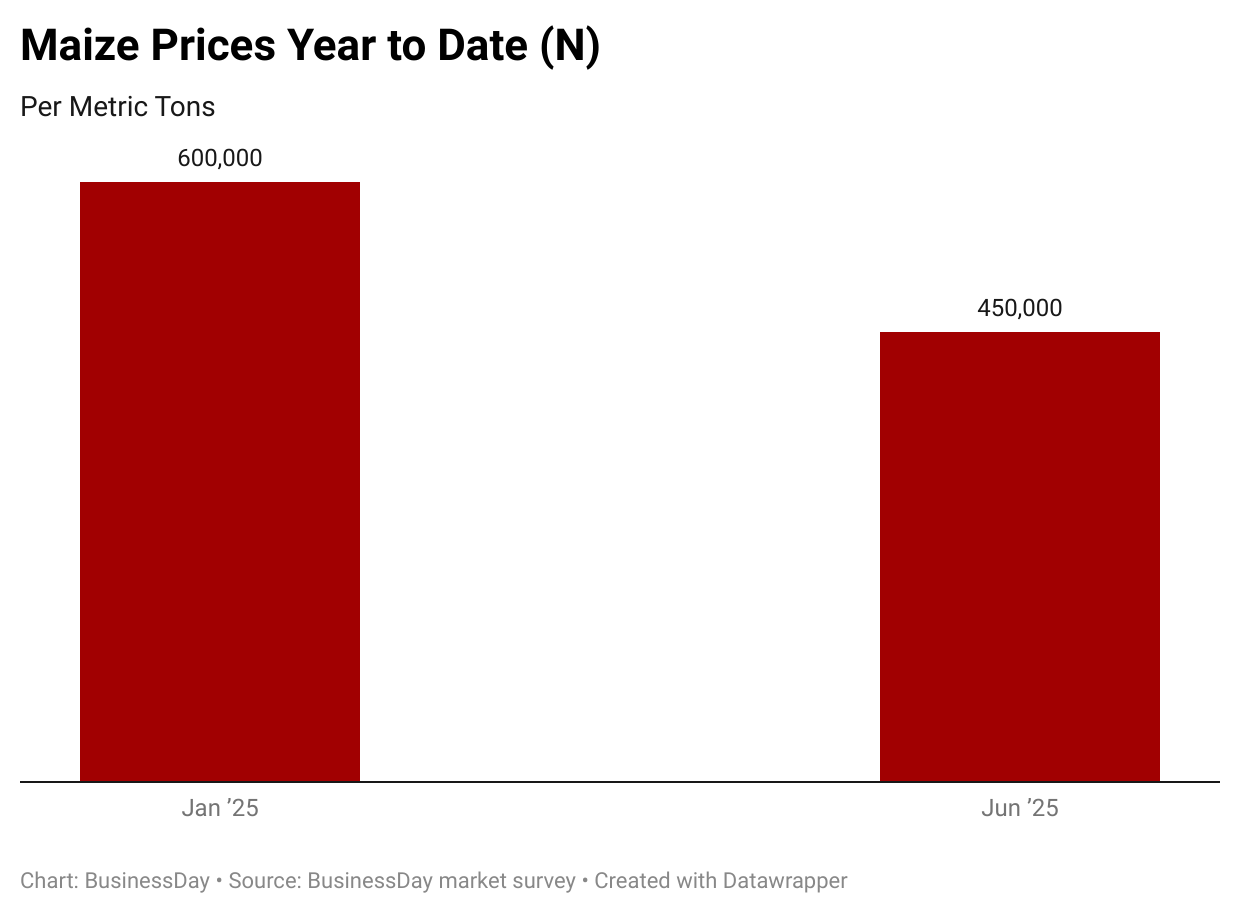
Findings by BusinessDay show that prices of maize have dropped 33 percent between February and June 2025 to N450,000 per metric ton, from N600,000 quoted in January 2025. On a year-on-year, the price of maize has dropped by 50 percent.
Farmers attribute the decline in maize prices to glut resulting from bumper harvests recorded across key producing states. Globally, the prices of the grain are declining owing to record harvests from Argentina, Brazil and the U.S.

This month, corn futures dropped to around $4.20 per bushel, a six-month low as weather forecasts and supply projections improved in the United States.
Read also: Eggs missing in meals as price hits N6,000/crate
Eggs fail to crack
However, the eggs have failed to crack as their prices remain elevated.

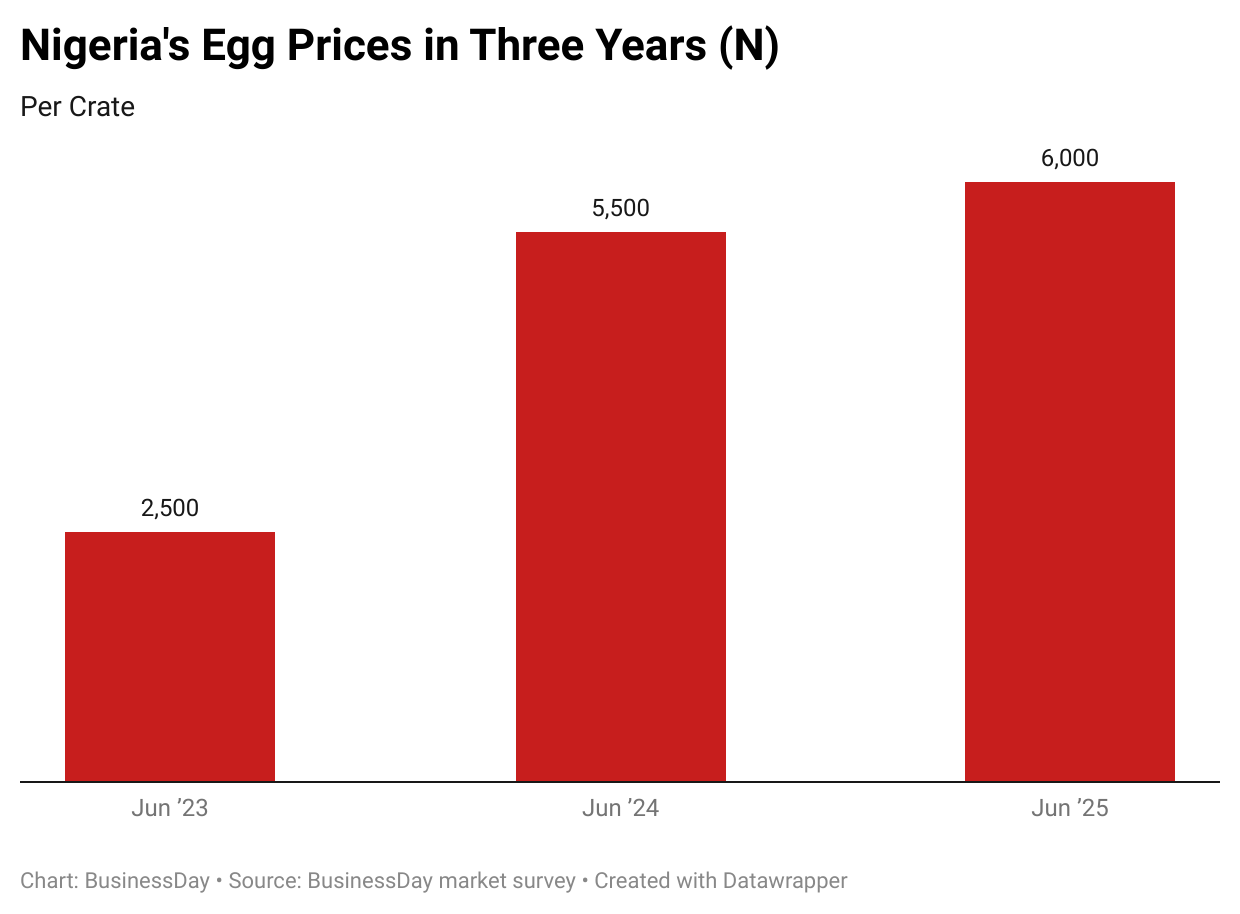
BusinessDay survey in major markets in Lagos shows that a big crate of fresh eggs sells for N6,000 as against N5,500 quoted last year.
Hazizat Temilade, secretary at Takeeb Farms, a feed processing facility in Lagos, said poultry farmers are unable to cut egg prices owing to the continuous surge in the prices of feed brands – other than maize.
Temilade explained that much of the maize used in production of feed mills were procured at higher prices and stockpiled, making it difficult for poultry farmers to slash prices.
“At the moment, we no longer use maize in our factory. This is because of the difficulty in local sourcing. However, for those who use it, the fall in maize prices cannot be reflected in the price of feeds,” she said.
Similarly, Ahmed Popoola, director of F.A Popoola Farm Project, reiterated that the prices of poultry feeds have not changed in the last two months, resulting in the high prices of eggs.
“In Badagry, Lagos, I have not noticed a change in poultry feeds,” Popoola, who is also a poultry farmer, said. “The prices are still the same as they used to be. Perhaps in the coming months, there will be a change with this drop in maize prices.”
Maize accounts for 60 percent of feed formulation in poultry and fish feeds. The crop serves as a key input in many manufacturing companies and the poultry industry. It is the leading cereal grown in Nigeria, closely followed by sorghum and rice.
Nigeria is Africa’s second largest maize producer after South Africa, churning out about 10.5 million metric tons per annum with a demand of 15 million metric tons, leaving a supply-demand gap of 4.5 million tons per annum, according to data from the Federal Ministry of Agriculture.
Olalekan Oluwafemi, chief executive officer at People’s Need Farm and Academy, said that prices of maize are falling across the country, noting that feed prices however remain elevated.
“Prices of poultry feed are increasing every day. While it is true that maize prices are falling, the cost of transportation from the North, where maize is produced, is offsetting the decline,” he said. “When you go to the market, you can be sure that feed prices have increased.”
The rising cost of eggs is weighing on Nigerians who are already hit by a cost-of-living crisis. The United Nations Children’s Fund (UNICEF) says Nigeria has the second highest burden of stunted children in the world, with a national prevalence rate of 32 percent of children under five, describing a nutrition gap prevalent in the country.
Read also: Eggs, others missing on Nigerians meal-table as inflation surges
Nutritional deficiency
Pius Aminu, chairman of the Poultry Association of Nigeria (PAN), FCT Chapter, told BusinessDay recently that the rising egg prices have resulted in nutritional deficiencies across the country.
Aminu urged the federal government to declare a state of emergency on egg production to ensure accessibility and affordability of the poultry product for citizens.
“The federal government should urgently declare a state of emergency on egg production. The current decline is alarming, and the country cannot afford to rely on egg importation,” Aminu said.
Aminu noted that high petrol prices have driven egg prices across the nation.
He noted that the situation has forced several farmers out of business, leading to the closure of hundreds of poultry farms and a rise in unemployment.
“The poultry industry employs a significant number of people, especially in lower-income groups. Each farm typically has at least four to five staff, so the closure of 100 farms directly translates into higher unemployment rates,” Aminu further said.





