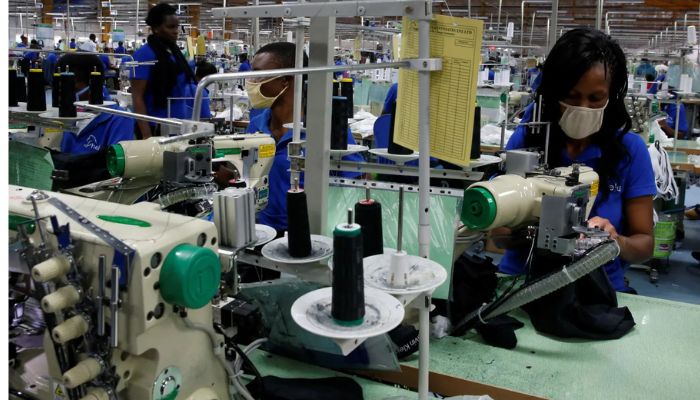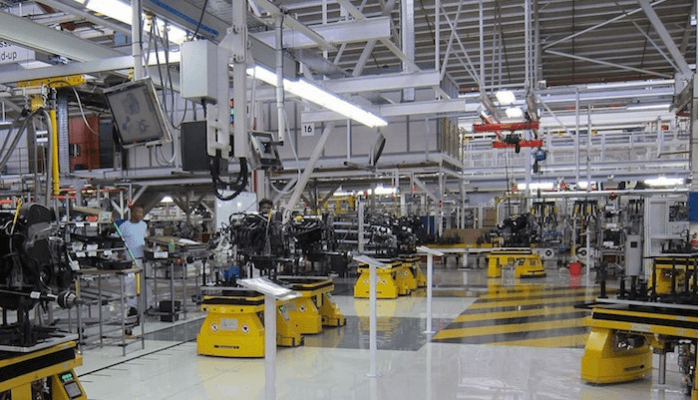
Manufacturers cut down on their local content in the first half (H1) of 2018, as domestic input sourcing fell by 4.12 percent due to manufacturers’ decision to look outwards for raw materials.
Data from the Manufacturers Association of Nigeria (MAN) show that local sourcing declined from 60.72 percent in H1 of 2017 to 56.6 percent in the H1 of 2018.
The 56.6 percent represents 9.1 percentage fall from 65.7 percent recorded in the second half (H2) of 2017.
“Local sourcing of raw-materials sourcing in the manufacturing sector slowed in the first half of 2018 with the exception of motor vehicle and miscellaneous assembly group. This may be adduced to the general sluggishness of the economy and a renewed ability for importation of raw-materials considering the tranquillity in the foreign exchange market,” MAN discloses.

The foreign exchange market has remained stable in the last 16 to 18 months owing to the Central Bank’s management finesse, which has helped manufacturers to access dollars to import inputs. Nigerian manufacturers import a number of inputs, ranging from wheat to sorghum, to animal skins and packaging materials.
In 2016, manufacturers were unable to access dollars as the economy went into recession due to low crude oil prices and Niger Delta militancy. Nigeria relies on crude oil for 90 percent of its foreign exchange earnings and any hit on oil hurts the entire economy.
This is bad news for the economy as this is happening when oil price is declining. Analysts believe this will put more pressure on the naira and hurt the economy.
Brent crude was about about $55 on Friday, December 28.
A manufacturer told Real Sector Watch that this could be attributed to quality and quantity of available inputs within the first half of the year.

“Sometimes we do not get the required quality here. This makes us look for it elsewhere. If you are a consumer, you will not like a product you buy regularly to change taste due to quality issues. Sometimes too, it is about availability,” the manufacturer, who did not want her name mentioned, said.
Real Sector Watch has found some cement makers importing limestone due to issues around quality and availability.
But recently, Gloria Elemo, professor and director-general of the Federal Institute of Industrial Research, Oshodi (FIIRO), said quality was no more an issue, as the body has come up with a number of innovations that aid the manufacturing sector in input sourcing.
A number of manufacturers are already pumping billions in local input sourcing by way of backward integration or partnership with local suppliers to prevent a repeat of 2016 when 54 firms went under owing to lack of access to dollars.
Nigerian Breweries is already substituting barley for sorghum sourced locally from an agriculture-based firm called Psaltery Nigeria Limited.
More than 250,000 farmers spread across several agronomic zones in the North are directly or indirectly involved planting sorghum for the country’s biggest brewer, BusinessDay understands.
Jordi Borrut Bel, managing director of NB, said at a pre-AGM meeting held in Lagos this year that the brewer would raise this from 50 to 60 percent.
“We optimise the cassava value chain in the country by providing industrial quality cassava starch to extract maltose syrup for use in NB’s brewing process,” said Oluyemisi Iranloye, MD/CEO of Psaltery Limited, supplier of cassava starch to NB, at a recent visit.
She added that the firm has created a supply chain involving up to 5,000 farm families, which include more than 2,000 registered and unregistered out grower farm families, marketers, transporters and retail input suppliers.
Nestlé Nigeria is sourcing 80 percent of its maize, sorghum, millet, soya, cassava starh, cocoa powder, palm olein from more than 41, 600 local farmers and processors scattered across the country.
Nestlé Cereals Plan project has over 30,000 farmers who supply 100 percent of the grain requirement for Golden Morn Maize. Through its Sorghum and Millet in the Sahel (SMS) project, now called Nestlé Nigeria & IFDC / 2Scale Project Sorghum & Millet, the food and beverage giant has engaged up to 10,671 farmers.
“The Industry has huge needs and we must help farmers improve their yields to meet them. To achieve real success with connecting farmers to industry, a 360 degree approach which will include the aggregators, processors, and logistics suppliers must be considered within this value chain,” said Mauricio Alarcon, CEO of Nestlé Nigeria Plc.
Dairy maker FrieslandCampina WAMCO is sourcing some of its raw milk from farmers in communities in Oyo State.
As of 2017, over 70 farming communities, including 962 women, supply raw milk to FrieslandCampina WAMCO on a daily basis, BusinessDay found.
“The capacity the company has there is even more than what I can supply. Things have dramatically changed for us dairy farmers,” Mayosore Olatunde Rafiu, CEO of Genius Integrated Farms, one of the milk suppliers in Iseyin, told BusinessDay.
Second biggest brewer Guinness Nigeria Plc is ramping up local use of maize and sorghum sourced from farmers from 43 percent to 87 percent over the next two years.
“Our patronage has increased tremendously from manufacturing companies. Some of the crops we farm like dry maize were being imported into the country before the foreign exchange crisis. But with the shortage of forex, importers and manufacturers could not bring in dry maize to sell and make profit, so they are now buying from us at large quantity,” said, Abiodun Olorundenro, chief executive officer, Green Vine Farms, said in an earlier interview with BusinessDay.
Azeeco International supplies cocoa to Cadbury, Olam, and Bolawole international, BusinessDay found.
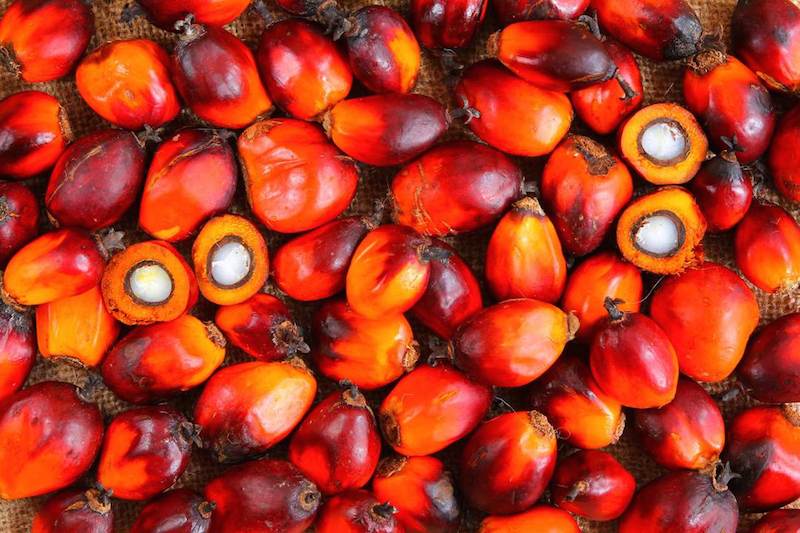
Major manufacturers such as De-United Foods and Chikason Group source palm oil from manufacturers, including Presco and Okomu.
Dangote Farms, Savannah Farm and Ikara Processing Plants had off-taker arrangement with tomato farmers. But Dangote tomato plant is currently not in operation owing to high cost of tomato seeds.
PZ Wilmar, which is a subsidiary of PZ Cussons, has acquired over 50,000 hectares of oil palm plantation in Cross River State. The firm acquired the defunct Calaro Oil Palm Estate, formerly owned by the Cross River government, as well as the 12,805 hectare Kwa Falls oil palm plantation, formerly owned by Obasanjo Farms. It also bought the 5,450-hectare Ibiae Oil Palm Estate and another 8,000 hectare estate in Biase.
Santosh Pillai, managing director of PZ Wilmar, said the company has invested approximately $150 million.
“We are determined to continue with these investments and looking for opportunities to expand our plantations in the state. We have also invested around N20 billion in an oil palm refinery in Lagos,” he told Real Sector Watch.
Dangote Sugar is investing over $2 billion in over six states in the country through its Savannah Sugar plc in Numan, Adamawa State, North-East Nigeria. It is already expanding plantations in backward integration projects in sugarcane and has pledged to extend this investment to Nasarawa State.
Flour Mills of Nigeria, through its sugar subsidiary known as Golden Sugar Estate Limited, is investing $300 million in sugar production at Sunti, Niger State.
Backward integration occurs when a company buys its suppliers or internally produces segments of its supply chain.
ODINAKA ANUDU