Illiteracy is the inability to read and write. This is the plight of people with no formal education. In some instances, such people are regarded as analphabetic. In the last century, illiteracy was a systemic challenge, especially in third-world countries. Thankfully, however, technological advancement and glocalization (a term coined to mean localising what is global) have necessitated the pursuit of literacy skills among the significant majority of Nigerians and citizens of other third-world nations. This development is what I aptly designate as E-LITERACY. In addition, the need to save their children’s, relations’ and friends’ phone numbers on their mobiles, in order to ascertain who is calling per time, has compelled many aged Nigerians to acquire literacy skills, since the advent and attendant prevalence of mobile phones in Nigeria. Interestingly, too, the interpersonal benefits of social media have made an overwhelming number of Nigerian youths who dislike reading, to become avid readers, inasmuch as they must read and write in the course of chatting.
Consequently, these realities in hand beg the question: what do many Nigerians read? My first submission in this piece is that any literacy skill that is devoid of a critical assessment of what is perused is ILL-LITERACY. An ILLITERATE can be likened to a person who cannot afford and, thus, does not own a car. By comparison, an ILL-LITERATE can be described as one who can afford and, in fact, owns and drives a car, but knows nothing about traffic rules. Apparently, the latter is prone to a quicker death than the former. An ability to read and write without the corresponding wherewithal to subject matters to logical and pragmatic assessments will perpetually make one a slave of information, especially in this period of endemic misinformation, disinformation, fabrications and falsifications.
READ ALSO: 80m Nigerians lack access to electricity – REA
Dear Nigerians, in the face of the devastating global pandemic, be well informed and inform someone that the data bundle with which you share posts and eventually peddle rumours, fear and threats can, first and foremost, be used to verify and authenticate that piece of writing you are about to share. Unfortunately, Journalism has gone messy, so much so that every Tom, Dick and Harry who can open a website now “qualifies” as a news editor. This is regardless of whether or not s/he knows that the past tense of broadcast is broadcast (not broadcasted). It does not matter to him/her that ammunition does not attract “s,” once s/he is set to fabricate a story pertaining to the Boko Haram insurgency. For perspective, “Chad have supply Boko Haram member arms and ammunitions” is a headline that should be correctly rendered as “Chad Supplies Boko Haram Members with Arms and Ammunition.” In the age of charlatans who call themselves bloggers, the ILLITERATES are safer, saner and much better off than their ILL-LITERATE counterparts.

Moving forward, it is pertinent to note that the first task of a reader is to investigate and ascertain the veracity of a piece of information or treatise, instead of instantly reporting or bandying same about. Avoid like the plague any information which does not come with substantial proof. Besides, it is deserving of mention that your reading a piece of news on a blog, or your receiving it as a broadcast does not automatically validate it. Against this backdrop, a person who questions, objectively critiques and verifies news is herein referred to as a HEAL-LITERATE.
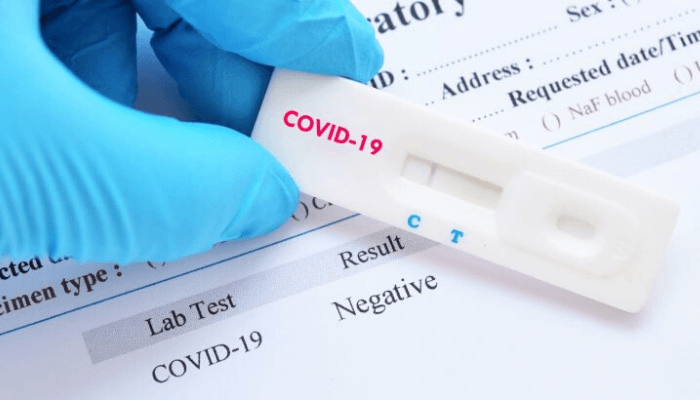
Hence, when next you read from impetuous bloggers who pander to their whims or from mediocre broadcasters, that a new case of COVID-19 was detected somewhere, or that the morbidity of the scourge has soared dramatically, don’t be an ILL-LITERATE by sharing first and arousing fear. Instead, I would rather you acted like a HEAL-LITERATE by confirming the information first before sharing as and when necessary.