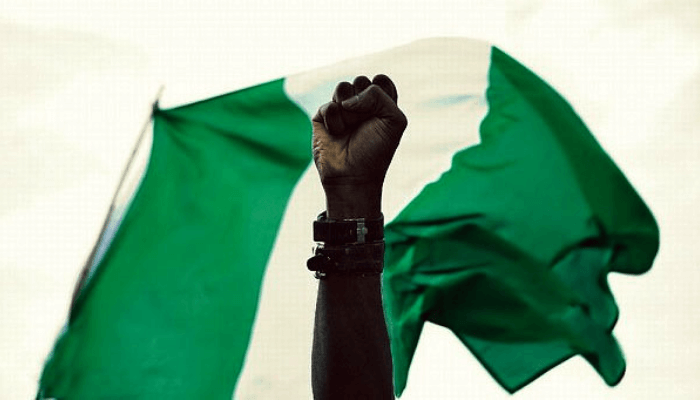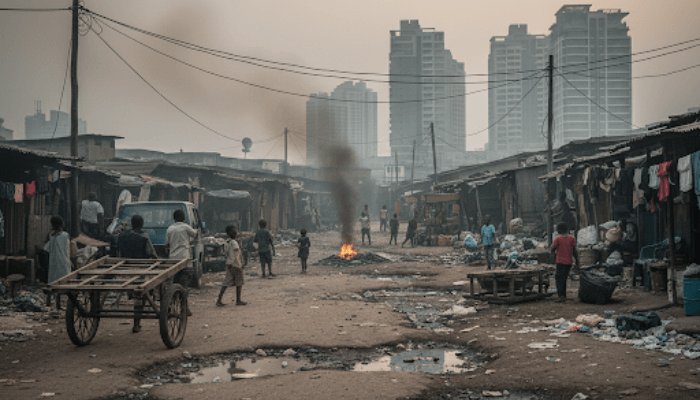
The price of tribal politics and pursuits of private gains has done more harm than good in the Nigeria of our dreams, summed up Dr Richard Ikiebe, coordinator of the Yaba School of Thought, in a recent article.
He says if there is a single thread running through the fabric of modern African political experience, it is woven from the persistent fibres of unhealthy ethnic rivalry and the relentless pursuit of personal wealth by political elites. The twin maladies have stunted national unity; they have also left legacies of squandered opportunities and fractured societies.
“The prioritisation of personal wealth accumulation over national interest further compounds this problem.”
To him, this phenomenon is evident in most African nations, particularly in Nigeria, a country whose promise has too often been undermined by the very leaders entrusted with its future. The consequences are societies organised not for collective advancement but for the benefit of a privileged few who have mastered the art of ethnic manipulation.
The damaging impact of ethnic rivalry on national development is perfectly illustrated by a story shared by August Adebayo, a former Western Nigeria regional head of service. In his 1986 book, Power in Politics, Adebayo recounts a heated parliamentary debate in 1964 over where to locate an iron and steel industry. What should have been a straightforward economic decision based on feasibility studies and national interest degenerated into regional advocacy. Representatives from each region fiercely defended their territories, presenting passionate arguments for why the industry should be in their area. The debate became so contentious that a decision proved impossible. The bill was withdrawn. Adebayo observed, “Members who a moment ago were at daggers drawn sat back with a look of satisfaction, everyone beaming with smiles.”

This stalemate demonstrates how ethnic rivalry paralyses decision-making and hampers crucial development projects that could benefit the entire nation. The episode is not merely a footnote in Nigeria’s history; it is a parable for the continent. When ethnic or regional interests win over national good, paralysis and stagnation follow.
The prioritisation of personal wealth accumulation over national interest further compounds this problem. In his memoir “From Third World to First: The Singapore Story”, Lee Kuan Yew shares a sobering but troubling encounter he had with the Nigerian finance minister, at which the minister admitted that setting up a local shoe manufacturing factory was central to his retirement plans. To facilitate this, he had imposed tariffs on foreign shoe imports. For Lee, the lesson was clear: when leaders prioritise personal gain over national purpose, the entire edifice of state is built on sand.
Across Africa, power has been wielded by narrow-minded political elites who organise society for their personal benefit, often using ethnic identity as both shield and sword. The result is a politics of exclusion, where the majority are spectators to their own marginalisation.
Read also: Why Sub-Saharan Africa should focus on its informal sector for inclusive growth
From history, such patterns are not unique to Africa. England in 1688 and France in 1789 were once riven by elite rivalry and exclusion. But through revolution or reform, they found ways to broaden participation and forge new, more inclusive identities. The difference lies in how these societies eventually evolved beyond such divisive politics.

The question is whether African nations can do the same without the trauma of violent upheaval that attended the French Revolution. Those calling for revolutionary changes must remember that while revolutions may sometimes alter power structures, they may not necessarily transform the underlying systems of exploitation.
From records, several nations have successfully addressed ethnic diversity to foster inclusive societies and economies. Norway, consistently ranked as having one of the world’s most inclusive economies, stands out for building institutions that ensure equitable growth and distribution across its citizenry. Singapore and Malaysia, despite their complex ethnic mixes, have implemented policies that promote peaceful coexistence and shared prosperity.
South Africa’s post-apartheid reforms, including its constitution and Truth and Reconciliation Commission, offer important lessons in healing and inclusion. Ethiopia’s experiment with ethnic federalism also seeks to balance ethnic autonomy with national unity, though not without its own challenges. These examples highlight the value of recognising ethnic identity while creating frameworks for collaboration.
Although Nigeria’s embrace of federalism, the creation of new states, and constitutional guarantees for minority rights were all designed to manage diversity and allay fears of domination by any single group. But, as recent history has shown, these structures are often subverted by the same elite interests they were meant to check. The proliferation of states has sometimes served only to multiply the avenues for political elite enrichment, while resource allocation remains a flashpoint for conflict.
To move forward, African nations must rise above ethnic patronage by building merit-based institutions and fostering truly inclusive economic policies. Dialogue and mediation, built on tradition and modernity, are essential to resolving disputes early, if leveraged. Real progress requires visionary leadership and citizens who demand accountability for national, not tribal, advancement.
A shift in political culture is vital: only when all groups are willing to put collective good above narrow interests will elites lose their grip on power. Nations that have embraced diversity show that ethnic differences can fuel strength, not division. With vision and courage, Africa can transform its diversity into a powerful engine for unity and progress.