A simmering battle between former Nigerian Ports Authority (NPA) boss Hadiza Bala Usman and BUA Group has boiled over into a public blame game, with both sides accusing each other of dishonesty, contract breaches, and disregard for due process over the management of Terminal B at Rivers Port.
The issue, which dates back over a decade, was recently reignited after Abdul Samad Rabiu, BUA group’s chairman, , in an article, accused Usman of abusing her office to arbitrarily revoke the company’s port concession, a move he says cost the conglomerate over $10 million and disrupted its operations.
But Usman, in a detailed rebuttal through her team, accused the company of twisting facts, hiding its own failures, and exploiting political connections to avoid accountability.
The broken deal
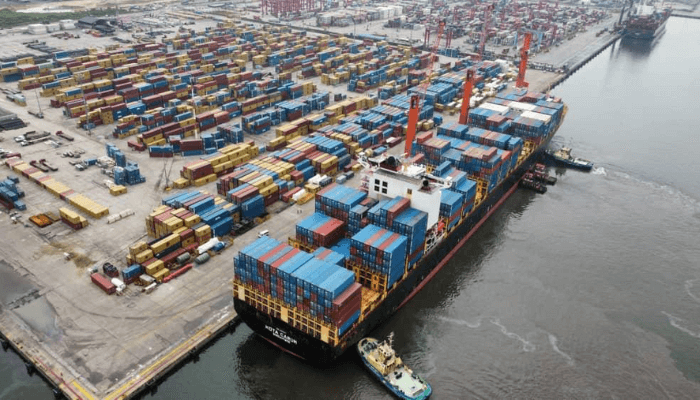
In 2006, BUA won a concession to manage Terminal B at Rivers Port. Under the terms, it was expected to invest in rehabilitating the ageing berth infrastructure and commence operations within 90 days. But according to the NPA, the company failed to fulfil key obligations for over 16 years.
In its statement, BUA insisted it couldn’t make progress due to insecurity in the area and NPA’s failure to dredge the quay walls. The company said it operated as best it could, investing as much as it could until things took a turn.

“One day, we woke up to a letter stating that the concession had been revoked. There was no warning, no issue, no conflict,” Rabiu said, describing the revocation as shocking and unlawful.
The company secured a court injunction in January 2018, ordering the NPA to halt the revocation and allow continued use of the terminal. But it says Bala Usman flouted the order and decommissioned the terminal anyway.
But Hadiza Bala Usman strongly disputes this version of events.
Far from acting without warning, they said, the NPA issued multiple default notices to BUA over the years. She said the decision to terminate the concession was not arbitrary but based on years of non-compliance and was legally vetted.
Documents shared by the former NPA boss, seen by BusinessDay, indicate that between January 2018 (when the injunction was granted) and June 2019, BUA berthed at least 117 vessels at the terminal, undermining its claim that it was locked out.
However, in May 2019, BUA own engineers raised alarms, writing to the NPA to admit the jetty was in a “state of total dilapidation” and could collapse.

Acting on that, Bala Usman said she consulted the NPA’s engineering department, which advised immediate decommissioning of the berth for safety reasons.
“This was not a unilateral decision,” her statement said. “It was based on professional advice to protect lives, infrastructure, and neighbouring terminals.”
She said even the termination notice was issued on the recommendation of the Authority’s legal department.
Court orders and power play
BUA also alleged that Bala Usman ignored mediation efforts by the Attorney-General and failed to respect arbitration processes. But she insists NPA staff attended all mediation meetings and fully engaged the arbitration, a process that the NPA itself initiated despite delays from BUA.
She also pushed back on the insinuation that she acted out of personal animosity. Instead, pointed to what she called BUA’s long-running culture of disregard for contractual timelines and reliance on “access to higher authority” to evade consequences.
She said the company only began the terminal’s reconstruction in 2022, a full 16 years after it was originally due.
In with the new
Following her removal in 2021, BUA resumed rehabilitation works on the terminal under a new NPA administration.
The project, now contracted to Italian firm TREVI, is reportedly ongoing and expected to be completed by early 2026. BUA says it has already pumped over $65 million into the facility’s upgrade.
But Bala Usman sees that move as evidence of bad faith, proof that the company could have acted earlier but chose not to, only doing so after political winds changed.
“The actions of an organisation that blatantly refused to honour its obligations while exploiting access to higher authority reflect the impunity with which many big companies operate in Nigeria,” her statement said.