Some inspirational teachers recently received cash rewards reinforcing an educational theory, which contends that learning standards have direct correlation with the quality of teachers and teacher-student ratio obtainable in an environment.
Learning standards refer to what students should have learned by the end of a course, grade level, or grade span, but they do not describe any particular teaching practice, curriculum, or assessment method.
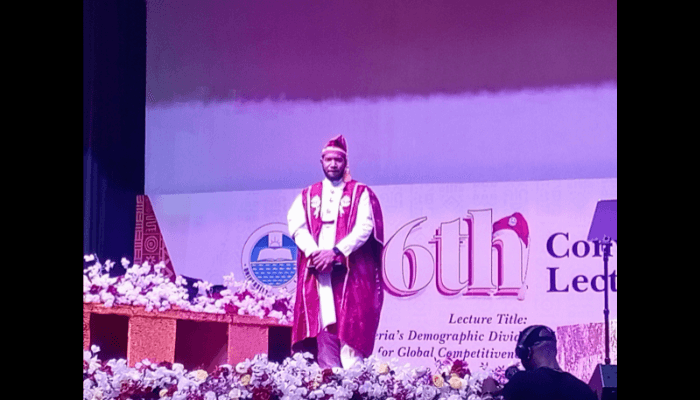
Committed to driving home the need to continually improve the quality of teachers, Meadow Hall Foundation, a subsidiary of the Meadow Hall Group, an educational company based in Lagos recently presented cash rewards to three teachers during the Inspirational Educator Awards (INSEA) held recently.
“We found inspirational stories of innovative educators who despite difficult circumstances, are working hard to improve children’s access to quality education”, said Kemi Adewoye, head of Meadow Hall Foundation, who gave the inspirational stories of the winners.

The INSEA is a merit- based award aimed at elevating the teaching profession and motivating school teachers and educational leaders to continue to strive for excellence in the profession. The Award is divided into two categories: The Inspirational School Leader of the Year Award and The Inspirational Teacher of the Year Award.
Oluremi Tanimola of Army Children Senior High School, Ikeja Military Cantonment, Ikeja emerged winner of the Inspirational School Leader of the year and was rewarded with a N2,000,000.00 cash award. Odueke Abiodun of Station Junior Grammar School, Station Bus Stop, Ifako Ijaiye emerged winner of the Inspirational Teacher of the year and was rewarded with a N1,000,000.00 cash award while Tolulope Odunsanya of Abibat Mogaji Millenium Senior Secondary School, Agege emerged first runner-up of the Inspirational Teacher of the year and was rewarded with a 500,000.00 cash award.
This comes at a time when education data report published by the National Bureau of Statistics (NBS) in February 2016 showed that Nigeria had 62,406 public primary schools in 2014 with a total enrolment of 23 million children. These schools had 574,579 teachers resulting in an average teacher to student ratio of 1 to 40 comparable to what is obtainable in most parts of Africa but twice higher than what is obtained in Europe and America and even most parts of Asia.
The high student teacher ratio means that most students in these classes are not getting enough attention from teachers since the classes are overcrowded. This poor attention is compounded by the fact that only 11 percent of teachers in public primary schools actually have an educational degree while 56 percent have the minimum National Certificate of Education (NCE). The remaining 33 percent of teachers have other undefined qualifications.
This shows that besides the fact that majority of Nigeria’s future generation are studying in overcrowded classrooms, many of the teachers impacting knowledge into them do not have the qualifications that will guarantee that they can get the best education on offer.

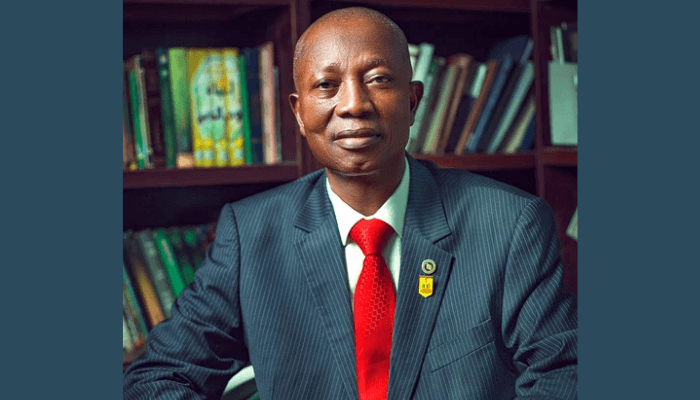
Folasade Adefisayo, CEO Lead Learning Ltd, an education consulting firm holds that “teaching is the mother of all professions and teachers are nurturers of the nation’s talents and cognitive skills in particular. Sound cognitive skills translate into a more productive and innovative workforce and entrepreneurs. However, something has gone terribly wrong with the formation and public perception of these agents of human and social transformation.”
Adefisayo added that “teaching today is regarded as a profession for those who could not find a place in other professions. Well, let it be on record that I am proud of teaching and a proud child of parents who were both teachers.”
Narrating an incident, she said, “I was shocked to the bones the other day, when a young man approached me to help him secure a teaching position. He had two second degrees (Master’s) but had such a poor command of both oral and written use of English Language that I wondered what he would offer his students, if offered the position sought. Whilst teachers may not be burdened with all the blame they have an immense role to play.”
STEPHEN ONYEKWELU