Following public outcry, the National Assembly will next year abolish the current envelop system of budgeting, which is opaque, that results in the capping of funds notwithstanding the needs of a government ministry, department and agency (MDA).
Instead, it would be replaced by programme-based budgeting. Otherwise called Line Item or Incremental Budgeting system, the practice has for several years received the bashing of financial experts who described it as ‘archaic’.
Whereas many countries have discarded the envelope method of budgeting in place of the Programme-Based Budgeting System, Nigeria continues to adopt the budgeting practice that has not done much to improve the economy or the well-being of the citizens.
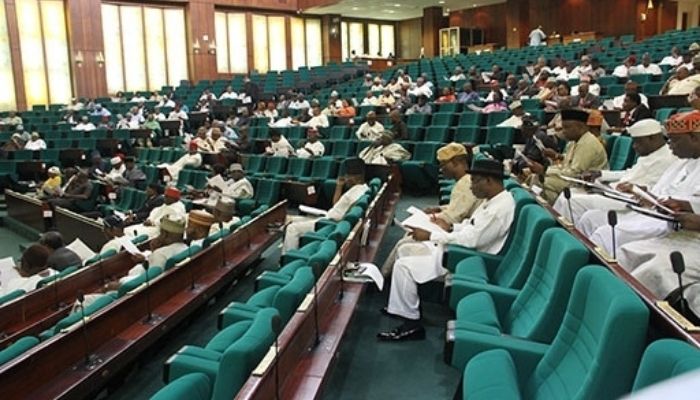
Lawmakers raised concern that the current national budgeting process makes the legislature less involved and at best reactive, relying solely on the information provided by the Executive arm of government. Under the current arrangement, federal lawmakers say there is an absence of a coherent and systematic means of exerting legislative control over fiscal decisions and priorities of the Federal Government.

Speaking with BusinessDay in Abuja, chairman, House of Representatives Committee on Media and Publicity, Benjamin Kalu, said in view of public criticisms over its inadequacies, the National Assembly is working on replacing the current system with a programme-based budgeting system, globally acclaimed to be better and more efficient.
Expected to be effective from 2023, the new system he said would eliminate corruption, instill transparency and accountability in the nation’s budgets and speed up infrastructure development across the country.
Another member of the House, Beni Lar, representing Plateau State, said the envelop system was overdue for replacement, stressing that it makes resources allocated to MDAs “to be thinly spread over a large number of projects, resulting in non-performance of successive budgets.” She had in 2013 sponsored a bill to abolish the system, which did not scale through.
The envelope system, also known as the envelope budgeting method, is a popular method for visualising and maintaining a flexible budget. The key idea is to prioritise cash income to meet separate categories of expenses in physically separate envelopes. It replaced the Zero-budgeting method.
Believed to prevent wasteful spending, the system demands honesty and fiscal discipline. However, in recent time, some chief executives of public corporations have called on the National Assembly to scrap it, alleging that the budgeting system leads to the reduction of their annual appropriations by the Ministry of Finance, as well as impede MDA’s operational efficiency.

For instance, the Chief of Army Staff, Farouk Yahaya, had late last year complained that the Army’s budget size was drastically reduced from the N710 billion it proposed to N579 billion by the Ministry of Finance in the 2022 fiscal year. The same complaint was made by sister security agencies.
Speaking when he appeared before the Senate Committee on Army for the 2022 budget defence, Yahaya said: “This reduction would impede the capacity and tempo of the Nigerian Army in carrying out its constitutional duties.”
In the same vein, the director-general of a Federal Government agency told BusinessDay at the weekend that his agency’s capital budget of about N20billion for the 2022 fiscal year was reduced by the Budget Office of the Federation to about N3billion, wondering what his agency would do with such “meagre” amount of money.
Kalu told BusinessDay that the complaints arising from the lapses associated with the envelop system of budgeting would soon be addressed by the National Assembly.
“I agree that the current budgeting system has its lapses but we can do better with the envelope system. We shouldn’t just stop at the envelope system and go home and sleep that we have given the MDAs the envelope which is say, N1billion for an agency or ministry. What informed that? I know one of the indicators is available resources.
“We should go beyond available resources as guiding lines in deciding the size of these envelopes and proceed into the feedback information on the needs analysis. So, we shouldn’t focus mainly on the politics in the budget, the economics of the budget is very important and you cannot discuss the economics of the budget without needs assessment to know where to plough in and where to harvest. Who says a particular envelope should be traditional; year one, year two, year three, the same envelope. No, it mustn’t be so,” Kalu said.
Read also: National Assembly to further empower SEC to sanction unregistered schemes, others
He further said: “For us, in the National Assembly we are worried about this system. When an envelope remains the same size year in, year out, it becomes unproductive because it is not been tailored to the realities of the dynamic times that we are in. This year is different from last year; last year was different from the other year.
“I don’t need to tell you that pre-Covid, Covid and post-Covid years are not the same with regards to economic realities. If you make the envelop the same, pre-Covid, Covid era, post-Covid, who are you deceiving? It is a wrong mathematics, a wrong economic algebra, a wrong economic formula for you to have a traditional envelope size for every year.
Rather, both the Budget Office and the parliament, particularly the MDAs, should go the extra mile of understanding the needs that the budget seeks to solve. And that we are already working on to be effective from next financial year.
“We cannot continue to operate the top-bottom approach where the top gives you whether you like it or not, you take. Whether it is solving the problem or not you take it. And I tell you, Nigeria will be saving a lot of money and making a lot of impact with regards to national development when the system changes.”
Reacting to the development, financial experts describe it as a good omen for the economy, stressing that it would improve budget performance.
According to them, the envelop system gives room for duplication and inflation of expenditure heads by MDAs
“It is good news that at last, the lawmakers are working on changing the current system, which requires little data and analysis, and relies heavily on opinions, judgment and historical precedent,” Emmanuel Ijewere, former ICAN president, said.
According to Ijewere, “Under this approach, budgets are prepared without reference to goals. Only a little attempt to link the budget with implementation and subsequent performance review is made.
“In a simple analogy, since this approach emphasizes expenditure rather than performance (i.e. inputs rather than outputs) and fails to justify expenditure heads in detail, it gives room for public officers to exploit its inadequacies to mismanage public funds and that is not good for us as a nation,” Ijewere said.