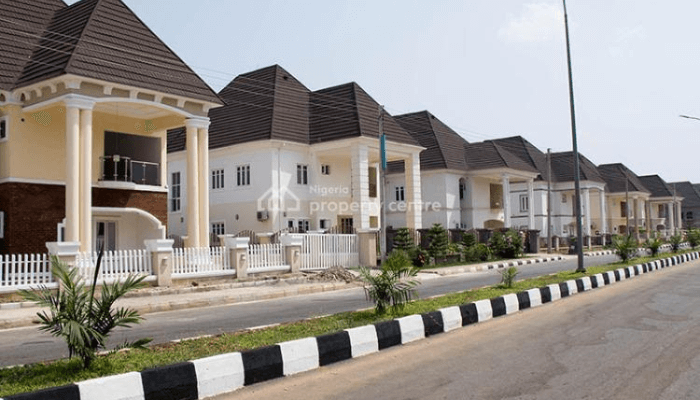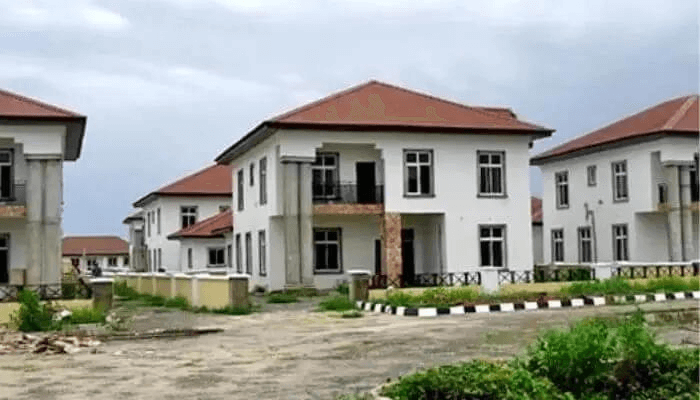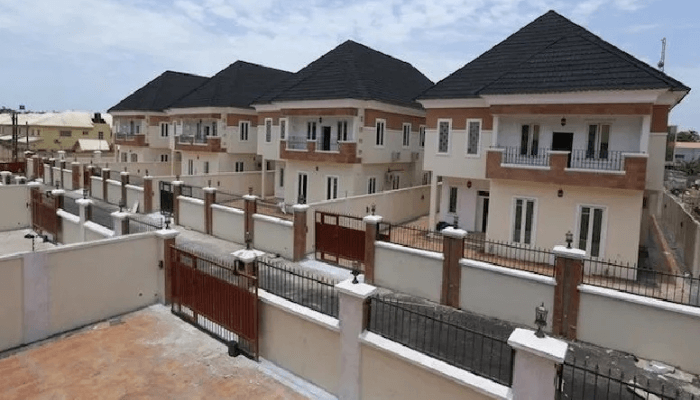
Major cities in Nigeria are witnessing escalating land conversion for residential and infrastructure developments, raising concerns as it puts citizens’ livelihoods at risk, especially in the area of food security.
The conversion has significantly reduced land available for urban farming, while the size of developed areas has increased. A recent study by the Federal University Ekiti, Federal University of Technology, Akure, and Obafemi Awolowo University, Ile Ife, reveals that farmland in Lagos decreased from 1984 to 2024, while developed regions increased by 22,538.34 hectares.
According to the report, the annual rate of farmland reduction has intensified over time, noting that from 1984 to 2013, the average annual reduction in agriculture was -0.45 percent, while light forest, open spaces, and waterbodies (through landfilling) experienced declines of -2.38 percent, -0.61 percent, and -0.57 percent, respectively.
In contrast, within the same timeframe, developed regions and wetlands expanded by 4.94 percent and 2.06 percent per annum. From 2013 to 2024, the annual rate of farmland loss increased to -2.42 percent, with more pronounced decreases in light forest, -6.78 percent; open space -3.45 percent; shrub, -6.36 percent, and waterbodies, -1.56 percent.

In its ‘H1 2025 Nigeria Real Estate Market Review Report’, Northcourt Real Estate notes that accelerated loss of agriculture and natural landscapes is exerting upward pressure on land prices.
“The decrease in farmland and open spaces since 2013 was largely attributed to urban expansion. Urban farming in Lagos is seeing a consistent decline due to the escalating conversion of land for residential and infrastructural development,” Ayo Ibaru, Northcourt CEO, confirmed to BusinessDay.
Ibaru argued that, despite indications that urban farming is gradually acknowledged as a viable means of livelihood, agricultural land is still being developed into residential and commercial use, stressing that this is especially the case for the marginalized.
According to him, built-up areas in Lagos saw the most expansion, with 20,197 hectares converted from bare land use in 2024, pointing out, however, that the transformation of green spaces into urban infrastructure suggests the strain of population growth and the consequent demand.
Ibaru noted that, of the 17,485 hectares of farmland documented in 2013, hardly 2,115 hectares remained so in 2024, because much of it was developed. “This trend indicated a persistent encroachment of commercial and residential development on urban agriculture. Initiatives to conserve farmland struggle, being surpassed by the need for urbanization,” he said.

Besides farming, land conversion has also caused ecological decline. Light forests and shrubs have decreased. Wetlands, essential for flood management and biodiversity, have also reduced. Waterbodies exhibited relative stability at 21,776 hectares in 2024. These changes highlight the disparity between growth and environmental preservation.
The report also highlighted the investment side of land, noting that some investors are attracted to informal land delivery networks largely due to expediency benefits.
It stated that these benefits are often short-term, adding, “this is particularly attractive in regions where conventional land procedures appear detached from the reality of the operating environment.”
“In contrast to the formal land system, which is typically slow and complex, the informal system provides greater flexibility, more affordable land, and a broader selection of locations. It also benefits from government-backed regularisation programmes that assist individuals in legalizing their land upon acquisition,” the report added.
Other investors concentrate on the historical and structural factors underlying the preference for informal systems. Antiquated regulations, rigid planning controls, and the centralized management of land render the official system unpopular.