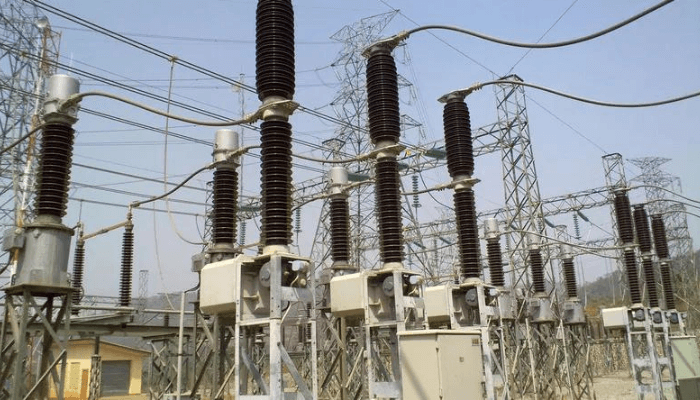
Lagos State Government and the organised private sector on Wednesday set out a joint pathway for strengthening electricity supply, as the decentralisation of Nigeria’s power market accelerates under the Electricity Act.
At the Lagos Chamber of Commerce and Industry (LCCI) Power Sector Conference, stakeholders said the reforms have opened fresh opportunities for state-led solutions but also exposed long-standing structural weaknesses that continue to undermine efficiency across the value chain.
Speaking at the event, Biodun Ogunleye, Lagos Commissioner for Energy and Mineral Resources, said the state is already implementing a decentralised market structure anchored on the Lagos Electricity Law, the Lagos State Electricity Regulatory Commission (LASERC) and the Integrated Resource Plan.
The commissioner, who was represented by Ogunade Hamed, Chief Technical Officer, said Lagos is prioritising infrastructure renewal, commercial sustainability and coordinated regulation as it works to build an electricity market capable of supporting industrial expansion.

Read also: Seventeen of Nigeria’s 23 power plants run below 50% capacity
“We cannot deliver reliability on infrastructure designed for a smaller population and an entirely different economy,” he said, warning that the grid must evolve to meet Lagos’ accelerating economic and demographic pressures.
He highlighted ongoing initiatives, including solar retrofits for 42,000 streetlights, support for embedded generation in industrial clusters and regulatory frameworks for mini-grids and hybrid energy systems.
While expressing readiness for a decentralised era, he urged stronger collaboration among operators, investors and regulators, stressing that the sector “must break free from old habits” to make meaningful progress.
Gabriel Idahosa, LCCI President and Chairman of Council, said decentralisation offers a unique opportunity to redesign the sector for efficiency but comes with significant risks if not matched with harmonised regulation and investor confidence.

He listed persistent bottlenecks, from unstable gas supply and limited generation to weak transmission and fragile distribution networks, as barriers that must be addressed for the reforms to deliver tangible outcomes.
“Nigeria cannot industrialise without reliable electricity. The private sector is willing to invest, provided the regulatory environment is predictable, transparent and efficiently managed,” he said.
Read also: Aba Power warns against power infrastructure vandalism
Idahosa called for clarity around cost-reflective tariffs, data integration and the role of renewable energy in state-led markets. He added that insights from the conference would help shape LCCI’s policy advocacy as the power sector evolves.
Also speaking, Olufemi Bakare, Chairman of the LCCI Power Group, said Nigeria stands at a critical point in its energy transition. Although reforms have spurred private participation, he warned that infrastructure deficits and regulatory inconsistencies continue to undermine progress.
“Infrastructure optimisation is now an indispensable priority if Nigeria is to unlock generation, transmission and distribution capacity,” he said.