As Nigeria grapples with an economy under pressure, President Bola Tinubu’s recent vacation comes at a time when the country can least afford any semblance of a leadership vacuum. Organised labour, represented by the Nigerian Labour Congress (NLC) and the Trade Union Congress (TUC), is once again up in arms, threatening industrial action if its wide-ranging demands, including a significantly higher national minimum wage and a review of the electricity pricing structure, are not met.
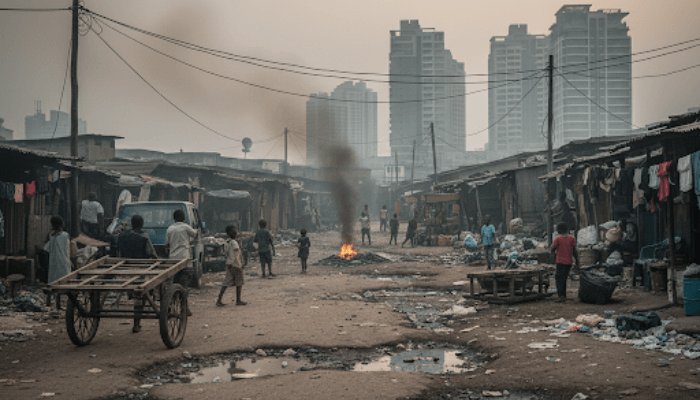
Against a backdrop of economic strain, rising inflation, and continued hardship for workers and the informal sector, the growing tension between the Federal Government and labour unions cannot be ignored. With inflation hitting, as of July 2025, 21.88 percent, although down from 22.22 percent in June, and food prices continuing to surge daily, labour is demanding structural and meaningful reforms.
Read also: Leadership and the power-sharing paradigm
On May Day, Joe Ajaero of the Nigeria Labour Congress (NLC) and Festus Osifo of the Trade Union Congress (TUC) took the government to task. They criticised what they described as insincerity by the administration, particularly the announcement of a 25 to 35 percent wage increase for civil servants, which they dismissed as a distraction from the core demand, a new national minimum wage reflective of current economic realities.

Their position was underscored by the unions’ call for a minimum wage of N615,000, a figure that drew both support and scepticism. While some economists view it as unrealistic, labour leaders defend the proposal as a necessary opening strategy in negotiations, arguing that the soaring cost of living, poor public infrastructure, and unchecked inflation have pushed workers into survival mode.
“To avert a full-blown crisis across sectors, the Federal Government must immediately reconvene wage negotiations with labour under an independent and credible committee to set a realistic but dignified minimum wage that reflects inflationary pressures.”
Labour also demands a complete review of Nigeria’s electricity sector, calling for the reversal of the 2013 privatisation exercise and the adoption of a service-reflective tariff system. At present, many Nigerians pay exorbitantly for an unreliable power supply, with customer classification further deepening inequalities. The recent hike in electricity tariffs has only increased tensions, coming at a time when most citizens are still suffering from the removal of fuel subsidies in mid-2023.
Amid the friction, the Federal Government’s Presidential CNG Initiative, aimed at transitioning the transport sector from petrol and diesel to Compressed Natural Gas (CNG), is perhaps the only ray of policy hope. At roughly N213 per standard cubic metre (scm), CNG is significantly cheaper than petrol (N870/litre) and diesel (N1,200/litre).
To date, there is no clear record concerning Bayo Onanuga, the presidential spokesman’s announcement of the government rolling out 2,700 CNG-powered buses and tricycles, with 2,500 tricycles expected before Tinubu’s first anniversary in office. Furthermore, 600 buses and over 100 conversion workshops across 18 states were to be in operation by the 2024 year-end.

However, critics say, even if the government has fulfilled its promises, the rollout remains insufficient, especially in the face of over 40,000 trucks operating across Nigeria’s roads. Analysts say that a noticeable drop in food prices and transport costs would only occur when at least 25 percent of haulage trucks are CNG-powered, a target the current initiative falls far short of achieving. For the CNG programme to bring relief, it must scale up swiftly and strategically, especially in key logistics corridors and urban centres.
Read also: Leadership struggle sparks crises in Akwa Ibom APC
A nationwide labour strike, now looming large, threatens to grind the economy to a halt. In a country already losing productivity due to epileptic power supply, insecurity, and logistics bottlenecks, a halt in government services and the disruption of critical sectors (education, healthcare, power, and banking) will worsen Nigeria’s fragile economic outlook.
The informal sector, which accounts for over 60 percent of Nigeria’s GDP, will also be affected. Labour’s call for a one-year moratorium on all taxes and levies imposed on the informal economy underscores the dire condition of street traders, market women, small-scale artisans, and transport operators who bear the brunt of government inefficiencies and overzealous tax drives by local authorities.
Beyond immediate economic consequences, a prolonged strike could erode investor confidence at a time when Nigeria is trying to boost Foreign Direct Investments (FDIs), strengthen the naira, and promote intra-African trade.
A significant stumbling block in the ongoing impasse is the evident lack of trust between labour and the government. Observers point to the Tinubu administration’s tactic of rotating negotiators and shifting talking points, a strategy seen by labour as time-wasting.
This alternating interface approach only fuels suspicion, reduces goodwill, and weakens the negotiating table. Both sides must now recognise that delaying engagement or relying on half-measures only deepens disillusionment among citizens and risks triggering broader social unrest.
Furthermore, policy decisions, however well-intentioned, must be accompanied by effective communication and transparent timelines. Nigerians are willing to endure hardship if they believe genuine reform is underway, but when hardship becomes perpetual and promises remain unfulfilled, frustration quickly transforms into protest.
To avert a full-blown crisis across sectors, the Federal Government must immediately reconvene wage negotiations with labour under an independent and credible committee to set a realistic but dignified minimum wage that reflects inflationary pressures.
Fast-track the CNG rollout in a more inclusive and coordinated manner. State governments and the private sector must be brought into the fold to scale infrastructure faster. Review electricity tariff hikes, especially for residential consumers, and make the power sector more transparent and accountable through regulatory reform.
Also, suspend aggressive taxation of the informal sector, pending a comprehensive review of how to balance revenue generation with economic inclusion, and adopt a singular, competent negotiation team to build trust with labour and ensure continuity in dialogue.
President Tinubu must recognise that this is not just a wage debate; it is a referendum on leadership and governance. As he enjoys another break from the rigours of office, Nigerians are still waiting for the dividends of the ‘Renewed Hope’ agenda. Hope, however, must be matched with action. And that action must begin now, before the streets go silent, not with peace, but with protest.