The Kwara State Ministry of Agriculture and Rural Development is intensifying efforts toward full-scale agricultural mechanisation following renewed collaboration with the National Centre for Agricultural Mechanisation (NCAM).
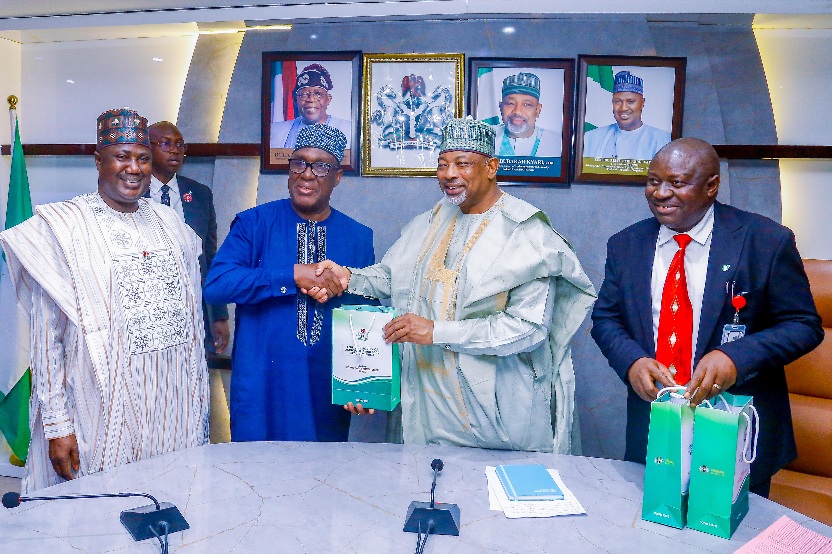
Receiving the NCAM management team in his office, Afees Alabi, commissioner for Agriculture and Rural Development, reaffirmed the Ministry’s readiness to work closely with the centre in deploying innovations that will position Kwara as a national model in modern agriculture.
Alabi noted that NCAM’s objectives align with the state’s agricultural transformation plan, nolting that Kwara farmers are increasingly embracing mechanisation as a pathway to higher productivity.
He urged NCAM to strengthen ongoing farmer training through the Kwara Agricultural Development Project (KWADP), which organises weekly capacity-building sessions.

“Training is a top priority for this administration because it equips our farmers with the skills needed for modern agriculture. Under Governor Abdulrahman Abdulrazaq’s leadership, Kwara has shown that investing in people is the surest route to sustainable food production,” he said.
He added, “With NCAM’s support, we are determined to expand these opportunities and make mechanisation the new standard for our farmers.”
Expanding on this call for collaboration, Kamal Rasheed, NCAM’s executive director, restated the centre’s mandate to design, build, and fabricate technologies tailored to Nigeria’s needs.
He disclosed that NCAM is producing both hand-guided and automated machines, such as ploughs, harvesters, and combined threshers, using locally sourced materials.
He further explained that NCAM’s farm village concept will serve as a hub for training, demonstration, research, and commercial production.

Machines developed in NCAM workshops will be deployed directly on farms, while harvested produce will be processed using the centre’s post-harvest technologies, thereby completing the agricultural value chain.
Rasheed revealed plans to establish farm estates across Kwara, equipped with solar-powered boreholes, drip irrigation systems, and the Elerinjare Dam, which can irrigate over 150 hectares for dry-season farming.
He pledged NCAM’s commitment to expanding training programmes, commercialising its technologies to generate revenue for the state, and finalising its mechanisation policy in the coming weeks.
In his remarks, Joshua Olaoye, a professor and the national chairman of the Nigerian Institution of Agricultural Engineers, commended the Abdulrazaq-led administration for its visionary approach to agriculture, describing Kwara’s progress as evidence that practical mechanisation is more impactful than policies on paper.
Olaoye announced that Kwara’s achievements have inspired a national machinery exhibition to be held in Ilorin in November 2025, where locally developed technologies for ploughing, harvesting, irrigation, and post-harvest processing will be showcased to farmers from across the country.
The meeting ended with a renewed commitment to deepen collaboration and innovation, firmly positioning Kwara as a national reference point for agricultural mechanisation.
Backed by the vision of Governor Abdulrahman Abdulrazaq, the state is charting a transformative path that empowers farmers, attracts investment, and strengthens food security across Nigeria.