Since gaining independence in 1960, Nigeria’s attempts at a population census have been marred by controversy, political interference, and logistical challenges. Censuses are critical for planning, yet in Nigeria, they have often been tools of political power and ethnic bargaining.
The first post-independence census in 1962 was widely disputed. Conducted under the Tafawa Balewa government, it was accused of manipulation, leading to its cancellation. A second attempt in 1963 produced a population figure of 55.6 million, but this too was challenged, especially by southern leaders who accused the North of inflating numbers to gain political advantage in the federal system.
The next census came in 1973 during General Yakubu Gowon’s military regime. It recorded 79.8 million, but allegations of massive inflation, particularly in certain states, led the government to cancel the results entirely. This deepened public distrust of the process.
Read also: Nigeria’s ageing population holds untapped economic potential, says Emem Omokaro

A relatively more credible count was held in 1991 under General Ibrahim Babangida, recording 88.9 million people. While not free from criticism, it was officially accepted and became the baseline for national planning until 2006.
The 2006 census under President Olusegun Obasanjo, conducted by the National Population Commission (NPC), put the population at 140.4 million. It was the first to include biometric data and gender breakdown, but it still faced disputes over methodology and undercounting, particularly in Lagos and parts of the South-East.
Since then, Nigeria has missed several planned counts, notably in 2016 and 2022, due to funding issues, insecurity, and political delays. The next census, initially scheduled for 2023, has been postponed, leaving Nigeria to rely on projections that place the 2024 population at over 220 million.
“Nigeria must seize this moment, as a transparent, digital census is not just possible but vital, as few things become imperative.”
Nigeria’s census history reflects the challenge of balancing accurate data gathering with political realities, a challenge that remains unresolved more than six decades after independence.

But today, Nigeria stands at a crossroads. With a population projected to be 237 million by 2025, we are burdened by the largest ‘guess-and-check’ exercise our government conducts – population estimation.
For nearly two decades, our development planning has hinged not on data, but on speculation, which must end now. The last official census was held in 2006, way back when the population was recorded at some 140 million. Since then, Nigeria has soared from the sixth-largest nation in global population to the world’s most populous in Africa, with estimates ranging from 234 million to 237.5 million by mid-2025.
Yet our government still lurches ahead, planning based on these fragmented estimations. Population data are not just a number; they shape the life-or-death workings of government policy: Allocation of state funds, infrastructure placements, school planning, health resources, security deployments, and political representation all stem from census data.
Without accurate data, marginalised communities, those living with disabilities, and rural and underserved populations remain invisible to governments and donors.
Mistakes in counts fuel resource inequities and political exploitation, as some regions inflate numbers for political clout and larger revenue shares, leaving others underserved.
It is no wonder census has become a political weapon here, distorting the picture and undermining fairness.
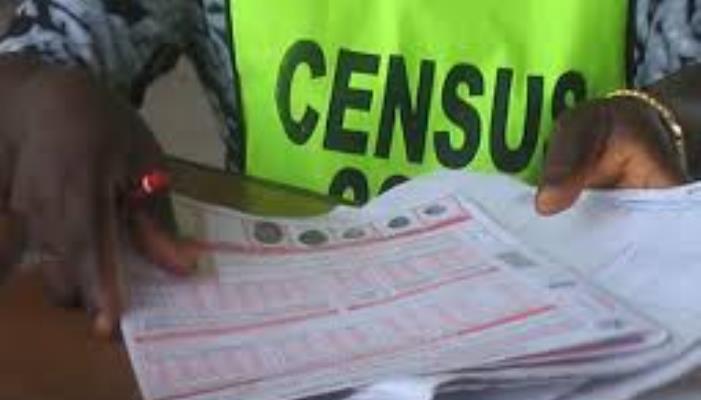
President Bola Tinubu has expressed support for a fresh census with biometric and digital systems at the core. The National Population Commission (NPC) claims preparedness, with about 760,000 tablets in storage, and plans for inclusive coordination with the National Identity Management Commission (NIMC) and other agencies.
Yet, after multiple postponements, from a planned 2023 launch to hopes for late-2024, the exercise still hangs in limbo. Only the President may officially set the census date, and that consent remains pending.
Read also: OADC Open Access Fabric to unlock cloud access for Nigeria’s 200m population
As we stare down the barrel of 2025 and gear up for the 2027 elections, timing is everything. Every quarter’s delay erodes the value of equipment (tablets could expire or go unused), raises costs, NPC estimates the 2025 census may cost up to N942 billion, due to inflation and supply shocks, and undermines confidence in governance and threatens to deepen data divides.
Nigeria must seize this moment, as a transparent, digital census is not just possible but vital, as few things become imperative.
Biometric enrolment – use NIMC infrastructure to capture fingerprints, facial/voice data, and geo-validated enumeration zones. Inclusive outreach – ensure marginalised communities are counted: women, disabled persons, refugees, and the rural poor.
Digital oversight, real-time dashboards, independent audits, and public access, not just politicians’ talking points. Transparent funding, state and local government area contributions should be pooled with federal funds and donor support; corruption cannot be off the table.
Every day we delay, schools are built where no children exist, health centres stay hidden from those who need them, and political representation remains skewed.
We cannot afford to wait another decade before looking in the mirror and seeing who we are. In a nation of over 200 million people, a credible and inclusive census is not a luxury but a national imperative.