What is the relationship between changing the name of Charley Boy Bus Stop and falsely accusing Mr Peter Obi of working for Abacha and therefore being tarnished? The answer is they are Igbos.
Let us make it clear. Last week, a local government in Lagos State changed the name of a famous bus stop in Gbagada, Lagos, from Charley Boy to Olamide. Charles Boy is the showbiz maestro who made a name for social criticism and artistic excellence. Charley Boy used to be the king of the boys in Lagos before migrating to Abuja. He is an icon who lifted many youths and helped them find direction in art, entertainment, and social activism.
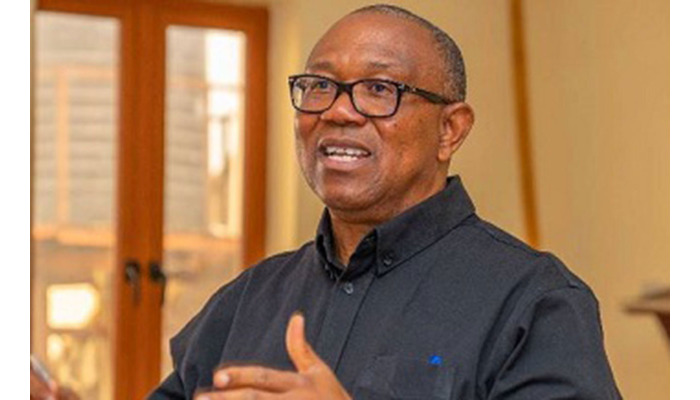
But in 2023, he crossed the Rubicon. He supported Mr Peter Obi, an Igbo politician who won the hearts of youths and became the unofficial president of those who wanted a radical change of the status quo. Obi did the unexpected and, perhaps, unwanted. He defeated the Asiwaju of Lagos in Lagos State, his fiefdom. The audacity of Igbo and Yoruba supporters, many of them very intelligent and accomplished, drew the ire of the custodians of Nigerian social order. Sooner rather than later, someone will pay the price.
It did not take long, and the casualties of this audacity in February 2023 started arriving. First was a young man who had every virtue and competence to be the Governor of Lagos State. But he has the misfortune to be ‘blood-stained.’ Her mom is Igbo. To stop his political momentum, he was tagged ‘Chinedu.’ He cannot be governor despite his many excellencies. Then later, in the governorship election, Igbos and every other person who looked ‘Igbo’ (whatever that means) were debarred from voting. Funny enough, some full-blooded Yorubas were also stopped from voting because they looked Igbo.

Nigeria has one great gift. It easily forgets its horrors and bad history. It also cannot see what it ought to see. This industrial-scale disenfranchisement of Igbos did not merit the attention of Nigerian institutions and political leadership. Even leading Igbo intellectuals and political leaders played dead-brain. Of course, you get cancelled as a genuine Nigerian intellectual or political leader if you complain about the ill-treatment of Igbos. Leading Igbos have internalised this psyop and see all evils but do not say any evil (I run the risk of being cancelled for saying this loudly).
Today, someone is tagging Mr. Peter Obi as an Abacha supporter and therefore irredeemably stained. Seriously? A man is condemned for joining other traders to plead for the release of their seized goods and later found competent enough to help decongest the ports, alongside others? Meanwhile, the individual who physically moved Nigeria’s looted funds for Abacha and negotiated their return is now serving as the Minister of Budget and National Planning under President Tinubu. Nigeria has not only absolved him but also rewarded him with a high office. Yet Peter Obi remains the one to bear an indelible mark?
Let us not forget: Obi once complained about the violation of his rights under Abacha and was merely asked to join others in resolving a shared grievance. Still, he is treated as permanently tarnished. And what of Buhari? He has just been canonised as a national icon, despite being elected and vigorously supported by leading intellectuals and politicians of the southwest, many of whom were closely tied to MKO Abiola, the man whose victory Abacha annulled and who was ultimately imprisoned and allegedly murdered under that regime. Even Abiola’s children and closest allies have reconciled with history, accepting national honours from those once complicit in his persecution.
But Peter Obi must be the scapegoat? What a peculiar notion of justice. As we say in Nigeria, “people know what they are doing.” Or, to borrow from Max Horkheimer of the Frankfurt School, the Nigerian bourgeoisie does not act out of ignorance but uses ideology as a tool of cunning to advance its strategic interests, fully aware of the truth it suppresses.
Mr. Charley Boy joins the list of casualties. He has refused to hold back his attack against the ruling party and support for Mr. Peter Obi. The price is the loss of a well-earned monument. Charley Boy has taken it in his stride. He believes that his legacy is in the hearts of men and women of goodwill and in the soul of time. But we cannot forget what this means. Beyond intolerance. It is a reminder of what Nigerian politics is all about. at least unofficially. Achebe called it “a national consensus.” That is a seeming agreement to constrain and contain the Igbos. In my 2011 lecture at the US Holocaust Museum, I argued that the purpose of the Nigerian civil war was not to exterminate Igbos or chase them out of Nigeria. No, it was to constrain and contain them. This is why when the Biafrans were defeated, Nigeria pulled back. The deed is done. That is why ‘no victor, no vanquished’ was not diligently prosecuted.

Saying Nigeria has an Igbo problem is one of the hurting truths that Nigeria needs to endure, in fact, embrace, to achieve its wished-for greatness. But it is never jolly to embrace a hurtful surgery. Nigeria’s Igbo problem does not mean that ordinary Nigerian citizens hate their fellow Igbo citizens. Not at all. Many of these citizens are like their Igbo compatriots. They admire them and often assist them like family. We are actually a family in Nigeria. But a troubled family with a terrible past. Like all such families, a dose of truthful and sincere leadership heals the wounds and releases everyone from the tyranny of troubled pasts. That is what Peter Obi’s presidency would probably have done. But the hope remains.
The meaning of this post is for Nigerians to understand their complex relationship with their brothers in the southeast part of the country. They love them, no doubt. But there is a national narration and memory that they have to overcome to show them just love.
To the Igbo themselves, you have to make a choice to be fully and equally Nigerian or to be moderately and unequally Nigerian. I think you should be fully Nigerian. You should fight with other Nigerians to build a better Nigeria that benefits everyone, including yourself. You have to continue to aspire to the full life Nigeria offers. Aspire to be president, to be governor, or to be a legislator everywhere in Nigeria, and leave it to the good sense of your compatriots to trust you to lead. If they refuse to trust you, do not relent to aspire.
Because “Onye Ajuruaju A Naghi Aju Onweya”.