Benjamin Netanyahu’s decision on Monday night to throw in the towel on his stalled bid for a fifth premiership has opened up a possible route to power for his rival, the centre-right army-chief-turned politician Benny Gantz.
Israel has been in political limbo since an April election that saw both Mr Netanyahu’s Likud and rival parties fail to secure enough seats to form a coalition government.
President Reuven Rivlin will this week ask Mr Gantz to try to find 61 members of the 120-seat Knesset to back his own bid for the premiership; if he fails to do so within 28 days, the country will be headed for an unprecedented third election within a year.
With 33 seats for his neophyte Blue and White alliance, and potential anti-netanyahu allies under his wing, Mr Gantz could conceivably form a minority government, with the support of the Joint List of Arab parties.

Read also: Isreali construction coy hard hit by Nigeria’s economic woes
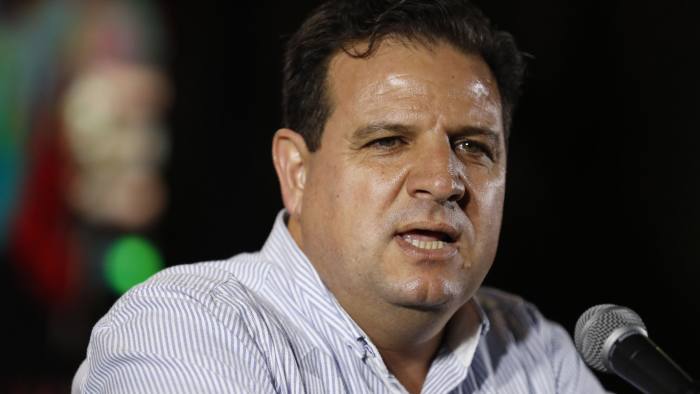
But for the politician who began his campaign boasting about having bombed the Hamas-controlled Palestinian enclave of Gaza into the stone age, a third election may be preferable. “The question is whether Gantz will be strong enough and brave enough to come to us and ask us,” said Ayman Odeh, head of the Joint List.
Split by infighting and hobbled by low turnout among their base — nearly 20 per cent of the Israeli population — the Arab parties of Israel have regularly found themselves sidelined, maligned and ignored. But, surprisingly, in September’s election the 13 seats garnered by the Joint List became a bulwark that even Mr Netanyahu, the four-time prime minister and masterful coalition-builder, could not surmount.
The longest-serving Israeli prime minister’s race-baiting, anti-arab campaign backfired, boosting Arab turnout — and even drawing in about 20,000 Jewish voters — leaving the Joint List in a position to deny him enough numbers to form a governing coalition.
Last week, as Mr Netanyahu’s plans for a governing coalition fell into disarray and party infighting, Mr Odeh, the mild-mannered, socialist, Hebrew-speaking leader of the Joint List, held court in Ajami, an Arab neighbourhood in south Tel Aviv.