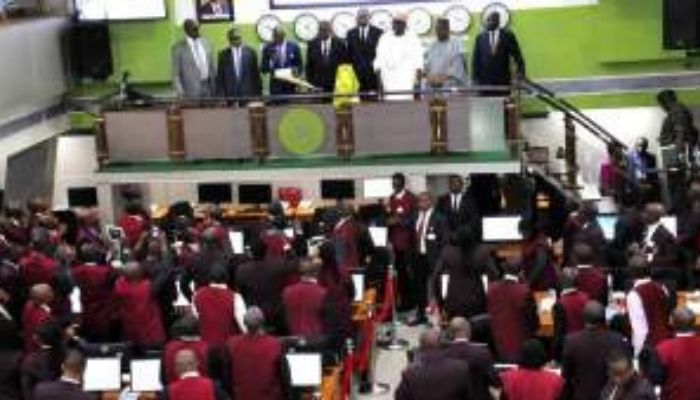
Investors buying and selling more than a dozen stocks on the Nigerian Stock Exchange (NSE) are groping in the dark as they are yet to release up to date financial statements, according to BusinessDay’s analysis of NSE trading data.
The companies are Anino International Plc, Deap Capital Management Ltd, DN Tyre and Rubber Plc, Ellah Lakes Plc, Fortis Microfinance Bank, FTN Cocoa Processor, Juli Plc, Multi trek Integrated Foods, Smart Products Nigeria Plc, Thomas Wyatt Nig Plc, Unic Diversified Holding Plc, Union Dicon Salt Plc and Unity Bank.
Out of these companies, Anino, Multitrek and Unic are yet to release any results since 2014, while D&N Tyre and Juli have delayed filing their results since 2015. International Energy Insurance has not released results since 2016 while investors still await to see the financial performance results of Ellah, Fortis, FTN Cocoa, Smart Products, Thomas Wyatt, Unic and Union Dicon whose most recent results are for the Full Year 2017 period, 9 months into 2018.
It is particularly shocking that five companies, Anino, Multitrex, Unic, D&N Tyre, IEI and Juli, yet to have released their results in the last 2 years are still trading on the exchange.
BusinessDays analysis of Bloomberg data shows that 77,035 shares of Multitrex last traded on 21st September 2018, at a price of N0.36.
Similarly 25,000 shares of Unic exchanged hands on 21th September, 2018 at N0.2 per share, 10,000 shares of IEI last traded on 19th September 2018 at N0.35 per share, while 1,000 shares of Juli changed hands on 11th September 2018, at N1.67 per share.
READ ALSO: NSE sets Dec. 7 for implementation of 0.08% Stamp Duty on securities transactions
Fortis Microfinance Bank and Union Dicon Salt both had their shares suspended from trading in July 2017 by the NSE before the suspension was later lifted after their results were released, but they are now delaying to file returns for Q1, and Q2, 2018.
An investor uses financial statements to make informed decisions such as buying or selling a stock, but a delay in filing accounts by these firms could cloud their investment judgements.
“We should improve on our governance and disclosure requirement, and institutions should disclose financial information as at when due,” said Bismarck Rewane, managing director and CEO of economic consulting firm, Financial Derivatives Company Limited.
“For Unity Bank, the audited financial statement has to be approved by the Central Bank of Nigeria (CBN). I don’t think there is any case for concern,” said Rewane.
It will be recalled that Nigerians woke up to the rude shock that Skye Bank’s licence was revoked by the central bank, and its assets transferred to a bridge bank – Polaris Bank.
Skye Bank, which emerged one of the eight Systematically Important Banks (SIB) in Nigeria three years ago- last filed its financial statement in December 2015.
Before trading on its shares was suspended by the NSE it had gained 48.08 percent year to date, as investors were overly optimistic that the restructuring strategies of the Apex bank would yield fruit.
Had the mid-sized bank not delayed filings, market participants would have got wind of its financial health, and most likely dumped its shares.
“NSE needs to be more firm to suspend some of these firms. If Skye Bank had been suspended, some investors wouldn’t have invested in the stock,” said Ayodeji Ebo managing director and CEO of Afrinvest Securities Ltd.
International Energy Insurance (IEI) Plc last audited financial statements released in December 2016, shows the insurer had total liabilities of N14.33 billion, which exceeded total assets of N8.95 billion, resulting in negative shareholders’ fund of N5.34 billion for the period.
Negative retained earnings of N17.70 billion means IEI have been recording more losses than profits since its existence, while the loss of N3.66 billion (for the period) exceeded gross premium income of N1.94 billion.
Unity Bank Nigeria Plc last released its financial statement in the third quarter of 2017, which shows net income of N2.44 billion.
A trend analysis of Unity Bank’s 5 year financial statement shows its cost to income ratio of 93.50 percent as at December 2016 is the highest in among the 13 largest lenders tracked by BusinessDay. What’s more, the small and mid-sized bank had a Non Performing Loans (NPLs) ratio of 35.23 percent as at December 2015.
FTN Cocoa Nigeria Plc last filed its financial statement in September 2017; showing debt to equity ratio of 422.93 percent in the period. Its interest expense of N174.32 million exceeded total revenue of N22.65 million, and a loss of N419.37 billion was inevitable.
“The NSE guidelines state that every quoted company must publish its financial statement three months after each financial year. Each firm must render quarterly, half yearly and yearly returns. The directors of every company must inform the SEC of any material event that may affect the stock,” said Johnson Chukwu, managing director and CEO of Cowry Assets Management Ltd.
“If these regulations are adhered to, it will make it possible to for investors to have live information on the company they trade in,” said Chukwu.
“It is surprising that there are a number of firms that failed to file their accounts to the exchange and their shares are not suspended,” Chukwu concluded.
BALA AUGIE, EMEKA UCHEAGA & DAVID IBIDAPO