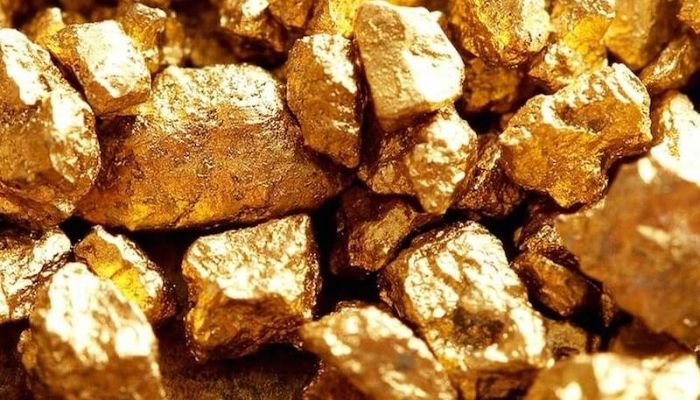
Foreign and local investors are acquiring new mining sites in Nigeria to tap from a cash-spinning sector that has remained largely under-utilised and under the radar since the crude oil boom.
“Investments, mainly from foreign companies, are taking place in the sector right now. The reason is that the mining environment is getting more attention from the government and better too,” Shehu Sani, president of Miners Association of Nigeria (MAN), told BusinessDay in a telephone interview.
Symbol Mining, an Australian publicly listed company, recently commenced mining high-grade zinc and lead in Bauchi State.
Symbol has two local Joint Venture projects— Tawny in Nasarawa State and Imperial in Bauchi State, with total tenements spanning over 500km2. The company is not particularly new as it commenced operations in 2012 in Nigeria, but it has been expanding operations recently, completing over 12,000m of exploration drilling, according to Tim Wither, CEO of Symbol Mining during the Mining Week in Abuja, earlier in the year.
READ ALSO: Will the ECB expand its bond-buying programme?
“Symbol’s strategy is to generate early cash-flow from open pit mining at the Macy Deposit, which will facilitate further exploration activities at Imperial and Tawny, and potentially expand our resource base to grow the company,” Wither said.
Also, PW Nigeria Limited is currently mining lead and zinc for Symbol Base Metals Limited at their Macy Base Metal project in Bauchi State. This project is fully mobilised and ore extraction has commenced.
“We have acquired a number of licences the majority of which are in Niger state and are currently carrying out a detailed exploration programme,” said Martin O’Boyle, director of PW Nigeria Limited, at the Mining Week.
Next is Minutor International, which is mining gold, zinc, lead, lithium and copper in many parts of Nigeria.
“Nigeria has amazing blue-sky opportunities in the solid mineral industry: from IOCG deposits to hydrothermal and epithermal gold deposits, copper porphyries, sedimentary copper deposits, high grade battery minerals including lead, zinc, lithium and graphite to name but a few,” Riaan van der Westhuizen, MD, Minutor, said in an interview at the Mining Week.
“The main challenge is security. Certain areas in the country are inaccessible to exploration crews and this has a direct impact on the speed of development of the solid mineral industry,” he said.
African Industries, which has 12 subsidiaries that operate mainly in the steel sector, now has mining sites that will enable it get raw materials directly from ore. Similarly, Mines Geotechniques Nig. Limited, an Australian firm, and Northern Numero Resources Ltd. from the UK mine gold in Kebbi State.
Moreover, Segilola Nigeria Ltd. and KCM Mining Ltd, two Australian firms, mine gold in Osun and iron ore in Kogi.
Recently, the federal government issued Nigeria’s first gold refining licence to Kian Smith Limited. The company’s licence came on the back of its participation and presentation at the economic growth and recovery plan (EGRP) Focus Labs and it is breaking ground today on a new Gold Refinery located in Ogun State.
Julius Berger is also in this game, according to industry sources.
The owner of a twitter handle @andrewfootie, who works for a South African banking group that raises capital for African focused investors, said on Twitter on Tuesday that funding for a new Nigerian mining complex will be in place by early 2019.
“Final investment Decision (FID), for an integrated mining complex for iron ore and steel in Nigeria will be sanctioned by early next year and supported by international banks,” @andrewfootie said.
Nigeria has at least 44 known mineral assets that include precious minerals, base metals, gold, iron ore, barite, bitumen, lead, zinc, tin and coal, among others. The sector lacks bankable data and suffers from state government interference.
Small-scale miners often lack funding to operate as they complain of their inability to access governments N5 billion fund domiciled in the Bank of Industry.
Just 18 of some 30 steel manufacturers in Nigeria are active, producing about 2.2 million tons a year and leaving the government with a $3.3 billion annual import bill, former Solid Minerals Development Minister Kayode Fayemi said last year.
The government is talking with companies including Russia’s Technopromexport and Ansteel Group Corp. of China to complete and start production at the Ajaokuta Steel plant.
It also plans to create a $1 billion mining exploration fund from state and private capital to improve data on Nigeria’s mineral wealth. Each exploration project will be supported with about $5 million.
Nigeria also aims to increase mining’s contribution to gross domestic product to 7 percent within a decade, from 0.3 percent in 2017.
“The new money being invested only represents two or three percent of what should be happening in this sector,” Babatunde Alatise, chairman of Lagos Chamber of Commerce and Industry Mining Group, told BusinessDay on the phone.
“The question is, how do we make artisanal miners to make up 95 percent of this sector? We do not have commodity exchange, which makes it difficult to know exactly how bankers can check international prices of solid minerals,” he added.
ODINAKA ANUDU