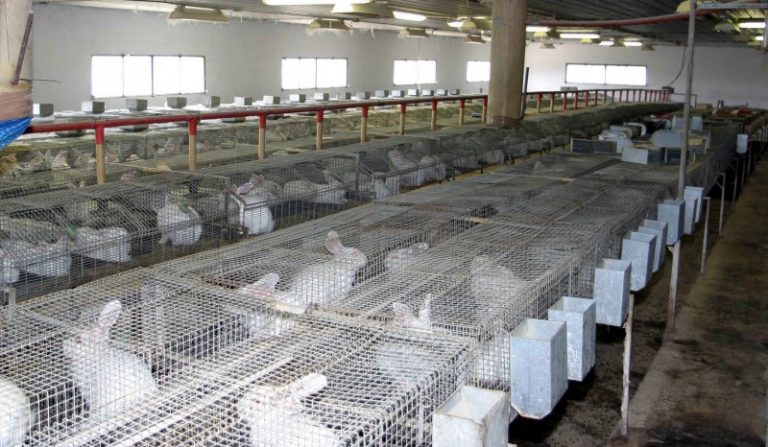
Nigeria faces a widening protein gap and rising urbanisation at a time when traditional livestock production is placing growing stress on land, water and air quality. More than half of Nigerians now live in cities. The World Bank puts Nigeria’s urban population at about 55.03percent in 2024, a shift that is reshaping how food is produced and distributed.
Against this backdrop, rabbit farming, once a marginal agribusiness, is attracting attention in cities as consumers, chefs and entrepreneurs seek healthier, lower-impact sources of meat. The appeal is concrete. Rabbits offer a low-emission, high-efficiency protein pathway that avoids adding to urban air pollution, making them a viable alternative in an economy searching for cleaner food systems.
That demand story is reinforced by a broader nutritional reality. A 2025 industry note citing FAO benchmarks puts Nigeria’s protein consumption at 45.4 grams per person per day, below the FAO minimum recommendation of 60 grams per day.
Market signals: demand growing, supply limited

Official statistics on Nigeria’s rabbit meat market are limited, but multiple field indicators highlight rising demand that local producers struggle to meet. Rabbits are appearing more frequently on menus and in speciality outlets in the southwest and beyond.
One Nigerian producer described receiving an order for 10 tonnes of rabbit meat that he could not fulfil even partially, underscoring supply constraints and the fragmented nature of current production.
Rabbit meat’s nutritional benefits help explain the interest. Peer-reviewed literature generally positions rabbit as a lean meat option and recent nutrition-focused reviews note growing global consumer interest in rabbit meat as a lower-fat protein.
Economic potential and value chain
“Rabbit production has the potential to enhance food security and fill the animal protein deficit,” wrote researchers reviewing rabbit production and livelihoods, noting that rabbit farming can support household income where market access and support systems exist.

A separate value-chain assessment argues that rabbit meat can be cheaper to produce than larger livestock because rabbits require limited space and can be raised with varied feed options including forages and agricultural by-products, which lowers the entry barrier for small farmers.
These observations matter because they frame rabbits as more than a subsistence activity. They point to a scalable pathway if formal value chains and steady offtake markets develop.
Urban farming without heavy air pollution
The environmental case for rabbits is significant. In dense cities, large ruminants are a poor fit because they require grazing land and are associated with higher methane emissions. Rabbits, by contrast, can be raised in compact hutches in backyards, community plots, or peri-urban farms.
On production efficiency, published livestock references commonly place rabbit feed conversion ratios in the low single digits under commercial conditions, broadly comparable to poultry and far more feed-efficient than beef on a liveweight basis.
For an urbanising Nigeria, that efficiency translates into a practical advantage. It supports small-space protein production without expanding land use or adding materially to local air pollution.
Challenges and risks
Despite these opportunities, obstacles remain. Consumer familiarity is still limited compared with poultry, beef and fish. Research from parts of Nigeria shows rabbit meat ranks below mainstream meats in preference surveys, with availability and familiarity shaping demand.
Trading Economics
Production is also largely small-scale and informal, with limited access to quality feed, veterinary support and formal credit. These constraints increase mortality risk and reduce productivity, making it harder for new entrants to scale.
meatscience.org
A path to mainstreaming
For rabbit farming to graduate from niche to mainstream, a coordinated approach is needed. Consumer education can expand demand. Better access to credit and extension services can lift survival rates and productivity. Organised value chains can connect producers to predictable offtake from restaurants, retailers and processors.
Nigeria’s rabbit economy is far from mature, but early demand signals, low start-up costs and adaptability to urban farming suggest a sustainable growth path. If the country is serious about closing its protein gap in a cleaner way, it will need more solutions that fit city realities. Rabbits are starting to look like one of them.