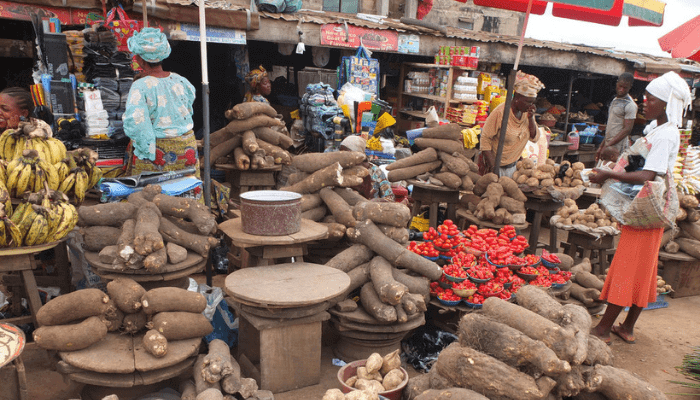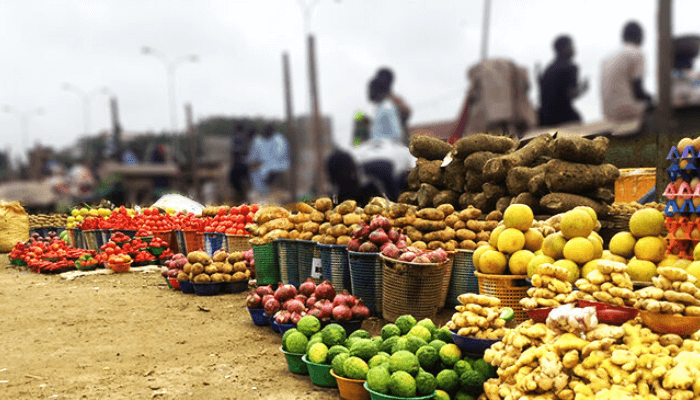
The importance of food to any nation cannot be over-emphasized. It has been known that food occupies a prominent position in the social, political, economic and cultural aspects of the World all over. Without food, there cannot be progress.
Food is very important to the rulers and the ruled. Both cannot communicate effectively with each other in the face of famine and hunger.
The ruler will be discredited while the ruled will be disgruntled. To this end, the challenge before everybody is the provision of food both quantitatively and qualitatively. This write-up is a contribution towards solving the food crisis in Nigeria.
Justification

The current ban of rice into the country through the land borders has created a scarcity of the product as the current supply is unable to meet the ever-growing demand.
The United States Department of Agriculture (USDA) puts Nigeria’s milled rice 2018/2019 production at 4.78 million metric tons, while the Federal Ministry of Agriculture puts the country’s domestic demand at 7 million MT per annum.
This shows a demand-supply gap of 2.2million MT which is insufficient for the country to feed its 200million people.
Nigeria needs to produce a minimum of 2.5 million metric tons to bridge the current gap.
Rice can be grown conveniently in Nigeria, the climate is good. It can be grown both in the forest and Savannah areas of Nigeria. The project is, therefore, technically feasible.

The project is highly profitable. The price of rice in the market is very good at the moment for the producers; hence the project is economically viable.
The potentials in investment in rice production in Nigeria cannot be over-estimated. This is why both indigenous and foreign investors are taking advantage.
Healthwise, it has also been found out that our local rice (ofada and abakalike for example) are more nutritious than the imported ones.
Production technology
The whole idea about this project is to make it an integrated one.
The raw materials (rice paddy) will be grown and processed by the prospective investors.
The target is to produce 4,000 metric tonnes of finished (polished) rice per annum.
Requirements are land (about 1,000 hectares), plant and machinery, building structures, farm inputs (seeds, fertilizer, herbicides, and insecticides) and packaging materials.
The rice cultivation process includes land preparation, planting/distribution, herbicides, and fertilizer application, harvesting, and threshing.
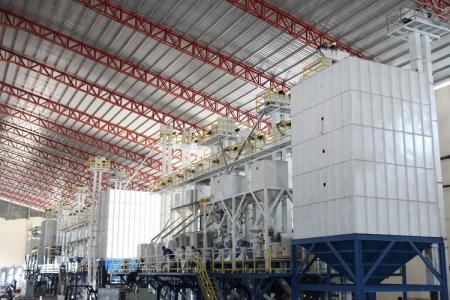
The harvested rice will later be processed in the factory. Rice processing includes parboiling, drying, de-stoning, dehauling, winnowing, polishing, and packaging.
Financial implication
The project has been estimated to cost N250,000,000 broken known as follows:
N
Farmland acquisition &cultivation: N100 million
Establishment of factory/equipment: N150 million
===========
Total N250 million
===========
The project can be founded by Bank of agriculture, Bank of Industry and Central Bank of Nigeria.
Profitability
The estimated revenue realizable by the project is about N400 million annually. Annual production costs have been put at N270 million. The annual profit of N130 million is guaranteed.
This project is therefore recommended for funding serious-minded investors can be assisted in terms of packaging to attract bank financing, project establishment, and management. Author’scontact: 08023058045,olumakindeoni2@yahoo.com
OLUMAKINDE ONI