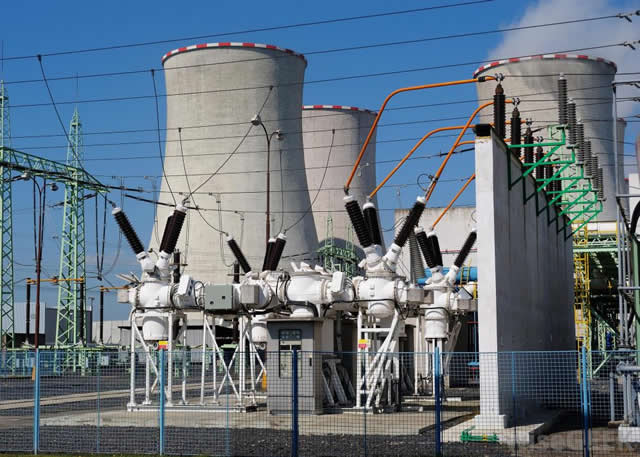
Ten years after its ground-breaking ceremony, the Independent Power Plant (IPP) in Kano State—designed as a strategic intervention to address chronic power shortages—has yet to deliver a single kilowatt to the grid.
Despite about N14 billion reportedly spent on the project, the plant remains non-operational, symbolising the broader dysfunction in Nigeria’s energy infrastructure development.
The two multi-billion-dollar IPP projects, which were kick-started in the state by the administration of Rabiu Kwankwaso, the former Governor of Kano State between 2011 to 2015, were designed to add a total of 35 megawatts of new electricity to the state power pool.
Kano is a known industrial hub in northern Nigeria, but in the past two decades has been hamstrung by incessant power outages which is fuelling unemployment and insecurity in the state.

The idea of the Tiga and IPP was first mooted by the Kwankwaso administration, along with another 6 megawatt capacity IPP project situated on Challawa Gorge, as part of the state intervention to reduce the state’s dependence on electricity supply from the National Grid.
History of the project
The groundbreaking ceremony of the Tiga Hydro Electricity Power Station, which was the first phase of the project, estimated to cost about N4.2 billion, was performed by Muhammadu Buhari, Nigerian former president, on 31st of May, 2014.
Speaking during the foundation laying ceremony, the then governor, Kwankwaso, disclosed that the first phase of the project will be completed in January 2015, while the second situated at Challawa Gorge dam, which was to gulp N10 billion, was slated for March 2015.
Kwankwaso said the two projects were estimated to cost the state government a total sum of N14.2 billion. “Both projects, with a total capacity of 35 megawatts of electricity, are being financed 100 percent by the state government without obtaining any loan and are being executed by Skipper T&D, a subsidiary of Skipper Group of India,” Kwankwaso said.

“Kano state, the famous commercial center of Northern Nigeria, like many states in the country, faces inadequate power supply, forcing public agencies, industries and private residences to depend largely on diesel-powered generators”, Kwankwaso added.
According to him, the two IPP projects were conceived with the aim of putting an end to the predicament of electricity outages that were affecting the socio-economic development of the state, which is known to be the business and industrial hub of northern Nigeria.
The former governor had equally announced that 10 megawatts of the total amount of power to be generated under the first phase of the project is to be solely dedicated to pumping water from waterworks stations to the metropolis, as well as to power the street lighting system in the metropolis.
However, when his successor, Abdullahi Ganduje came to power in 2015, he reviewed the project down to 13.2 megawatts from the initial 35 megawatts, after technical audit of the two projects, and it was noted that they could not yield the desired result, and vowed to commission the project before leaving office in May 2023, which he never did.
Governor Abba’s N4 billion loan
Therefore, it was a big relief to the residents when Ganduje’s successor, Abba Yusuf recently requested that the State House of Assembly to approve and grant him access to a loan of N4bn from the Central Bank of Nigeria for the completion of the Tiga and Challawa Hydro-electric power projects, an approval which the House has since granted him.
The move by Governor Yusuf to restart the project was borne out of the desire by most of the residents and businesses in the state to see the project completed, which is considered to have a multiplier effect on the overall economic landscape of the state.
BusinessDay’s correspondent, who visited the sites of the two projects on Thursday, 3rd of April 2025, observed that preparations are in top gear for the commissioning of the first phase of the Power Plant, which is expected to give a big boost to the ecosystem of the ancient commercial city.
If everything works according to plan, the plant, which is being developed by the Kano Hydro and Energy Development Company (KHEDCO), an agency of the state government, is scheduled to come on stream before the end of this year.
The coming on-stream of the plant, which is designed to generate an estimated 7.2 megawatts of electricity for a start, is expected to impact positively in the conservation of monetary resources being expended by the state in servicing electricity bills as it involves some key state public utility establishments.
Construction work at the Tiga Dam Independent Power Plant, sources following the project, Murtala Adamu, a water engineer, hinted that the project has reached up to 95 percent completion rate.
The IPP project situated on Tiga Dam is programmed to leverage the raw water from the man-made dam, erected on the Hadejia-Jamare River Basin.
KHEDCO, the state-owned company managing the project, is believed to have received two ‘Water Use licenses’ from the Federal Government for permission to use the water facility in the Hadejia –Jamare River Basin to drive the hydropower generation.
The company is also said to be working with the Nigeria Integrated Water Resources Management Commission (NIWRMC), an agency under the Federal Ministry of Water Resources saddled with the responsibility to regulate the commercial use of water by evaluation, inspection, monitoring and licensing operators in the water sector, to ensure the full operationalisation of the project.
The presentation of the license, according to sources, was an indication that KHEDCO has met all technical requirements to generate hydropower and transmit electricity from the plant.
Tiga Hydroelectric Power Plant station, which is located in Babaji Local Government Area of the state, whose source of water is the Kano River, with an annual water abstraction threshold (m) of 1.9 billion cubic meters, serves raw water to the Tiga dam storage reservoir.
Challawa Hydroelectric power plant station, which is located in Karaye, Kano State, whose source of water is from Challawa River, which also obtains its supply from Hadejia-Jamare River Basin, which connects several states in the North West Geo Zones of northern Nigeria.
Economic gains of a power plant in Kano
The transmission lines that will be convey power from the plant to the Challawa Water Treatment Plant is believed to have been put in place under the previous administration of Umar Abdullahi Ganduje, and transmission of the power to be generated has also been linked to another Sub-Station at Sadatu Rimi, that supply all the street lights across the state.
Some of the major economic benefits of the projects when they fully start operation were that the state would save the huge money it is currently using to buy fuel to power the street lights, as well as the treatment plants.
Any leftover energy is expected to be sold to the companies that have been suffering from electricity shortages, which has been hampering their operations, a development that translates into more employment for the people of the state.