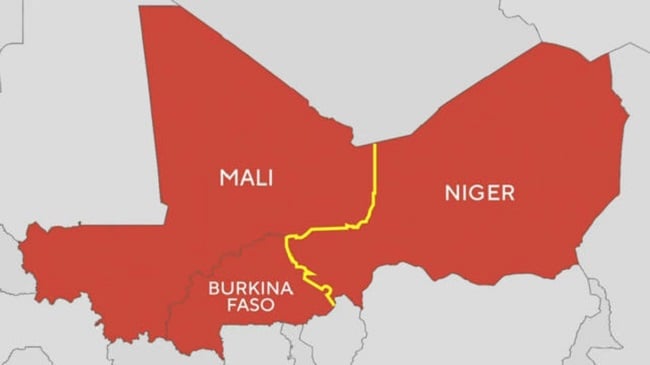
Mali, Burkina Faso and Niger have moved to tighten regional security coordination with the official launch of a joint military force, a new alliance-driven effort to confront Islamist violence and instability across the Sahel.
The force was unveiled on Monday in Bamako at a ceremony led by Assimi Goïta, Mali’s military ruler.
AfricaNews reported that the event, held at an air force base in the Malian capital, underscored the determination of the three junta-led countries to coordinate their security responses amid persistent violence linked to Islamist insurgent groups operating across their shared borders.
Read also: What to know as Nigeria pushes forward on military deployment to Benin Republic

The new force, which comprise about 5,000 troops, is designed to enable the three countries to conduct joint operations and respond collectively to security threats in the Sahel.
In January, Niger’s defence minister announced that the troops would be able to “intervene together” in areas affected by armed attacks, reflecting a shift toward a more coordinated regional military strategy.
It was learnt that at the ceremony, Daouda Traoré, Burkinabè General was officially appointed commander of the joint force.
According to the report, the force will maintain its central command base in Niamey, Niger’s capital, while drawing personnel and operational support from all three member states.
The launch ceremony was attended by the defence ministers of Burkina Faso, Mali and Niger, as well as senior military officers.

Also present were ambassadors and representatives of international organisations accredited to Mali, highlighting the regional and international interest in the evolving security architecture of the Sahel.
The report noted that the establishment of the joint force is the latest initiative under the Alliance of Sahel States, formed by Burkina Faso, Mali and Niger after their withdrawal from the Economic Community of West African States (ECOWAS).
The three governments have accused ECOWAS of imposing what they described as inhumane sanctions following recent military takeovers and of acting against the interests of their populations.
All three countries have experienced coups in recent years and continue to face serious security challenges, including attacks by jihadist groups linked to al-Qaeda and the Islamic State.