The Consumer Price Index or CPI/inflation report as we know it, aims to measure the average price of commodities paid by Nigerian consumers through consecutive review periods.
When the latest inflation report was released in January by the National Bureau of Statistics (NBS), Ijeoma Okorie, a lifestyle blogger (“voice of the people” as she is popularly known) and a graduate of law from the University of Lagos took to her page with some inflationary market realities that befall the lower and middle-income class, stating that inflation rate faced by poor households in Nigeria was far greater than those faced by the rich and was definitely much higher than the 15.63 percent published by the NBS.
In an interview with BusinessDay, Ijeoma, who is a religious follower of Jack Munroe (a popular UK food writer and poverty campaigner), gave a breakdown of these inflationary disparities by bringing us closer to some market realities which have eluded many analysts in recent times.
While discussing with BusinessDay, she asked, “Do you know why many Nigerians, especially those in the lower and middle-income class were upset with the inflation figures released by the NBS all though last year? Well, it’s because inflation hits these classes of individuals differently.”

“The system by which we measure the impact of inflation is fundamentally flawed,” she added.
She further stated that the current inflation index grossly underestimates the reality of inflation for those within the lower-income class (the poor).
Recent research has revealed that while poorer households allocate more of their budget to food and energy, wealthier households spend more on petrol and discretionary items like holidays and luxury goods/items.
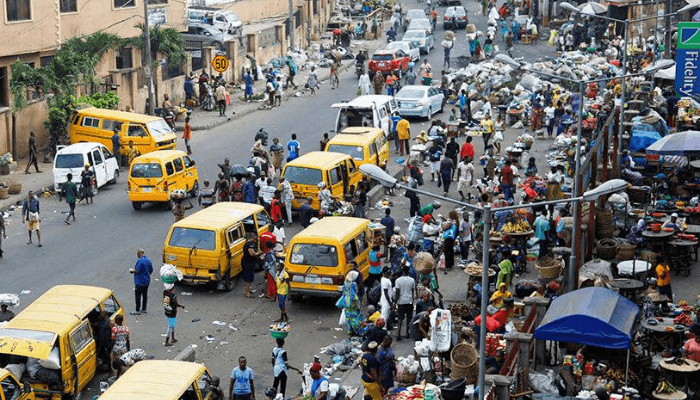
To shed more light on this inflation disparity, a recent market survey of commodity prices revealed that the price of a big bag of new onions increased by 35.7 percent to sell for an average of N44,333 compared to its former average of N32,667 in the previous month.
Read also: Futureview offers investment tips to hedge against inflation

Similarly, a big bag of dry onions now sells for an average of N57,667, representing a month-on-month increase of 21.8 percent in price.
A carton of frozen chicken now sells for an average of N19,500, which is 18.1 percent higher than N16,500 recorded in the previous month.
Also, the price of nylon of crayfish increased by 24.7 percent to sell for an average of N15,167 compared to an initial average of N12,167.
A 10kg bag of Mama Gold rice rose from N5,375 to sell for an average of N7,500. This represents a 39.5 percent increase in price compared to its previous month’s average.
A 5kg pack of Dangote pasta increased by 19 percent to sell for an average of N6,400 compared to N5,375 recorded in the previous month.
The price of a crate of eggs has surged to sell for an average of N1,800 compared to an initial average of N1,700 recorded in the previous month and a lot more within this category.
On the flip side, a recent survey of prices of meals in 4-star and 5-star hotels/restaurants revealed that the price of a standard buffet at most hotels in Abuja has remained within the same threshold in the last five years.
Prices of reservations in these hotels have increased by 6.7 percent within the same review period.
However, prices of transportation (foreign and local flights) increased by almost 45 percent last month mainly due to festive pressures.
Ijeoma in her interview stated that while these increases might look enormous to the average man, richer households, on the other hand, don’t consider them significant increases because of their high levels of income.
Esther Oye, an economic analyst and lecturer at Covenant University, stated that the major problem plaguing many Nigerian households and the Nigerian economy is the growing disparity between household incomes (which are stagnant) and the aggressive upsurge in prices of commodities and food items.
“Imagine a civil servant who has been earning N100,000 for almost eight years now and imagine how much prices of most food items have risen in the last eight years. The price difference might be closing in on almost a thousand percent increase,” she said.
“How is such a person supposed to survive in this economy? That’s why migration to the UK and US has been increasing in the last 5 years,” she added.
Taking a look at Jack Munroe’s recent twitter thread released last month it reads, “the inflation margins are always calculated to squeeze the belts of those who can least afford it, and massage the profits of those who have money to spare. And nothing demonstrates ‘inequality’ quite so starkly as tracking the prices of ‘luxury’ food against ‘actual’ essentials”
“The system by which we measure the impact of inflation is fundamentally flawed, it completely ignores the reality and the real price increases for people on minimum wages and millions more.
“But I guess when the vast majority of our media were privately educated and came from the same handful of elite universities, nobody thinks to actually check in with anyone out there in the world to see how we’re doing.
“Every time there’s a news bulletin on the rising cost of living, I hope that today might be the day that some real journalism happens and someone stops to consider those outside the bubble. Maybe today might finally be that day,” the twitter thread read.
It is both expensive and invaluable to gather really good data. But it is often shocking to realize that there are certain questions that have slipped between the cracks.
Nigeria needs to try to fill such gaps in its knowledge-space rather than stumble into them in the near future.