



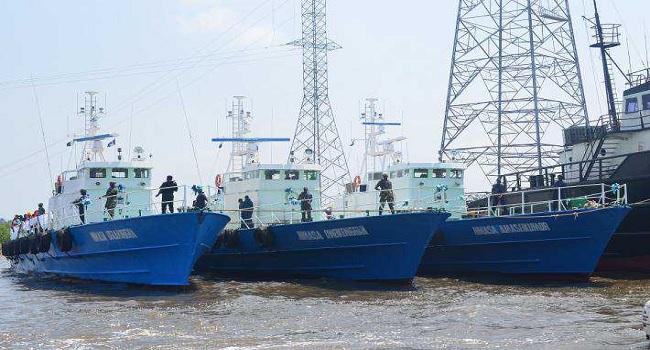
The Nigerian Maritime Administration and Safety Agency (NIMASA) commitment to enforce provisions of the Coastal and Inland Shipping Act 2003, otherwise known as Cabotage Law is eliciting some excitement among local industry operators and stakeholders.
Increased local participation in vessel building, they say, will reduce capital flight to International Oil Companies (IOC), deepen local content application, generate more employment and cut wastage that occurs when vessels are rendered redundant due to lack of patronage.
“There are billions of funds lying idle in the Cabotage Fund that should be available to vessel owners and accessing this fund will help to drive the industry,” said Henry Ojogho, managing director of Broron Oil and Gas Ltd.
Maritime lawyer, Mike Igbokwe, said that some key benefits from keener enforcement of the Cabotage law are that local operators will benefit from the Cabotage fund and increase the number of ships registered in Nigeria.

“The Cabotage fund is not being enforced efficiently, that is why many local operators complain of not accessing it,” said Igbokwe.
He added, “There is a two percent surcharge on all Cabotage contract that NIMASA collects and it is supposed to pay into that fund for the purpose of ensuring that the basis of the fund are met. The purpose is to promote indigenous ship acquisition capacity by providing financial assistance to Nigerian operators in the domestic coastal shipping.”
The Cabotage law seeks to make coastal shipping the exclusive preserve of Nigerian shipping companies by stipulating that vessels trading on the nation’s coastal waters must be owned, crewed, built and maintained by Nigerians.
NIMASA has been accused of shoddy implementation of the law as local operators say they do not get equal treatment, especially in the award of contracts by Nigerian National Petroleum Corporation (NNPC). They are often left to compete with foreign companies who have proven expertise but ship jobs and revenue abroad.
But in a meeting with the operators in Lagos recently, Dakuku Peterside, NIMASA director general, read the riot act to the IOCs.

“You must give us ample notice of vessel requirements so that we can engage indigenous operators who have the capacity to do the job instead of giving it to foreign operators,” he told representatives of the IOCs.
He said a situation where the IOCs engage foreign vessels to do jobs that Nigerian operators have adequate capacity and equipment to do, will no longer be tolerated as this has been a major bane in the development of Nigeria’s shipping industry.
“The spirit of the Cabotage Act is not to generate revenue in terms of waivers but to build the requisite capacity for indigenous players, who will in the long run generate wealth and create employment for Nigeria’s teeming population,” he stated.
Local operators who have long called for strengthening local content with keener enforcement of the provisions of the act and thorough monitoring of the operations of the IOCs, say firmer enforcement of the Cabotage law will deepen Nigeria’s maritime sector.
“It is indeed a positive development for the industry,” said Lucky Amiwero, a maritime expert, in response to BusinessDay questions, “it will create more jobs, make the industry more competitive and open new frontiers for investments.”
Some foreign operators have been accused of using agents to bid for jobs that should ordinarily go to Nigerians and when they win bids, these are transferred back to the IOC’s who then give them to their partners abroad.
“This practice negates the principle of local content laws. What government agencies can do to support indigenous operators is ensuring bidding processes are not subject to abuse, and were few operators have capacity, it should benchmark and select operators according to best practices,” said Ojogho.
ISAAC ANYAOGU




