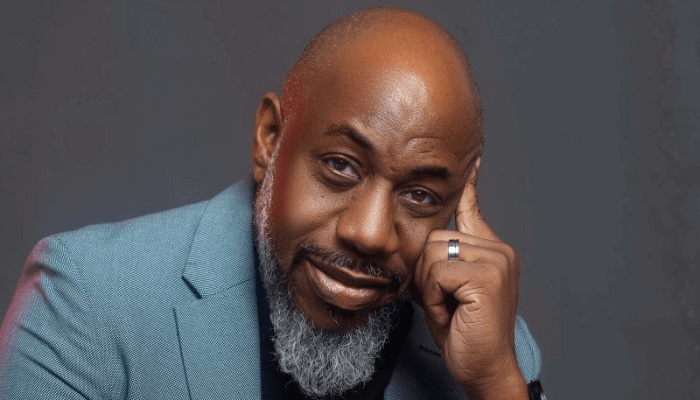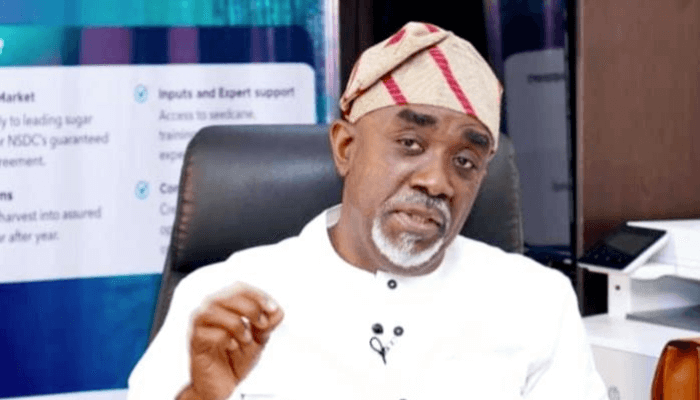
Small and Medium Enterprises (SMEs) contribute almost 50 percent of Nigeria’s GDP and provide more than 80 percent of employment, yet many still face power constraints that limit productivity and growth. This challenge affects 96 percent of Nigerian businesses that operate as SMEs and underscores the importance of continued collaboration to expand access to reliable infrastructure and competitiveness. Christian Mulamula, head of office for International Finance Corporation (IFC) for Nigeria, in this interview, spoke on the corporation’s investment trajectory in 2025 — infrastructure projects that are job-enablers — while rolling out where IFC will be investing in 2026. BusinessDay’s Wasiu Alli, Taofeek Oyedokun and Chima Chima bring the excerpt:
In 2025, IFC expanded into industrial zones, recycling, energy access and the data economy. What ties these investments together strategically?
I’ll start by giving a bit of background. Over the next decade, about 1.2 billion people in developing countries will reach working age. Today, they are between seven and seventeen years old. In Africa alone, we see 12 million youth entering the labour market every year, but we are creating only about 3 million jobs annually. That leaves a deficit of roughly nine million jobs each year.
This is why jobs sit at the heart of our development strategy. Jobs give dignity, they generate income, and they move people out of poverty. To address this, we have three pillars. First is foundational infrastructure: roads, ports, and also human infrastructure such as education, skills and training. Second is regulatory work, where we support governments in improving laws and regulations that hinder business growth. Third is financing and mobilising private capital, because the World Bank Group cannot solve these challenges alone.

Our 2025 investments follow these pillars. We invested in power projects under infrastructure; in a free zone that supports both infrastructure and manufacturing, which are core job drivers; and in an initiative focused on finance and mobilising capital. We can discuss each of these as we go.
IFC’s 2025 portfolio in Nigeria spans industrial infrastructure, the circular economy and clean energy. What did IFC deliver this year, and how do these investments move the needle for Nigeria’s economy?
Let me touch on a few examples. IFC committed a US$ 5 million revolving debt facility for Husk Nigeria, a mini-grid operator, to develop and construct up to 108 mini-grid sites, benefitting 115,000 people and businesses, with a total capacity of 5.4MW across Northern Nigeria. Electricity is the number one complaint of Nigerians. Husk goes directly to that challenge by supplying reliable power, especially to rural SMEs and women-led businesses, at competitive prices. We expect to do more of this. Manufacturing is another focus because manufacturing creates jobs. Our US$ 50 million investment in Lagos Free Zone supports more facilities so manufacturers can set up and operate. Our projections show about 30,000 direct and indirect jobs from this investment. The attached port is also a critical infrastructure that helps firms move goods and expand.
Another US$ 78 million of debt was committed to the Mohinani Recycling expansion. That investment supports both job creation through recycling operations, while also protecting our environment. Protecting our environment and addressing climate change risks are important to IFC. Even in Lagos today, the weather patterns show clear signs of changing. We also invested US$80 million in Sun King. Anyone who buys a small solar lamp or panel in the market is likely buying Sun King equipment. This supports energy access and affordability, and their pay-as-you-go model lets households finance solar equipment over time.
All these projects reflect the pillars I mentioned: jobs, infrastructure, and climate. The same focus will continue into the future. Sector-wise, we prioritise manufacturing, energy and electricity access, tourism, agriculture, health and digital access. Digital unlocks markets, even from home, but digital also requires infrastructure.

Mission 300 and DARES aim to expand clean energy across the continent. How does this translate into economic outcomes for communities and SMEs in Nigeria?
The World Bank Group set a goal to connect 300 million Africans to electricity by 2030. About 17 million of them are expected to be in Nigeria, which puts a major focus on the country. Under DARES, the World Bank provides performance-based grants to mini-grid developers. IFC provides revolving financing so these developers can build the mini grid systems. With Husk, for example, the plan is to connect around 108 mini-grid sites, which translates to roughly 115,000 new customer connections. These are real businesses that currently lack electricity. Once connected, they can operate longer hours, use POS devices reliably, or simply keep the lights on at a fraction of the cost of running generators. Electricity is a game-changer for a small trader or a rural SME. That is why we prioritise off-grid solutions alongside on-grid investments.
These projects cover different parts of the economy. How does IFC ensure that women, youth, SMEs and rural communities benefit in practice?
For us, inclusion is designed from the start. It is not an afterthought. When we work through banks, for example, we often require that at least 40 percent of the funds be on-lent to women-owned businesses or specific SME segments. We also have a strong gender team in Lagos and a new Nigeria Gender Country Program covering 2025 to 2030. Its goal is to embed gender considerations into every project. That includes developing women leaders, supporting women in renewable energy, enabling financial inclusion, and encouraging childcare businesses so women entrepreneurs can participate fully in the economy. These are deliberate metrics we monitor project by project.
Beyond infrastructure and energy, IFC is active in fintech, venture capital, private equity and the creative economy. Why are these sectors important to Nigeria’s development story?
Fintechs have transformed access to finance. In the past, you needed a traditional bank account to transact. Today, fintechs have expanded penetration across rural and urban areas. This matters because businesses run on the ability to receive and make payments. Just remember the period around 2021 and 2022 when cash disappeared from circulation. Transactions stalled. That experience showed the need for stronger digital rail, which is why we invest both in the digital infrastructure, such as towers and networks, and in the technology layer, such as payment platforms. This helps equalise rural-urban access. We also invest in venture capital funds because they can support early-stage companies with higher risk profiles.
IFC’s investments touch women, youth and SMEs. How do you ensure inclusion is not incidental?
As I said, we set KPIs from day one and track them with clients. We monitor the share of women customers, women-led SMEs, and women rising into leadership roles in our client companies. Young women seeing others lead helps foster aspiration. We support clients to embed these approaches, not as external add-ons but as part of the core business model.
Investors often cite FX volatility, regulatory uncertainty and infrastructure gaps as constraints. What risks matter most to IFC, and how do you navigate them?
Every project comes with risks. In regulated sectors like energy, you have tariff risks. There are supply chain risks, power availability risks, and of course FX risks. We structure around these. For instance, we may finance in local currency to soften FX exposure. For regulatory issues, we work with the World Bank to engage government counterparts. Sometimes we use our PPP advisory team to help structure concessions and attract investors. The goal is bankable, financeable projects. On FX specifically, we believe recent government reforms are encouraging. The naira exchange rate has moved from a low of around 1700 to the mid-1400s today, and we see increasing investor confidence in Nigeria’s economy.
Looking ahead, IFC has a $2.1 billion pipeline in Nigeria. Where do you see the strongest investment momentum in 2026?
Clean energy will continue to grow, especially under DARES with more mini-grid investments. Manufacturing will also expand because manufacturing equals jobs. Tourism presents strong opportunities that Nigeria has not fully explored. It creates jobs directly and stimulates catering, events and SME activity.
Agriculture is critical. It remains the backbone of African economies and helps Nigeria diversify away from crude oil. We invested in Johnvents, a cocoa processor, and we want to expand such opportunities.
Digital will remain a priority, both for financial access and infrastructure. Finally, human capital is essential, so expect investments in health, diagnostics and education.
At a personal level, what does IFC’s work translate into for ordinary Nigerians?
A simple example is Azura. IFC invested in the 460-megawatt plant in 2014. Today, it supplies between 8 and 10 percent of Nigeria’s grid power with about 94 percent availability. Whenever a Nigerian connects to the grid, roughly one-tenth of what they consume may be coming from that project. We also invested in two urea manufacturers, including the Dangote plant in Lekki and Eleme Indorama in Port Harcourt. Urea feeds Nigeria’s agriculture. These kinds of projects support farmers, traders, SMEs and households. They are practical improvements in daily life.