1. Introduction
Its inadequate transport and logistics infrastructure significantly hinders Africa’s economic growth and regional integration. A well-developed transport and logistics network is essential for enhancing trade, industrialisation, and social development across the continent. This paper explores the key components of an ideal transport and logistics system for Africa, including robust infrastructure, multimodal transport networks, digital transformation, sustainable transport solutions, and policy reforms. The paper argues that strategic investments, technological innovations, and regional cooperation are necessary to build Africa’s efficient, integrated, and future-ready transport and logistics system.
Transport and logistics are the backbone of economic development, facilitating the movement of goods, services, and people. In Africa, however, inefficient transport networks, poor infrastructure, and high costs hinder trade and industrial growth. According to the African Development Bank (AfDB), logistics costs in Africa are among the highest in the world, significantly reducing the competitiveness of African businesses.
An ideal transport and logistics system for Africa’s future must be efficient, sustainable, technologically advanced, and well-integrated to support economic growth, regional integration, and global competitiveness. Let us examine the critical factors needed to develop a world-class transport and logistics network for Africa.

2. The current state of transport and logistics in Africa
2.1. Challenges in Africa’s transport and logistics sector
Despite recent improvements, Africa still faces significant transport and logistics challenges:
• Poor infrastructure: Many African roads, railways, and ports are in poor condition, leading to high costs and delays.
• Limited regional connectivity: Cross-border trade is slowed by inefficient border controls and non-harmonised transport policies.

• High transportation costs: Transporting goods within Africa is often more expensive than shipping them to Europe or Asia.
• Urban congestion: Rapid urbanisation has led to traffic congestion, inefficient public transport, and pollution in major cities.
• Lack of digitalisation: The logistics sector in Africa is still heavily reliant on manual processes, reducing efficiency and transparency.
“An ideal transport and logistics system for Africa’s future must be efficient, sustainable, technologically advanced, and well-integrated to support economic growth, regional integration, and global competitiveness.”
2.2. Opportunities for growth
Africa has vast opportunities to transform its transport and logistics sector:
• The African Continental Free Trade Area (AfCFTA) offers a framework for enhancing regional trade and connectivity.
• Advancements in technology, such as artificial intelligence (AI), blockchain, and the Internet of Things (IoT), can improve supply chain efficiency.
• Public-private partnerships (PPPs) can drive investments in large-scale infrastructure projects.
3. The vision for an ideal transport and logistics system in Africa
An ideal future transport and logistics system in Africa should be integrated, efficient, sustainable, and technologically advanced. The following key areas must be prioritised:
3.1. Infrastructure development and modernisation
A well-developed infrastructure network is essential for improving transport efficiency and reducing costs. Key areas include:
• Modern highways and road networks
o Construction of durable highways connecting cities, industrial zones, and rural areas.
o Expansion of motorways and smart roads with sensors for real-time monitoring.
o Improved security along major transport routes to prevent cargo theft and delays.
• Efficient railway systems
o Development of high-speed rail networks linking African capitals and economic hubs.
o Investment in cargo rail to ease pressure on road transport and lower freight costs.
o Adoption of standardised rail gauge systems for cross-border connectivity.
• Upgraded ports and waterways
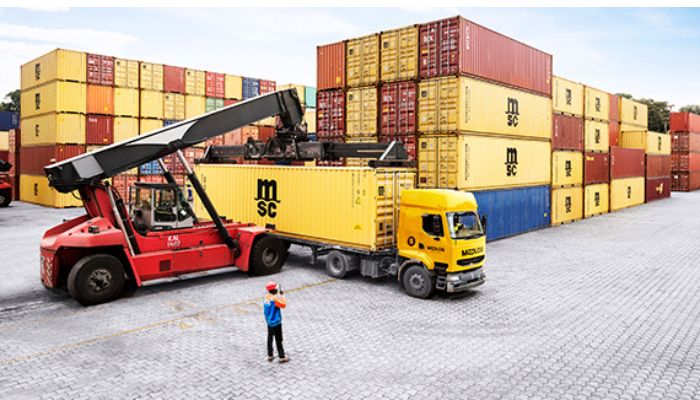
o Expansion and automation of major seaports to handle larger cargo volumes.
o Development of inland waterways to improve transport efficiency in landlocked countries.
o Implementation of digital customs clearance systems to reduce port delays.
• Advanced air transport networks
o Expansion of regional and international airport infrastructure.
o Adoption of air cargo logistics hubs to improve supply chain efficiency.
o Promotion of intra-African air connectivity through open skies agreements.
3.2. Smart and digital logistics systems
Digital transformation is critical for enhancing Africa’s transport and logistics sector. The future system should incorporate:
• AI-powered supply chain management
o Use of predictive analytics to optimise logistics planning and reduce delays.
o AI-driven demand forecasting for efficient inventory management.
• Blockchain for transparency
o Secure and transparent trade documentation to reduce fraud and corruption.
o Digital contracts and payments for faster transactions.
• IoT-enabled logistics
o Real-time tracking of shipments using GPS and IoT sensors.
o Smart warehouses with automated sorting and dispatching.
• Drones and robotics in logistics
o Drone delivery systems for last-mile logistics in remote areas.
o Robotics for warehouse automation, reducing operational costs and improving efficiency.
3.3. Multimodal transport integration
An ideal transport system should integrate various transport modes for seamless movement of goods and people.
• Standardised policies for cross-border transport
o Harmonised customs regulations to facilitate smooth trade.
o Regional transport corridors to connect economic zones.
• Efficient urban mobility systems
o Expansion of Bus Rapid Transit (BRT) and metro rail networks.
o Digital ticketing systems for seamless urban transport access.
Prof Lere Baale is the Director of Business School Netherlands International in Nigeria.