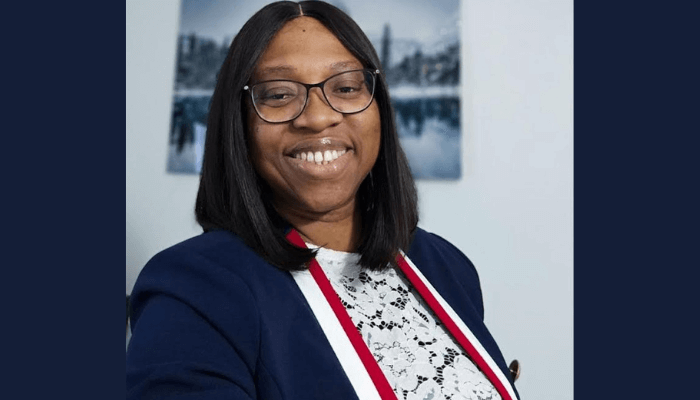
Oluchi Nnennaya Imoh is a cake artist, creative entrepreneur, and business coach based in Swindon, United Kingdom. She is the founder of iBakecake Signatures, a bespoke cake company. She runs a mentorship/empowerment programme called “Baker to Baker with Oluchi Imoh”, which helps bakers grow their skills. Since 2017, she has mentored many bakers through both virtual and on-site instruction. Gourmet Guide234, using the food journalism and tourism advocacy decided to spotlight her journey, innovations, challenges, and social impact, while stressing on her influence. She has so much to share with her generation. LYDIA EKE brings the excerpts:
You’ve had an inspiring journey — from a decorated cake artist to a globally recognised entrepreneur. Can you take us back to where it all began, and what inspired this transition?
My story has been one of dogged resilience and a winning mindset. I started out as an entrepreneur running business from the confines of her kitchen. My why and the passion behind what I do has been one of the driving forces of my journey. So, right from the start of my business, it has been a story of winning and making progress against all odds because I started out not having the basic tools and equipment, I needed for running the business to borrowing from family and neighbours and then being able to purchase mine and building a trusted and reliable customer-centric brand in the hospitality industry.
Transitioning was birthed out of the need to impact the lives of people around me, seeing that there was a need for people to be empowered and that need still exists. After relocating to the United Kingdom, it was about leveraging what seemed like a disadvantage — rebuilding from nothing — to fuel bold ideas, entrepreneurial breakthroughs, and provide unexpected solutions for the communities around me. It was a mindset shift I adopted to adapt when faced with disruption.

Many people know you for your success in baking — what personal experiences pushed you towards digital entrepreneurship and EdTech?
Empowering others, mostly women and digital tech. Baking was my first love, and it gave me a strong foundation in creativity, discipline, and entrepreneurship. But as I grew in that journey, I realised something bigger: there were so many women like me, in different locations, both nationally and internationally who had the passion and the skills, but they lacked access to the right knowledge, networks, and digital tools to scale beyond their immediate communities.
That realization pushed me to explore ways I could reach them and share my knowledge and digital entrepreneurship and EdTech afforded me that platform. I understood that while baking fed my creativity, digital technology gave me the power to multiply impact — to move from serving a few customers locally to empowering thousands globally.
For me, EdTech is not just about leveraging technology; it’s about inclusion. It’s about ensuring that women, especially those in underserved communities, can acquire skills, access opportunities, build sustainable businesses, and contribute to the global economy regardless of where they are. My personal journey from the kitchen to the digital space is proof that with the right mindset and access, anyone can transform their passion into a platform for impact. And that’s why I’m committed to using digital tech and education as vehicles to empower others and shape the future of entrepreneurship.
On Entrepreneurship and Innovation, as an entrepreneur, you’ve won multiple awards across industries. What do you think sets your approach apart from others?

What sets my approach apart is that I don’t see entrepreneurship as being limited to a single industry — I see it as a mindset. Whether it was baking, digital entrepreneurship, or EdTech, my focus has always been on solving problems with creativity, resilience, and scalability in mind. My work transcends a single industry because the core principles are universally applicable: blending passion with purpose, embracing collaboration over competition, and using technology to amplify connections that would add value to the lives of others.
I approach every project by asking: How can this not only serve me, but also empower others? How can this idea be replicated, scaled, and adapted across different contexts — from a small community to a global audience? I think accessibility, inclusion and adaptability.
Innovation, for me, isn’t just about inventing something entirely new — it’s about reimagining what already exists and making it more inclusive, more accessible, and more impactful. That’s why many of my initiatives are designed to uplift women and marginalised groups, giving them the tools to thrive in a digital-first world.
So while awards are a wonderful recognition, what truly sets my approach apart is this vision and a commitment to using entrepreneurship as a bridge between personal passion and collective progress to build solutions that outlive me because I want to leave a legacy and inspire others to do the same.
You’re passionate about bridging the skills gap in the blue-collar workforce. What gaps did you see that others missed?
Many people look at the blue-collar workforce and focus narrowly on the technical gaps — whether someone can paint, weld, sew, or bake to a certain standard. But what I saw went beyond technical skill – gaps that keep them from thriving.
First, there is a digital literacy gap. In today’s world, knowing your trade isn’t enough — you need to know how to market it online and create awareness, how to price it competitively, how to receive digital payments, and even how to connect with customers globally. Too many skilled workers are left behind simply because they don’t know how to leverage technology and integrate it into their craft.
Second, there’s a business and growth mindset gap. Many blue-collar workers are incredibly talented, but they were never trained to think like entrepreneurs. They know how to make the product well, but not how to build systems, scale operations, access funding and even impact others. Without this knowledge, they remain stuck in survival and scarcity mode.
Third, there’s a global competitiveness gap. While their skills may be sought for and appreciated locally, they often lack awareness of international standards and best practices, innovations, trends, collaboration/partnership opportunities and certifications that could make their work globally marketable and position them as globally relevant.
Where others saw just ‘labour,’ I saw untapped entrepreneurs and innovators waiting to be empowered. And that’s why my work in digital entrepreneurship and EdTech is so focused on this space: because if we can bridge these overlooked gaps, we can transform not only individual lives but also entire economies.
If we empower the blue-collar workforce with the right skills, they don’t just fill jobs; they create them. And that is where Africa, and indeed the world, will see real inclusive growth.
How do you use storytelling and digital innovation to empower entrepreneurs in practical ways?
Storytelling and digital innovation are two of the most powerful tools I use, because one connects to the heart and the other opens up opportunities.
With storytelling, I make connection with the human part of entrepreneurship. I share my own journey — from being a home baker with no resources of my own, to having limited resources, to scaling into digital entrepreneurship and EdTech and then navigating the challenges of relocating, being in the diaspora and rebuilding from scratch. When people hear not just the successes but also the struggles, the rejections and the resilience, the pains and the pivots — they begin to see their own challenges differently. Storytelling gives them permission to believe: If she could start from there and scale despite these challenges, then maybe I can too. It removes the myth that entrepreneurship belongs only to the privileged few or that entrepreneurs are super humans.
But story alone is not enough. That’s where digital innovation comes in. I translate those lessons into practical tools: online training, mentorship hubs, digital marketing strategies, and e-learning platforms. For example, I don’t just tell a baker, “You can grow globally” — I show her how to use social media to showcase her work, how to set up digital payments and how to brand herself for cross-border clients.
So, in practice, storytelling provides the connection and inspiration, while digital innovation provides the capability for implementation. Together, they create a pathway from aspiration to action and from inspiration to implementation. And that’s what truly empowers entrepreneurs: not just hearing what’s possible, but having the digital tools to make it a reality.
On “Baker to Baker with Oluchi Imoh” in which u have mentored nearly 200 bakers and still supports over 100 entrepreneurs. What impact story from this programme stands out the most for you? How were you able to mentor them and where are they now?
One story that stands out for me and deeply inspires me is of a young baker at the time who joined the programme, even though she didn’t want to. Through the mentorship, she not only grew her business but also pivoted to digital technology, which allowed her scale her business beyond just baking cakes to creating digital products to share her knowledge, skills, and passions with a wider audience, turning expertise into a valuable asset.
Today, she has transitioned from being a baker to educator who leverages digital technology for impact. She built an automated pricing tool for bakers, has written an eBook for pricing and profit, consults for other cake businesses and has a Baking business Accelerator programme. For me, that’s the ripple effect I care about — mentorship that multiplies impact.
I mentored by combining structured training, practical tasks, accountability check-ins, and digital exposure. Where is she now? She’s a role model in her community — proof that the right guidance can turn potential into global relevance.
Through our annual mentorship programme and after, I have worked with her closely over several months and years, not just on baking techniques but consulting and offering professional advice on building a brand, leveraging social media, and creating an online presence that connected with her audience.
We focused on practical strategies—storytelling to communicate her unique cultural approach to baking, digital tools to scale her reach, and mindset coaching to navigate the challenges of entrepreneurship. Today, she runs a thriving business, teaches and mentors other small businesses, and has even won funding grant for her business. Her story is a perfect example of how mentorship can transform not just a business, but an entire entrepreneurial mindset.
For me, the impact isn’t only measured in numbers—it’s in seeing these entrepreneurs gain confidence, global relevance, and the capability to scale their vision. Across nearly 200 mentees, many have gone on to launch successful brands, expand into new markets, and even mentor others, creating a ripple effect of impact that extends well beyond our programme.
How did you sustain and grow the programme to become a hub of mentorship beyond just baking?
Sustainability came from listening to the needs and pain points of the people and what helped the programme grow beyond baking was keeping the focus on people and their potential. From the start, I wanted it to be more than just teaching about techniques—I wanted to help entrepreneurs build their confidence, tell their stories, and use digital tools to reach customers. I employed simple online resources – group chat sessions, webinars, and mentorship check-ins that allowed participants to learn at their own pace while still being a part and getting support from the community.
I also encouraged them to share their journeys, showcase their work online, and connect with other entrepreneurs. That combination of practical guidance, storytelling, and digital innovation turned the programme into a space where people could experiment, grow, and support each other. Over time, it naturally attracted entrepreneurs from different sectors, creating a hub not just for bakers, but for anyone looking to scale their business and gain real-world skills. Today, it’s a growing community where people gain both confidence and capability, and where success stories keep inspiring new members.
On Challenges & Growth, every entrepreneur faces challenges. What was your biggest setback, and how did you bounce back from it? For others like you, what is your word to them?
One of the biggest setbacks I faced was early on, when I wanted to build a website to showcase my business and reach a wider audience—but despite the money, time, effort, and resources I invested, it never saw completion. It was frustrating because I knew that having a strong digital presence was crucial for scaling globally, yet it felt like a door kept closing.
I had innovative ideas and a clear vision of what I wanted to accomplish with that, but it was a failed project.
I bounced back by shifting my focus to what I could do immediately: leveraging social media, digital platforms, and online communities to share my story, connect with customers, and test ideas. I also sought guidance from mentors and peers who had faced similar challenges, learning to be resourceful and persistent even without a website in place. Over time, these actions built visibility, credibility, and eventually laid the foundation for a fully functional platform.
To other entrepreneurs facing setbacks, my encouragement is – don’t let failures stop your progress. Focus on small, consistent actions, use the tools you have, and let each challenge teach you. Persistence, progress and adaptability are more powerful than perfection.
Also, setbacks don’t define your story; they refine it. Every challenge is a classroom — if you pay attention, it equips you for the global stage.
You’ve shifted industries successfully. What advice do you give to entrepreneurs considering a pivot in their careers?
A pivot is not a sign of failure — it’s a sign of evolution. And it doesn’t mean you have lost your passion or vision. My advice is to treat pivots strategically, not emotionally. First, ask yourself, “What skills and experiences from my current journey can I leverage and build on in the new space?” because your skills are transferable.
For me, the discipline, creativity, and resilience I built in baking became my foundation in digital entrepreneurship and EdTech.
Second, prepare to start as a learner again — humility is key. Keep an open mind and be ever-ready to learn, especially with settling into a new environment or being exposed to knowledge or practices you never knew existed. Finally, embrace technology, don’t resist it because it allows you to make transitions smoother and be more visible globally.
A pivot done with purpose can position you for opportunities far greater than where you started.
On EdTech & the Future of Work, you talk about reimagining skills, work, and enterprise in the digital era. In practical terms, what does the future of work look like in Nigeria and Africa?How easy or difficult is it for Diaspora to pull through in the midst of stiff opposition?
The future of work in Nigeria and across Africa is being redefined by digital technology and entrepreneurship. We’re moving toward a world where talent isn’t confined by geography—people can learn, collaborate, and scale businesses entirely online from the comfort of their homes. Skills in digital literacy, innovation, and problem-solving will be as critical as traditional qualifications, and platforms for learning, mentorship, and global networking will be the gateways to opportunity.
For diaspora entrepreneurs, the path can feel steep because of market barriers, low social capital, discrimination, limited local networks, or skepticism. But the silver lining is that digital tools and global connectivity create unprecedented access. Those who can combine creativity, digital capabilities, and authentic storytelling are able to break through opposition and create impact across borders.
In practical terms, the future of work rewards resilience, adaptability, continuous learning, and the ability to turn ideas into scalable solutions. My advice to diaspora entrepreneurs is to see the strength in their stories- that’s their superpower, embrace technology, focus on building real capabilities, and persist—because your value isn’t limited by location; it’s amplified by how effectively you connect, innovate, and deliver globally.
With rapid technological change, how can blue-collar workers remain relevant and competitive globally?
Sustained relevance for blue-collar workers will depend on three things: upskilling, adaptability, and visibility. First, upskilling — learning how to integrate digital tools into traditional crafts, whether it’s using mobile apps for bookings or learning e-commerce. Second, adaptability — being open to new methods, materials, and global standards. Third, visibility — leveraging platforms like social media to showcase skills to a wider audience and creating awareness. Here’s a simple and memorable framework to adopt for competing globally: STACK.
S — Skills stack, not single skill.
Blend craft mastery with digital fluency, for example, truck drivers in transportation and logistics using advanced GPS to provide directions, real-time traffic and weather updates. Don’t do basic, stack skills to boost your profile.
T — Trusted, portable credentials.
Move from time-served to outcome-proven. Short, stackable micro-credentials (safety, quality, specific equipment) plus recognition of prior learning make skills visible across borders. Think digital badges, verification via reputable registries or certifications, so a scaffolder in Lagos, a solar installer in Nairobi, or a machinist in Manchester can prove competence to any employer—fast.
A — Augment with technology, don’t replace the craft.
Use AI as a co-worker not a competitor. Embrace technology not as a threat, but as an opportunity to master new, valuable skills and increase your craft’s power and productivity. The rule of thumb: automate the paperwork and pattern-finding; keep the human judgment, safety, and customer trust.
C — Customer and human strengths.
What travels across every market is reliability, accessibility, safety culture, communication, and problem-solving under pressure. These “power skills” lift wages, reduce callbacks, and make small shops and solo businesses look world-class. Every worker should be able to explain to their buyers, upsell ethically, and document work with photos/video for transparency.
K — Known reputation online.
Treat your portfolio like your passport: geo-tagged job photos, before/after videos, safety record, credentials, and client reviews. Build a digital trail. Publish “how I solved it” micro-case studies on LinkedIn, YouTube Shorts, or trade forums. Visibility turns local skills into global opportunity.
The world is no longer just about what you do; it’s about who knows you do it. If blue-collar workers embrace these shifts and adopt this framework, they will not only remain relevant but also become competitive players in the global economy.
How do you see education technology shaping entrepreneurship over the next decade?
EdTech will be one of the biggest engines of entrepreneurship in the next decade. The reason is this – it would break the monopoly of opportunity by providing platforms for the transfer of knowledge, enabling mentorship, and creating markets in the hands of anyone with a smartphone who wants to make a positive impact through education.
On Leadership & Social Impact, you’ve volunteered with organisations supporting women, children, and vulnerable communities. How has this shaped your vision as a leader?
Volunteering with organisations supporting women, children, and vulnerable communities has taught me that leadership is not just about title—it’s about influence and impact. When you work with people at their most vulnerable, you quickly learn that solutions must be human-centred, not just well-designed on paper. For me, it’s about meeting people where they are and empowering them to be better.
My vision is simple: leadership that lifts people, connects ecosystems, and uses technology as a bridge for social impact across borders.
What role do you think entrepreneurs should play in driving social impact, beyond profit-making?
A mantra for me as an entrepreneur has always being to look beyond measuring and defining success by profit alone or the amount of money in your account. In a world where we are facing climate change, youth unemployment, widening inequality gaps, poverty and many other global challenges, entrepreneurs must see themselves as builders of solutions, not just businesses.
For me, the real role of entrepreneurship is threefold:
One- Solve real problems. Whether it’s using EdTech to close the skills gap, or applying innovation to empower blue-collar workers, entrepreneurs should create value through their craft that improves lives as much as it creates revenue.
Two- Model inclusive growth. The best businesses are those that lift communities and gives vulnerable groups the access to opportunity. That’s where social impact becomes sustainable.
Three- Bridge local and global ecosystems. As a diaspora entrepreneur, I’ve seen how ideas birthed in other countries can scale globally, and how the UK—with its thriving innovation and social enterprise ecosystem offers the perfect platform to connect these models to international markets.
Profit is important, but the real legacy is in how you use your platform to empower others, build resilient communities, and create solutions that travel across borders. That’s the kind of impact I want to drive—linking grassroots innovation with global opportunity.
Let’s look at your personal side & vision, you’re writing your debut book — what inspired you to put your journey and insights into writing?
The book was born out of a simple conviction: stories have power. So I wanted to document my journey to serve as a springboard for others because personal stories shift mindsets and spark change. Over the years, I’ve lived the realities of building my business from ground up with limited resources to a brand people love and trust, leaving all that behind and starting again from scratch as a diaspora entrepreneur.
With my book, I hope to achieve:
– Representation. Too many entrepreneurs, especially from Africa and the diaspora, don’t see their struggles or resilience reflected in mainstream narratives. Our stories are not heard so I wanted to document that journey—how what looks like disadvantage can actually become a superpower.
– Impact at scale. Not everyone will sit in my workshops, watch my live sessions on social media or hear me speak at events, but a book can travel across borders, languages, and generations. It becomes a portable mentor that would guide the next entrepreneur, student, or professional who is navigating uncertainty.
My vision is that this book will not just tell my story, but serve as a blueprint showing how resilience, digital tools, and inclusive leadership can turn setbacks into platforms for global relevance.
When people think of Oluchi Imoh in 10 years’ time, what do you hope they remember?
I hope they remember me as someone who left footprints in the sands of time, who built bridges — between local and global, between the less privileged and opportunities, between traditional industries and digital futures. Not just as a successful entrepreneur, but as a catalyst who made others believe in themselves.
I want to leave a Legacy about lives transformed and impact made. If in 10 years people can say, because of her, I dared to try, that’s worth it.
What keeps you motivated on tough days?
My why. In the end, what matters to me is living out God’s purpose for why He created me.
My husband. He is my number one cheerleader and brand ambassador.
My kids. They are my motivators and accountability partners. “Mummy, you have not been recording videos for your YouTube channel. Why?”
My why isn’t about me alone — it’s about the people I serve. A message from a mentee who finally made their first sale, a photo of a baker who revamped their brand and is now getting media mentions, someone who was able to sell their digital products from a mention on my page or seeing someone in the diaspora use our resources to start selling back home — those small human wins snap me out of worry and refocus me on impact.
For young entrepreneurs listening or reading this, what’s your single most important piece of advice?
Solve a real problem for real people and share your impact stories. That’s the core. Everything else follows from whether people actually value what you offer.
And a quick note for diaspora or globally-minded founders: your cross-cultural experience is an asset, maximise it! Use it to test ideas, translate lessons, and tell that story clearly. And remember: consistency, not perfection, builds credibility. If you solve something people care about and keep improving, relevance and scale will follow.
Don’t wait for perfect timing; start with what you have, where you are, and grow from there. The world doesn’t just need more businesses — it needs entrepreneurs who solve problems, create value, and leave footprints of impact. Be that kind of entrepreneur.