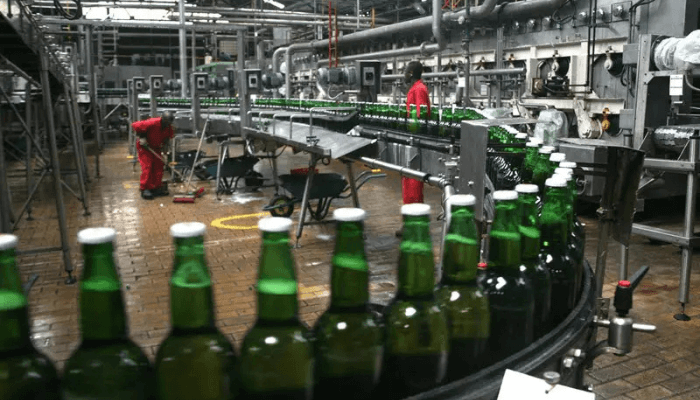
Affiong Williams, founder and CEO of ReelFruit, one of Nigeria’s biggest food companies, says her company’s resilience through Nigeria’s economic turbulence is driven by a long-term strategy, which includes product diversification, and a clear understanding of its market
Williams, speaking at the BusinessDay CEO Forum in Lagos, reflected on how the fruit processing company, now in its 13th year, has navigated multiple “boom and bust cycles,” particularly amid naira volatility and inflation shocks.
“There’s been a lot of resilience, a lot of surviving and holding on,” she said. “Our staying power gave us the chance to see the remarkable opportunity in processing fruit in Nigeria.”
Founded after Williams returned from South Africa, ReelFruit was inspired by a desire to create jobs in a high-impact sector.

After research and inspiration from former agriculture minister Akinwumi Adesina, she settled on dried fruit, an underdeveloped segment in Nigeria but one with a lot of global potential.
Read also: Market understanding, refocusing, others key sustaining businesses in tough times – CEOs
“When I moved back, someone told me you can’t build a scalable food business if you’re not selling a N100 product,” she recalled. “That used to haunt me, but it turned out to be one of our biggest advantages.”
Targeting price-sensitive consumers became a safety net as Nigeria’s economy faced repeated currency devaluations.
The company’s entry-level product remained accessible, helping ReelFruit retain market share even when costs rose sharply.

“Because we were selling to the most resilient target market, we were able to recover from different volatile situations,” she said.
As inflation accelerated and the naira weakened, ReelFruit doubled down on diversification.
The company expanded its manufacturing to serve multiple segments including retail consumers, industrial buyers, and export clients.
“That diversification has become our hedge,” she said.
“We produce for different market segments, and that has helped us stay afloat and continue to grow.”
Today, ReelFruit’s products are sold in over 1,000 stores across Nigeria, and the company is expanding exports and supplying local industries, part of its push toward import substitution and deeper market integration.
But Williams notes that long-term stability will largely depend on Nigeria’s macroeconomic environment.
“Whatever we invest now, if those calculations change suddenly, it’s difficult to recover at scale,” she said.
“We’re hopeful for a period of macroeconomic stability that will encourage real growth, not just survival.