The National Agency for Food and Drug Administration and Control (NAFDAC) raised an alarm on the dangers of artificial fruit ripening during the flag-off of the agency’s media sensitisation workshop recently.
Adebayo Adeleke, the founder of Supply-Chain Africa, also took to social media recently to raise awareness about the harmful effects of using artificial ripening methods on produce like bananas, watermelons, and tomatoes.
In his tweets, Adeleke emphasised that food poisoning isn’t merely a stroke of bad luck—it’s a serious food security issue.
In an open market, amidst the usual bustle, a BusinessDay correspondent overheard a conversation between two women—one selling raw food and the other selling fruits—discussing how they quickly ripen bananas for faster sales.

Curious, the correspondent engaged in a conversation, and one of the women identified as mama Theresa, revealed that many banana sellers use carbide, a substance known for its carcinogenic properties, to ripen the fruit artificially.
Further investigation revealed that this practice is widespread across the country.
Read also: Five ways farmers can naturally preserve grains
Here are three simple ways to spot naturally ripened bananas and watermelons:
Taste
When it looks all ripe on the outside and tastes sour on the inside, you might be dealing with an artificially ripened banana, Adeleke said.

Naturally ripened bananas are often sweet and have a fruity smell. Similarly, naturally ripened watermelons are sweet and juicy according to NAFDAC.
These watermelons (artificially ripened) also feature a uniform color and sometimes black patches. To speed up growth and enhance sweetness, chemicals like carbide, lead chromate, methanol yellow, and sudan red are often used in the process, Challa added.
Texture/Color
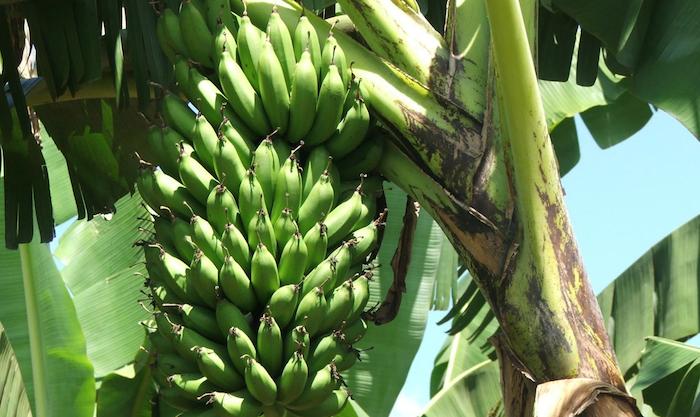
Naturally ripened bananas typically have a dark brown or black stalk, are slightly soft, and offer a rich, sweet flavor. The skin is a deep yellow with uneven black or brown spots scattered across it, signaling its natural ripening process according to NAFDAC.
On the other hand, artificially ripened bananas are often flawless, with a bright, uniform yellow skin and a green stalk in the early stages. One distinctive feature of artificially ripened bananas is the uneven texture: certain areas may feel soft, while others remain firm, says Challa.
This inconsistency occurs because some parts of the fruit are exposed to chemicals, while others aren’t, Challa noted.
Similarly, experts from the National Watermelon Promotion Board recommend looking for a creamy yellow spot on the underside of the watermelon, known as the “field spot.” This marks the area where the watermelon rested on the ground and ripened naturally in the sun, indicating it is ripe and ready to eat.
Naturally ripened watermelons boast a rich, deep red color and a sweet, juicy flavor, while artificially ripened ones tend to have a bright red hue and a waterier, less flavorful taste according to NAFDAC.
Artificially ripened watermelons are often injected with bright red dye to mimic a ripe appearance, as they tend to lack the deep red color of naturally ripened melons, Kumari Challa, a food scientist noted.
Fruit test
Another quick test involves placing the fruit in water: naturally ripened bananas will sink, whereas artificially ripened ones will float, as they’re still immature according to Challa.
Similarly, A ripe watermelon produces a distinct hollow sound when tapped, often described as a “plunk,” which is deeper and more resonant, Challa noted.
In contrast, an unripe watermelon gives off a higher-pitched sound, while an overripe one emits a dull “thud,” signaling a lower pitch.
The fruit test methods do not have a scientific base but have been used by fruit experts to determine naturally ripened bananas and watermelons according to Challa.