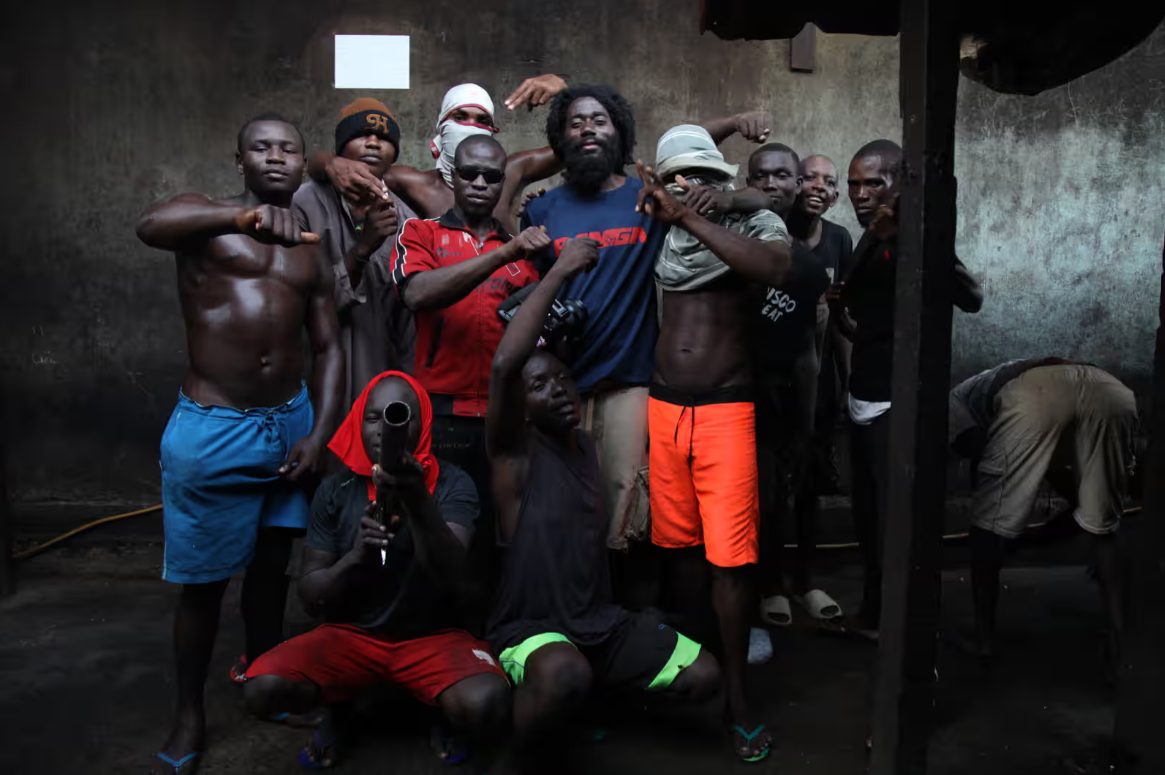
In Cameroon’s port city of Douala, a battered van pulls up to the curb. Music blasts from its speakers, and within minutes, the air is charged with the raw energy of freestyle rap. This isn’t just a publicity stunt. It’s Jail Time Records on the move — a mobile recording studio scouting talent from the streets and giving young people something Nigeria’s multibillion-naira music industry too often overlooks: direction.
Founded in 2019 inside Cameroon’s toughest prison, Jail Time Records began as a rehabilitation initiative, helping inmates discover purpose through music. Fast forward five years, and it’s evolved into a full-blown talent discovery project — one that’s now catching attention across borders, including in Burkina Faso.
But perhaps the biggest lesson lies even closer: Nigeria, home to Afrobeats megastars and global music festivals, could learn a lot from this low-budget, high-impact model that fuses social impact with creative enterprise.
“Music gives me a certain freedom,” says Diblaq, a 21-year-old Douala native who stumbled into Jail Time’s orbit through one of its street freestyle sessions. “My environment isn’t really favourable to my growth, but now I have access to a studio for free. I can express myself.”

This is not charity work dressed up as music. It’s a deliberate investment in potential — particularly from communities where the risk of sliding into crime is just one misstep away.
In Nigeria, where youth unemployment hovers stubbornly above 30%, and music is one of the few ladders out of poverty, most talent development still revolves around luck or connections. Recording sessions cost money. Studio time is precious. Without the right plug, many aspiring artists are locked out before they ever hold a mic.
Contrast that with Jail Time’s model: take the music to the people, not the other way around. Set up in “unfavourable” neighbourhoods. Don’t wait for talent to climb the ladder — build the ladder.
Steve Happi, co-founder of Jail Time Records, is clear about the mission. “The only older brother figures they have to look up to are mostly drug dealers,” he says. “Our goal is to put up a hand and say, ‘We can go in another direction too.’”
In Nigeria, where police crackdowns and overcrowded prisons tell a grim story about youth crime, the music industry has rarely positioned itself as a frontline responder. Talent shows and TikTok challenges may make for good PR, but they don’t substitute for consistent engagement with at-risk youth.

Imagine a model where labels and streaming platforms — flush with profits from global hits — deploy mobile studios to Ajegunle, Mushin, or Sabon Gari. Not for a one-off PR splash, but as long-term A&R scouting combined with mentorship. Imagine if part of the over N5 billion that the Nigerian music industry generates annually were reinvested into grassroots music education, street studios, or community listening hubs.
Jail Time’s story also reminds us that rehabilitation and reinvention go hand-in-hand. One of its breakout artists, KMB, first encountered the project while imprisoned as a teenager. Now 21 and out, he’s trying to stay clear of the path that landed him behind bars.
“It’s difficult to find work and stay out of trouble,” he says. “But this project helps me pursue my passion and avoid going back to my old demons.”
The success of Jail Time Records isn’t just about what happens behind the mic. It’s about building a structure that believes in second chances, and in spotting talent not just when it’s trending, but when it’s struggling.
That’s a challenge — and an opportunity — the Nigerian music industry can no longer afford to ignore. If Cameroon can find stars behind bars, surely Nigeria can do more to find them before they get there.