In this interview with BusinessDay’s Eniola Olatunji, Ayo Odunlami, and Chisom Nwangwu, tax partner Peter Nwofia of Forvis Mazars, breaks down the shift in Nigeria’s Personal Income Tax (PIT). He highlights the integration of Capital Gains Tax (CGT) into the new Nigeria Tax Act, clarifies common public misconceptions, and explains how the digitisation drive aims to formalise and fairly tax Nigeria’s vast informal sector.
Give a brief overview of what the new personal income tax is about.
The personal income tax by January 1, 2026, would no longer be contained in the Personal Income Tax Act; it would be included in the Nigeria Tax Act.
Personal income tax is a tax that is administered on the income of individuals, partnerships, trustees, families, and estates. It deals with income earned by individuals, sole proprietors, joint ventures, businesses, and people that are not limited liability companies or PLCs.
How would the personal income tax be deducted going forward, and would it be directly from employers?
Personal income tax will still be administered the way it is currently administered. We need to be clear that what has always been designated as income will continue to be designated as income with a few additions, like capital gains.
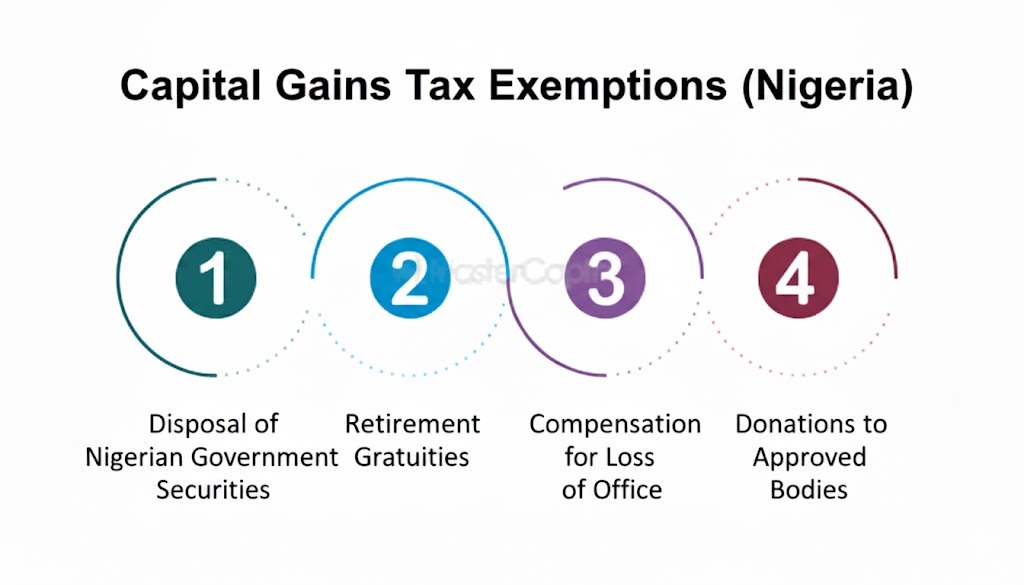
Capital gains were not initially classified under personal income tax. It was under the Capital Gains Tax Act, but now, capital gains have been brought into it. If you earn it as an individual, it becomes part of your total income. If you earn it as a company, it becomes part of your total income as a company. Your employer has a responsibility for charging the personal income tax, collecting that from your income, and then remitting it on your behalf to the tax authority. Which is actually the tax authority where you live, not where you work.
If a person lives in Lagos but runs a small business elsewhere, which state collects their personal income tax? And if the business isn’t incorporated, does that mean they do not pay company tax but are taxed only on the profits they earn?
One of the problems small businesses have is a lack of structure in their businesses. Your business is different from you. We need to ask you, do you get paid by your business? If you earn income from your business, then your personal income tax will go to Lagos, where you live, but if you do not earn income from your business, that means you have not structured it to say, This is the income I earn or my salary.
Then what gets taxed is the profit of that business, which would be paid to where the registered address is. In a case where the person earns a salary from the business, the salary the person is paid by the business is a deductible expense. The business does not pay tax on the whole income; it pays tax on the chargeable profit. They would have taken note of expenses, incurred even the payments made to the owner, for the proprietor, the employee, and what is left of it is subject to income tax.
What if I win something? Will it be taxed?
When you win something you’ve worked for, it. If you receive allowances, say gifts from your brother or mother, these are not income; they are not what you earn from employment, business, or investments. They are not benefits you get because you’re working; therefore, they are not income, and are not subject to income tax.
If I win an essay competition and the prize is one million, would that be taxed?
You would pay tax. You worked for it. It is the income you earn from doing a specific service.
What are some misconceptions you’ve heard about the new tax, especially the personal income tax?
Some misconceptions I’ve heard are, if there’s money in your account, everything will be taxed, if you receive a salary and you transfer it to another account, you will be taxed, and then when you receive money from your friends or family outside the country, you’d pay tax on this money, which is not correct. It is easy for people to miss out some of these things as benefits they earn, but then benefits you have, they may not be cash, but there are benefits you get as a result of being an employee of a company that are considered as income for the purpose of calculating income tax.
The personal income tax rate is progressive. There are speculations that people within the 15 percent to 18 percent bracket pay less coming from the following year. Is that how it’s likely to look?
We have a progressive tax system when it comes to personal income tax, which is a lot different when you talk about company income tax. For PAYE the rate has changed. After you’ve declared your total income, the next step is deductions and reliefs. So some old deductions still stay, relief deductions that can be found in Part Seven deductions. We had the consolidated relief allowance (CRA), but from next year there is no CRA. The additional thing that has come in is rent relief. So you take out rent relief and then you pass it in. Whether people who are between 15 and 18 percent pay more, depends on the income and that may not be enough to know or say who pays more. But if you earn more, you will pay slightly more at the same level. If you earn a lot more, you would astronomically pay more.
Can you walk us through how small businesses and people who work in the informal sector are going to be taxed?
The first step is to have a law so that when people do not comply, you tell them, “You’ve not complied with something.” The next thing is, how do we make it work? The formalization of the informal sector is important. Another thing the committee has done is to see if there can be an exchange of information; What I see them doing is if we can identify you using your BVN or NIN and then create a TIN for you, it is possible that there could be a check where we pick on this particular individual, see if funds are coming into that account and see if these funds are income. If they are income, have taxes been paid? If taxes have not been paid, they will be paid.
What do you think about tax digitization? Do you think this is going to be a much safer and transparent method? Can the government lend its assistance, and how can users adopt this technology that will be used to tax them?
I think one of the things that should be done is informing people, helping people understand, because you can never over-inform people when it comes to taxes. But then, for automation, I think we should find innovative ways of getting the accurate income earned by people in the informal sector, or even helping people in the informal sector make a self-declaration of their income easily.
You mentioned something at the beginning of the podcast about CGT and how it affects personal income tax and also withholding tax, like how they affect your personal income tax
The Capital Gains Tax Act forms part of the income tax. So, as an individual, if you have disposed of or sold an asset, the income would be embedded as part of all your gains. And then it’s passed through the tax band.
The gain is embedded into and then passed through the tax band, and then what can it do? It can move you, it can really move you from a band 15 percent to 18 percent or 18 to 20 percent.
Then the other point of withholding tax, like you rightly said, is an advanced payment of income tax. So, for you to pay withholding tax, the first thing is to confirm that you are eligible to pay income tax, because if you’re not eligible to pay income tax, you can’t pay withholding tax, right? So that withholding tax has been taken from your income, the customer who is paying you for his service, or the employer, or whoever is paying you that personal income, that withholding tax will be used to offset your final tax at the end of the day.
What would you like people to know? And what country has the best global practices for tax that we can look up to? What metrics can we use to measure?
I would say that tax revenue is sustainable. We need to approach it with a different mindset. If you have new laws and they’re administered with the old mindset, you will be sabotaged. You also need to ensure that personnel are trained enough to approach taxes properly. The people we should emulate are the older countries, usually, people with a very complete set of tax laws are the EU, European Union. In Africa, Kenya, Rwanda, and South Africa are doing well. If we can be fairly transparent in our dealings and automate what we can, then we would have gotten closer to the ideal tax system that we want in Nigeria.