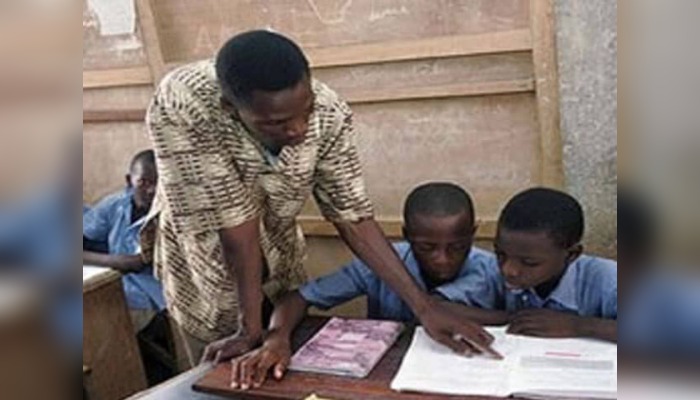
At the break of dawn, the school bell rings, but almost no one comes, and it was not because they do not like to learn, but for the fear of their lives and poor learning conditions.
In the Gidan-Bijimi community of Bwari Area Council, the LEA Primary School had only 12.5 percent of pupils attend classes as insecurity rages, amidst inadequate infrastructure.
In some parts of Abuja, Nigeria’s seat of power, fear, displacement, the constant threat of attacks and poor learning environment have turned education into a gamble, exposing the devastating cost of insecurity on children’s futures.
This tales of the Local Education Authority (LEA) Primary School in Gidan-Bijimi village, Kawu ward of Bwari Area Council, where the poor state of primary education continues to deteriorate as only 17 out of the 136 (12.5 percent) of the pupils enrolled in the school attend classes, reflects the travesty faced by Nigerian youngsters in pursuit of learning.

Most parents would rather keep their children at home than risk losing them to kidnappers. BusinessDay earlier reported how the federal government sent several students home as the pang of insecurity deepens across the country.
Beside the insecurity crisis, the school had dilapidated classrooms with no windows, and doors, while some of the ceilings were seen dropping.
Isaiah Ogundele, a teacher, emphasised that in a situation such as Nigeria is now, safety should be prioritised over education.
“Consider safety first, take your child to a school that is located in a safe environment, because when there is life, there is hope,” he said.
Read also: Senate summons finance, education ministers over collapse of $30m Safe School Initiative

As a way out of the wood, Ogundele advocates home school and online learning system where parents can enroll their children from the comfort of their homes.
This is obviously not the best of time for Nigeria bearing in mind that the strength of any nation lies in the quality of its education.
A 2025 report focusing on states such as Katsina, Zamfara, and Niger found that insecurity (banditry, kidnappings, communal conflict) has forced school closures, displacement of families, and a mass exodus of teachers and students.
Before then, a UNESCO report revealed that over 20 million Nigerian children were out of school, the highest number globally.
With the surging rate of insecurity and schools being shut down, the country will continue to lag behind in learning, especially in the northern part of the country.
Experts emphasised that for effective teaching and learning to take place, there must be a good classroom environment. They maintained that poor building conditions such as broken ceilings, dilapidated furniture, and blackboards make students feel negatively about learning.
According to a 2023 assessment of the “Minimum Standards for Safe Schools” in Nigeria, on average states meet only nine out of 21 safety/infrastructure standards.
Less than one in five schools performs well overall; only ~14 percent meet basic safety requirements such as perimeter fencing and lockable gates.
Many Nigerian schools still lack basic facilities such as toilets, libraries, science labs, potable water, or adequate classrooms. In some situations, classes are held under trees or in makeshift shelters.
Chris Nmeribe, a teacher in Lagos said that a good classroom environment is very important for learning.
“Good sitting posture will facilitate good assimilation during the lessons. Classrooms with iron sheets on top and no ceiling would make students uncomfortable, especially in the afternoon when the weather is hot,” he said.
Research has shown that good furniture, writing boards, buildings, classrooms, and other education infrastructure are crucial elements of learning environments in schools.
When students do not have access to adequate facilities, it can lead to a lack of motivation and a fragmented education experience, as noticed in Abuja.
Nigeria is struggling to develop its economy simply because those the governments at various levels have failed to provide the citizens with quality education.
Jessica Osuere, the chief executive officer at RubiesHub Educational Services, pointed out that the underlying problem in the education sector include issues such as inadequate funding and infrastructural shortage, among others.
Many schools, she said, particularly in rural areas, continued to struggle with inadequate infrastructure, poor learning environments, and a lack of resources.
The question remains, if the government cannot provide basic education and security for the citizens, which is meant to be a fundamental right, what else can it provide?