Small businesses are the backbone of Nigeria’s economy, contributing about 48 percent to gross domestic product and accounting for more than 80% of jobs, according to government and industry estimates.
Across the country, micro, small, and medium enterprises make up about 96% of all businesses, driving exports, local production, and income growth, data from the National Bureau of Statistics (NBS) show.
Yet many struggle with limited access to funding, weak infrastructure, and skills gaps. At the community level, institutions like Ajegunle Business School (ABS) are stepping in to help close those gaps by training entrepreneurs to build sustainable businesses.
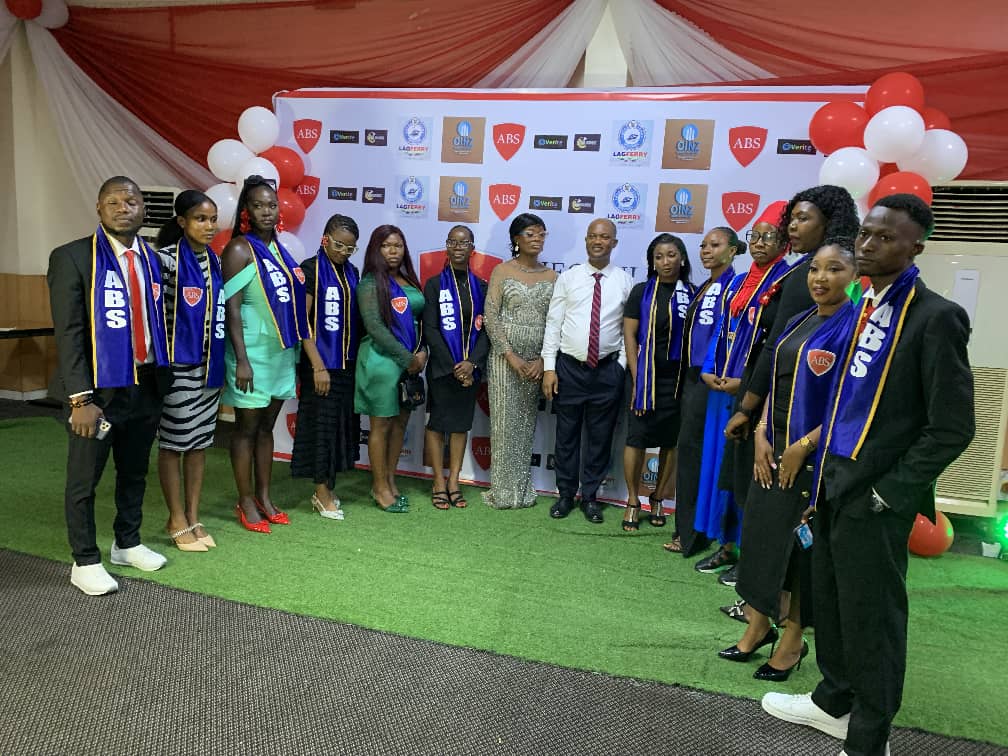
As part of efforts to change this narrative and equip SMEs with the tools to thrive, ABS recently held its eighth annual Entrepreneurship Award and Graduation Ceremony, celebrating 14 entrepreneurs and graduating 17 founders who completed its eight-week Entrepreneurship Development Programme. Out of 40 participants who enrolled, fewer than half met the graduation criteria.

“We don’t reward popularity but impact,” said Alfred Konaughe, founder of Ajegunle Business School. “Our goal is to help entrepreneurs survive, grow, and create value in the economy.”
ABS, founded about eight years ago, focuses on practical entrepreneurship skills, including problem-solving, communication, and business planning. Konaughe said the school was shaped by personal hardship after he and his wife lost housing due to fraud early in their marriage. “That period changed my mindset,” he said. “Ajegunle was no longer a limitation. It became a platform.”
The awards spanned 14 categories, including CEO of the Year, Techpreneur of the Year, Startup Entrepreneur of the Year, and Fashionpreneur of the Year. The recipients were selected through recommendations and background checks to ensure their businesses had measurable community impact.
One of the award recipients, Chioma Ukpabi, founder of SUWK Technologies Limited, runs a digital vocational learning platform that trains young Nigerians in skills such as fashion design, solar installation, makeup artistry, and hairdressing.
“Our focus is affordability and access,” Ukpabi said. “Our courses cost between ₦5,000 and ₦45,000, compared to about ₦200,000 in many offline centers.”
SUWK operates nationwide, using artificial intelligence to guide learners toward suitable skills based on age, literacy level, and interests.

The platform also matches students with apprenticeship opportunities across Nigeria’s 774 local government areas.
Another award recipient, Sidikat Folami, has spent 18 years in the fashion industry and more than two years developing textile waste recycling solutions.
Her work intercepts discarded fabrics before they reach landfills and prepares them for reuse across industries. “Textile waste can become a resource,” Folami said.
“Innovation starts with understanding what you already know.”
Beyond training, ABS maintains active engagement with alumni. Konaughe said graduates are monitored through alumni networks and linked to funding and retraining opportunities.
Last year, several ABS alumni accessed a federal government SME loan scheme offering single-digit interest rates of 9%. Many borrowed up to ₦1 million and completed repayment by November 2025.
Graduates say the training reshaped how they view business. Ijeoma Ifeoma Nwabue, one of the 17 graduates, said she learned that entrepreneurship is about solving real problems, not just making profits. “I now build my business around value,” she said. “The money follows the solution.”
As Nigeria seeks inclusive growth, stories from Ajegunle highlight how MSMEs—when supported with skills, access, and structure, can help reduce poverty, create jobs, and strengthen the economy from the ground up.