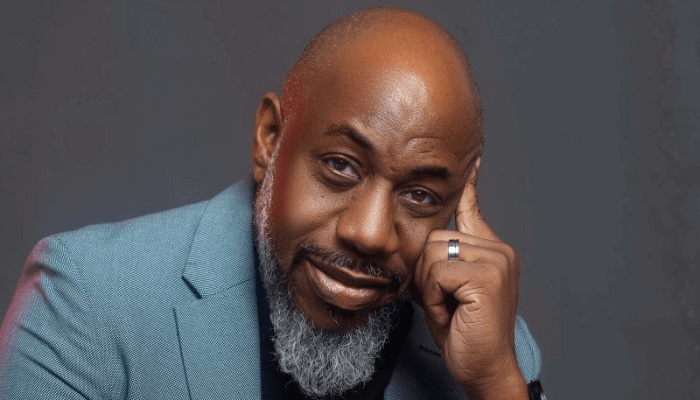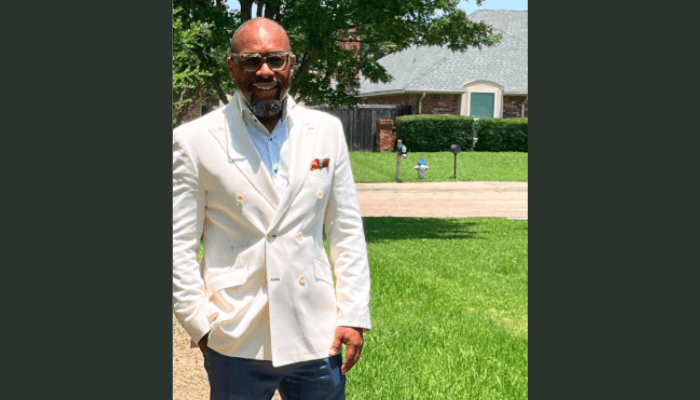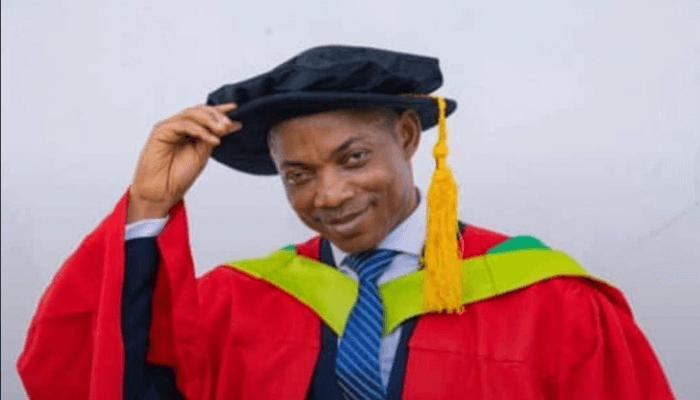
Moses Adebowale Akanbi is a distinguished Professor of Computational Mathematics at Lagos State University (LASU), Ojo, where he has built a remarkable career advancing mathematical research, digital innovation, and academic mentorship. He holds a PhD in Mathematics from the Federal University of Agriculture, Abeokuta (FUNAAB), specialising in cutting-edge computational techniques and mathematical modelling. Over the years, Akanbi has authored numerous peer-reviewed publications, presented at major global conferences, and driven transformative digital solutions at LASU through automated academic systems. His commitment to excellence and service continues to strengthen the university’s reputation in science, technology, and data-driven innovation. In this exclusive interview with KENNETH ATHEKAME, he reflects on his humble beginnings, academic battles, and spiritual encounters, testifying that every milestone in his life has been a manifestation of God’s grace. Excerpts:
Can you take us back to your childhood days in Isashi town?
My childhood experience in Isashi was like many others without direction or privilege, just survival. I had a severe eye condition that made school difficult. Sometimes, my parents had to take me to Maryland so we could reach Ikeja General Hospital early. But even in those struggles, a small light flickered my love for Mathematics.
As a young boy, what dream did you carry?

I always wanted to be a teacher. My classmates called me “Professor” because Mathematics came naturally to me. That nickname shaped my identity long before I knew my future.
How tough was your early education at Ajangbadi High School?
Very tough. English was a huge barrier. Everything sounded foreign. Local language was banned. My eye condition made learning worse. But Mathematics did not require perfect English. It became my comfort zone and my proof that I was not “inane.”
What sparked your passion for Mathematics?
My primary school teacher, Mr. Aina was strict about memorizing times tables. That discipline opened up my mind, and numbers began to speak to me. Mathematics became not just a subject, but a calling.

Your classmates saw something in you early. What did that mean to you?
When English failed, numbers didn’t. Being called “Professor” gave me confidence and purpose.
How important was your cousin in helping you academically?
He played a significant role coaching me in English, correcting pronunciations, and encouraging me when I felt overwhelmed. He sharpened both my voice and my confidence.
You once dreamed of studying Electronics & Computer Engineering. What changed?
I thought a “double honours” degree sounded more prestigious than Mathematics. But after WAEC and JAMB disappointments and a temporary disownment due to my new faith—God divinely redirected me. A counseling session with Prof. Ekiyor brought me home to Mathematics my true calling.
What did those setbacks teach you?
That God’s timing is perfect. What looks like delay can be divine acceleration.
You joined LASU first as a Laboratory Assistant in 1989. How did that feel?
Honestly, it felt like disappointment my mates called me “Professor,” yet I failed English. But it was divine placement. That role positioned me for salvation, mentorship, and later, admission.
Students nicknamed you “Submit Your Apparatus.” What do you feel when you recall those days?
(Laughs) It reminds me how God hides greatness in humble beginnings. That season shaped my humility and discipline.
Did you ever imagine rising to become a professor at LASU someday?
I had dreams, yes. But only God could bring them to pass despite distractions.
Tell us about your transformative encounter with God at Impact ’90.
It was a turning point—fear vanished, direction emerged. Life became about what God could do through me.
Your journey at LASU transitioned from student to lecturer to Professor. What does that progression represent?
A testimony of God’s grace. From Lab Assistant (1989) to Graduate Assistant (1998) to Assistant Lecturer the next day, and eventually to Professor and Dean all at the same institution. Nothing but divine orchestration.
What key challenges shaped your journey?
– Language struggles
– WAEC & JAMB disappointments
– A death threat for refusing exam malpractice
– A mistaken F that almost ruined my record
– A computer crash wiping out my PhD
– Five long years waiting for a Post-Doc
Each time, God turned setbacks into stepping stones.
How has God’s faithfulness been evident in your career?
Every stage of my life spiritual, professional, personal shows that grace lifted me where effort could not.
Your lecture is titled: “The Nature of Error: Human Fallibility versus Divine Infallibility in Computational Thought.” How does this connect to your life story?
My life is filled with human errors, mistakes, miscalculations, lost opportunities. But at every step, God corrected, redirected, and accelerated me. In computation, we build systems to manage errors. In life, God does the same. We miscalculate. He recalibrates.
What do you hope young people take away from your lecture?
That their current position is not their destiny. Faithfulness in obscurity prepares you for visibility. Failure may be divine redirection. And God still lifts people from humble beginnings to glorious heights.
What would you tell someone struggling right now?
Don’t sit and die in disappointment, stand up and move in faith. God has already gone ahead of you.