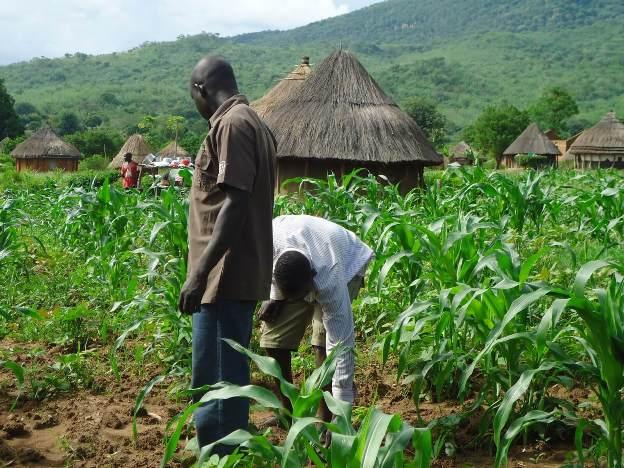
Implementing modified farm practices, some of which have been highlighted by FAO in a new study, can help mostly poor farmers in achieving significant economic gains and other benefits.
According to FAO, many of the “disaster resistant” farming innovations it assessed through multi-year trials on over 900 farms in 10 different countries, are within easy reach of poor farmers and do not require substantial investment. What is more, these innovations did not merely act as a buffer against disaster damages – in most cases, they significantly improved farm yields and financial gains even in the absence of any natural disasters.
Examples include a range of low cost options for disaster risk reduction that range from nature-based solutions, such as planting mangrove to protect coastal areas from floods, to the use of flood resistant rice varieties, to shifting to the installation of rooftop water collection and irrigation systems.
“The study makes clear that in most cases, disaster risk reduction (DRR) efforts on the farm make good economic sense: that investing in DDR early can save many dollars that would otherwise be spent on post-disaster rehabilitation,” said Dominique Burgeon, Director of FAO Emergency and Resilience Division, in the foreword to the report. “Moreover, farm-level DRR good practices are often “no-regret” measures – meaning that they prove effective in providing added benefits even in the absence of hazards”.

The FAO study is intended to guide farmers in making choices to manage risk as well as to inform policy-makers. It reveals that the good practices assessed have considerable potential to reduce the damages wrought on developing world agriculture by smaller-scale, lower-intensity disasters. While capturing less attention than large-scale disasters, hazards like dry spells or cold spells recur more frequently and represent a constant and significant problem for the 2.5 billion people on the planet who rely on small-scale agriculture.
On average, the DRR practices analysed in the study generated benefits 2.2 times higher than practices previously used by farmers, the report said. Benefits included both increases in agricultural production as well as avoided hazard-associated risks.
The average benefit-cost ratio for DRR practices was 3.7 in hazard scenarios, meaning that for every dollar invested in DRR the farmer achieved $3.7 in terms of avoided loss or return. Under non-hazard conditions, this indicator rose even further- up to $4.5 returned.
Such practices can prevent economic losses at household level, with immediate and palpable benefits to the lives of billions of people, and can also deliver economic benefits at the regional and national levels, the report says.

CALEB OJEWALE