When a state decides that time on its runway matters as much as time in its coffers, its ambition is no longer symbolic, it becomes operational. Last week, Victor Attah International Airport (VAIA) in Uyo resumed night operations after a calibrated overhaul of its airfield lighting and navigational aids, removing the sunrise-to-sunset restriction that had constrained flight schedules for years.
That technical upgrade is small in vocabulary but large in consequence: it makes Akwa Ibom a more predictable destination for tourists, business travellers and cargo operators alike.
“I am pleased to announce that night flight operations have been fully restored at Victor Attah International Airport,” Governor Umo Eno said in an official statement announcing the development. “Last week, I directed the Ibom Airport Development Company to complete the overhaul of navigational aids and lighting systems by September 30, and I am glad to report that the deadline was met.”
The governor’s public deadline followed a decisive injection of capital earlier this year. In July the state authorised ₦1.194 billion for a comprehensive overhaul covering replacement of navigational aids, upgrade of airfield lighting, settlement of electricity bills and service charges to the Nigerian Airspace Management Agency (NAMA). That budget line made the restoration possible and signalled that the upgrade was policy, not afterthought.

Why does lighting an airfield matter so much to tourism? Because aviation is an ecosystem, each improvement unlocks activity across other sectors. Night operations extend scheduling flexibility, reduce the cost penalties airlines face when they must compress routes into daylight windows, and broaden the range of flight times available to business and leisure travellers.
It also supports cargo, charter, medevac, and even private aviation schedules that demand flexibility.
For Ibom Air, the state-owned carrier that uses Uyo as its hub, the ability to operate after dusk means more rotations, better connections and an easier time matching flights to events, conferences and hotel bookings across the state.
Ibom Air has been a visible anchor of the state’s strategy to use aviation to drive growth; making the airport operational round the clock strengthens that anchor.
Ibom Air is a great success story among state-owned airlines in Nigeria, and for the first time, it recently opened its books to scrutiny, despite being 100 per cent funded by the state government. No airline has come clean on its revenue. Ibom Air has demonstrated tremendous success, indicating that airlines can be profitable in Nigeria if properly managed.

The carrier is projected to increase its revenue to N150 billion in 2025 from N95 billion in 2024, indicating that Ibom Air is growing organically and positioning itself as an airline with the potential to revolutionise the airline business in Nigeria.
The Chief Executive Officer of Ibom Air, George Uriesi, recently reiterated the carrier’s ambitious plan, noting that it plans to join the Global Distribution System (GDS) by October 2025; a key instrument to interline and expand with other global airlines.
His words, “It takes discipline and determination to run airlines like Ethiopian Airlines, ASKY, RwandAir, Air Côte d’Ivoire, and others are cleaning up the market, and we need to respond. They night-stop in Nigeria. ASKY’s passenger traffic was around 100,000 but has grown to I.5 million passengers. That is remarkable. We need to start responding to the market. We believe that there is room for improvement. We can do it.”
Aviation analyst Chris Aligbe recently described the state’s approach as “a rare example of subnational discipline and vision in Nigeria’s aviation sector,” noting that “Ibom Air has already shown that a state can run a viable airline if guided by sound management rather than politics.”
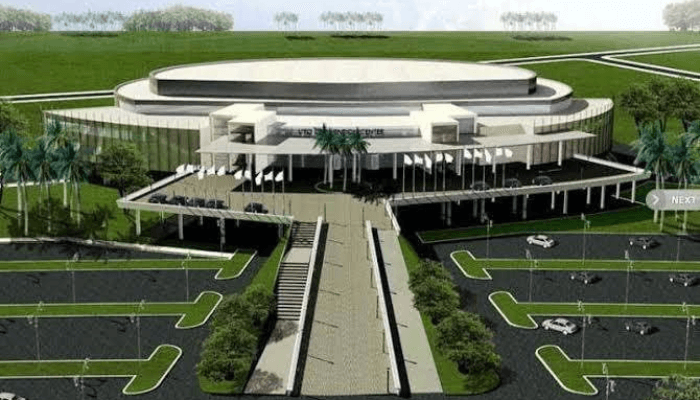
Restoring runway lighting is necessary, but not sufficient. The significance of this milestone lies in how it dovetails with the Arise Agenda’s broader tourism and infrastructure programme. Under the governor’s plan, a modern international terminal, an MRO (maintenance, repair and overhaul) facility, an Aviation Village, the ARISE Resorts and other visitor assets are scheduled to come online in the months ahead.
Together, these projects convert a technical capability, night operations into an end-to-end travel proposition that can support multi-day stays, conferences and family leisure travel.
Consider the visitor’s decision tree. A cultural tourist from Lagos weighing a weekend trip to Akwa Ibom is influenced by flight frequency, arrival and departure times, ease of ground transport and the quality of accommodation.
Before the upgrade, limited flight windows narrowed choices and pushed some travellers to choose destinations with more convenient schedules.
With 24-hour capability, VAIA becomes comparable with other regional hubs and gives tour operators the confidence to package Akwa Ibom into holiday itineraries. That translates directly into hotel bookings, restaurant revenue and employment for guides, drivers and artisans.
The state’s approach is deliberately sequential: funds were allocated to correct the most urgent operational shortfalls, a strict timeline was enforced, and the technical validation by NAMA ensured compliance with aviation safety standards.
Governor Eno publicly commended NAMA and the airport board for delivering on the mandate, reflecting a partnership model that mixes political will with technical oversight.
Evidence from other jurisdictions bears the point out. States or cities that synchronise airport operations with tourism product development routinely see faster growth in visitor numbers than those that treat transport and attractions as separate problems.
Akwa Ibom’s inventory; Ibeno Beach, historic sites in Ikot Abasi, Oron’s cultural assets and the planned ARISE Resorts is internationally competitive on paper; the recent upgrades make it reachable in practice. Travel trade and media attention already followed the announcement, an early sign that perception is beginning to align with reality.
There will, rightly, be scrutiny. Restoring the lights must be matched with reliable power, robust air traffic procedures, completed terminal works and improved ground transport.
The state has recognised that, and the funding decisions announced in July were aimed precisely at knitting those elements together. What remains essential is steady follow-through: completing the international terminal, bringing the MRO online to reduce aircraft ground time and working with carriers to open new routes that feed Uyo into national and regional networks.
If implemented faithfully, the payoff is tangible and multipronged: increased tourism receipts, diversified revenue for a state preparing for a future “with or without oil,” more jobs in hospitality and aviation services, and the emergence of Uyo as a reliable arrival point for conferences and cultural festivals.
Governor Eno’s directive and the subsequent delivery on the timeline demonstrate that infrastructure strategy, when paired with execution, changes outcomes.
As he said when releasing the funds in July, “World-class infrastructure is the bedrock of economic transformation under the Arise Agenda.”
The restoration of night operations at Victor Attah International Airport is a technical improvement with strategic consequences. It is proof that a state can reimagine its geography by investing in the connective tissue that turns potential into visitation.
Our runway is now lit; the next task is to fill the flights, the hotels and the plates of travellers who will discover that Akwa Ibom’s coastlines, culture and hospitality are, at last, open around the clock.
Ekaette Okon-Joseph is Special Assistant on Media to the Governor of Akwa Ibom State.