The battle against counterfeit foods and drugs intensifies as the National Agency for Food and Drug Administration and Control (NAFDAC) sounds the alarm over the growing prevalence of adulterated honey in the country.
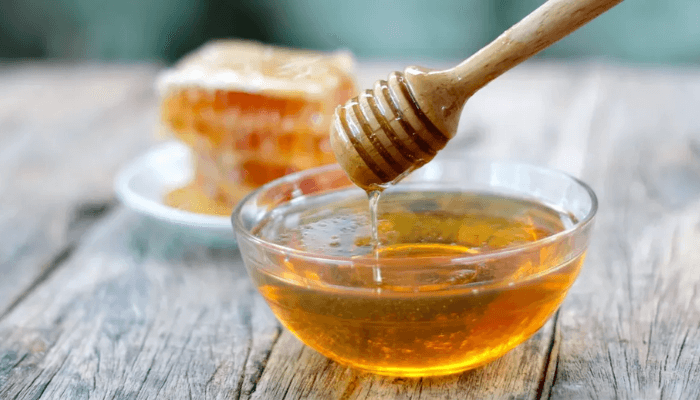
Honey, a natural sweetener produced by bees from flower nectar, contains around 80 percent sugar, according to Joseph Nordqvist from MedicalNewsToday.
It is widely used for its health benefits, which include combating infections, healing wounds and burns, soothing coughs and colds, and easing sore throats.
Amy Lee, a US-based medical nutritionist, recently raised concerns about the increasing sale of adulterated honey, warning that many products in stores may contain high-fructose corn syrup instead of pure honey.

Chiamaka Nwakalor-Egemba, president of the Culinary Arts Practitioners Association, also pointed out that some vendors sell caramelized sugar as honey. While it may appear similar in texture, she cautioned, it is harmful, especially when marketed as a healthy alternative.
Read also: Honey production: Delta gives support packages to bee farmers
Experts recommend the following methods for detecting adulterated honey:
Water test
Lee explained that honey is denser than water. To perform this test, add a teaspoon or two of honey to a glass of water. If the honey sinks to the bottom and remains intact, it is likely pure.
However, if it floats and begins to dissolve, it is likely adulterated. Omeh Blessing, CEO of Enat Pure Honey, with over a decade of experience, confirmed to BusinessDay correspondent that the water test is a reliable and straightforward method.

Paper test
To test honey’s authenticity, Lee suggests rubbing a teaspoon of honey on a paper surface and then folding the paper. If the flip side shows wet marks, the honey is adulterated. If it remains dry, the honey is pure.
Blessing confirmed that she often uses this test when sourcing honey from local farmers.
Matchstick/fire test
Chiamaka Nwakalor-Egemba shared that dipping a matchstick into honey and lighting it is another effective method.
If the matchstick lights up easily, the honey is unadulterated. However, if the matchstick fails to ignite, the honey is likely adulterated.
Lee added that placing a folded piece of paper in honey and lighting it will also show whether it is pure—if it catches fire, the honey is genuine.
Bubble test
Fred, a local honey farmer, explained that by turning a bottle of honey upside down, you can observe how quickly the bubbles rise.
If the bubbles move quickly, the honey may be contaminated. Pure honey’s bubbles will rise slowly and steadily. While not scientifically validated, this is a traditional method used by farmers for decades.
Ant test
Grace, a honey seller from Taraba State, pointed out that ants typically avoid pure honey. If ants swarm a drop of honey, it is likely adulterated. Genuine honey does not attract ants in the same way, making this a simple field test for authenticity.