The development of any country is significantly tied to its youth population, and this has been buttressed by several studies and reports. The United Nations has also emphasised this in its World Youth Report (2020), where it stated that young people are critical in achieving the Sustainable Development Goals (SDGs) and Agenda 2030.
Nigeria, Africa’s most populous country, has approximately 70% of its population below 30 years, promising substantial benefits from a large and productive workforce. However, harnessing the potential of this demography requires strategic investments in a productive labour force.
Over the last decade, Nigerian youths have been driving innovation and job creation with the potential to transform the country’s economy into a diverse and globally competitive one. Put into perspective, Maxwel Maduka and Nathan Nwachukwu were 23 and 22 years old respectively when they co-founded Terra Industries, a drone start-up that specialises in industrial applications, including surveillance and security.
Similarly, Olugbenga Agboola, CEO of Flutterwave, was 31 in 2016 when he co-founded the company. Today, Flutterwave operates in about 34 countries, providing seamless and secure payment solutions for businesses and individuals.

However, the opportunities enjoyed by a few innovative youths remain out of reach for the majority, with over 80% of Nigeria’s youth facing challenges such as unemployment, limited access to education and healthcare, lack of start-up funding, high cost of living, and gender marginalisation. These factors have left a large percentage of young people unproductive, with a high risk of their developmental potential wasting away.
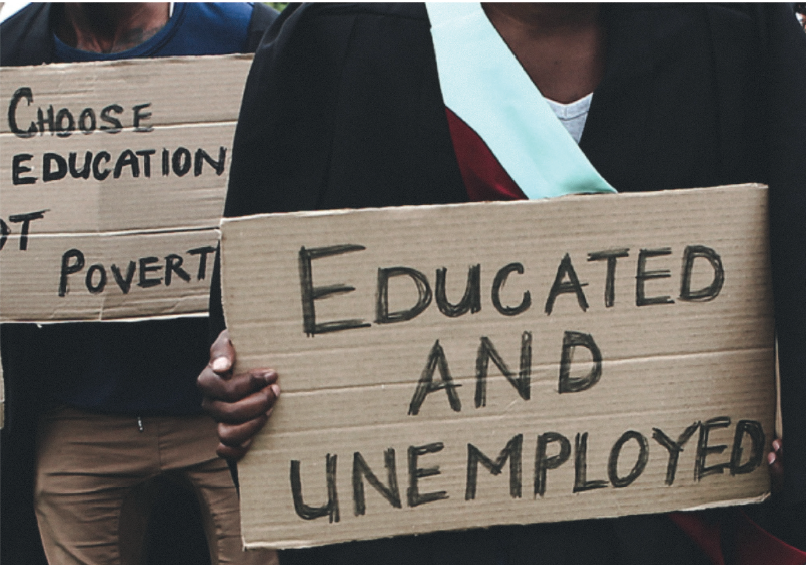
The UN and global development experts have consistently emphasised that investment in education, healthcare, and job creation is crucial to harnessing the potential of Nigeria’s demographic dividend and transforming the nation’s economy. Yet, there has been little effort directed towards achieving this, further straining the environment for young people in the country. Education has become more expensive, public health facilities are underfunded and unaffordable for ordinary Nigerians, and employment opportunities are increasingly eroding, with unemployment reaching an all-time high of 54.40 per cent in 2020.
These issues have created both a skills and opportunity gap for the country and its citizens, the former lacking the technical know-how in critical sectors, the latter seeking how best to maximise skills for bigger gains. As a result, many Nigerian youths are forced to seek opportunities abroad. The Japa phenomenon has seen a high number of young people migrating overseas, many of them skilled across different sectors. In the health sector alone, over 16,000 doctors have migrated in the past five years. Also, the Nursing and Midwifery Council of Nigeria reported that about 15,495 nurses left within the same period. This points to a critical concern: without urgent action, Nigeria risks losing more of its human capital – a setback that could undermine national development and dim the country’s prospects.
On the global scene, countries such as South Korea and Singapore successfully harnessed their demographic dividend, achieving rapid economic growth and development. They did so through strategic economic and social policies that leveraged their youthful populations. With national plans focused on creating jobs, driving innovation, and promoting growth, both countries invested heavily in education and skills development, which helped build a skilled workforce. They also created pro-business environments that encouraged entrepreneurship, innovation, and foreign investment. This raises a critical question: can Nigeria follow suit?
Nigerian youths are not different from their counterparts in other parts of the world. Harnessing their energy and creativity must follow the universal path defined by the demands of their time. This includes providing education – both formal and entrepreneurial – relevant to their aspirations. Uneducated and unskilled youths are not only a danger to themselves but also to society at large. While they need skills and knowledge to launch start-ups, they also need the right toolkits to scale such ventures. All these are achievable through a functional educational system designed to produce successful entrepreneurs.

The government has often declared plans to empower Nigerian youths, especially entrepreneurs.
However, this support is barely enough. According to a report by Weetracker and GreenTec Capital Africa Foundation, Nigeria’s start-up failure rate stands at approximately 61%, one of the highest among Africa’s top tech ecosystems. Another report indicates that by the second quarter of 2024, more than 40% of start-ups funded between 2021 and 2023 had already shut down, many affected by fragile business models, weak scalability, and limited capacity to withstand a prolonged funding drought.
While some African countries fared worse than Nigeria – Ethiopia (75%), Rwanda (75%), Ghana (73.9%), Zimbabwe and the Democratic Republic of the Congo (66.7% respectively) – Nigeria, considering its continental stature, could still create a pathway that serves as a model for others. The report cites hurdles such as complex regulations, fragile revenue models exposed by dried-up venture capital pipelines, and persistent funding woes, with 51% of start-ups struggling with currency volatility and scarce investors. Yet, with its vast youth population, Nigeria holds the potential for a demographic dividend. By investing in education, skills, and jobs, the country can move beyond sluggish growth and reignite the inclusive progress once seen in the early 2000s.