Governors of the 36 states and the Federal Capital Territory (FCT) on Wednesday took firm steps towards implementing nationally accepted solutions to the farmer-herder crisis aimed at guaranteeing food security.
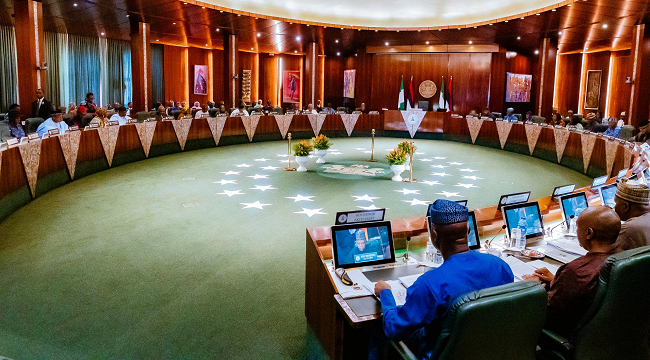
The decision was taken at the virtual 155th meeting of the National Economic Council (NEC) held on Wednesday, with the constitution of a committee on livestock development to expedite the implementation of livestock production in Nigeria.
Vice President Kashim Shettima, speaking at the meeting, tasked the governors with evolving what he described as “practical, enduring and nationally accepted solutions” to the farmer-herder crisis, adding that such initiatives would guarantee food security in the country.
The meeting followed President Bola Ahmed Tinubu’s charge to the Vice President last Wednesday during the Federal Executive Council (FEC) meeting, urging governors, who have constitutional authority over land, to work out acceptable solutions to the farmers-herders crisis.

The President had directed that governors provide any available land that could immediately be converted to ranches as part of his security emergency plans to ease communal crises.
Read also: Tinubu blows hot over slow implementation of security emergency
The committee has one member each representing the six geo-political zones, comprising Bauchi for the North-East, Niger for the North-Central, Ondo for the South-West, Imo for the South-East, Cross River for the South-South, and Kebbi for the North-West.
The Kebbi State Governor, Nasir Idris, will chair the committee.
The decision came as the federal government battles to end the conflict between farmers and herders that has led to food insecurity in Nigeria.

The committee also includes the ministers of Livestock Development; Agriculture and Food Security; Budget and Economic Planning; and the Senior Special Assistant to the President on Agribusiness (Office of the Vice President).
Council directed the committee to, among other things, review the recommendations of the Presidential Livestock Reform Committee and the proposal of the Ministry of Livestock Development, as well as identify interested states for the implementation of the programme.
President Tinubu had, at the FEC meeting held on December 10, 2025, directed NEC to work in collaboration with the Ministry of Livestock Development to come up with a roadmap for the transformation of Nigeria’s livestock industry.
The ministry worked on the proposal, which was presented at the meeting for Council’s endorsement, all in a bid to transform Nigeria’s livestock sector into a modern, peaceful, and profitable engine of national development.
According to the Vice President, “food security is a moral obligation to citizens and can only be guaranteed by practical, enduring and nationally accepted solutions to the farmer-herder crisis.”
“We must acknowledge with absolute regret the deep distrust created by this violence, born out of a trade and an ancestral practice that ought to have remained a central pillar of our food security and rural economy. The loss of lives, the destruction of homes, and the devastation of farmlands must end.
“We cannot perform a task as fundamental as feeding ourselves unless we find an enduring, practical and nationally accepted solution to the farmer-herder crisis. Food security is a moral obligation to our people,” he stated.
Shettima also identified the mismanagement of long-standing tensions between farmers and herders as the cause of “the conflicts that have strained the ancestral bonds of communities across Nigeria.”
He regretted that what started “as a challenge of coexistence gradually hardened into cycles of violence that were allowed to persist for far too long without a durable solution.”
“Today, that violence respects no geography. It has become a shared nightmare that has scarred every region, disrupted livelihoods, and eroded trust between neighbours who once relied on one another for survival,” the Vice President added.
He commended President Tinubu’s bold initiative to transform livestock production in Nigeria, especially by integrating the sector as a key component of the national economy.
He therefore urged state governors to take seriously the presentations on livestock development by the Ministry of Livestock Development and the Presidential Livestock Reform Committee (PLRC), particularly by leveraging opportunities in the sector for economic transformation, conflict resolution and the restoration of peace in parts of the country.
He assured that the recommendations of the PLRC and the Ministry of Livestock Development would be given priority attention by the Tinubu administration, even as he sought the support of sub-nationals to fully harness the vast opportunities in the sector.
“The presentations before us today offer critical insights into responses designed to confront these realities. They speak directly to the challenge of stabilising our food systems, restoring confidence in rural economies, and reducing the security pressures that flow from competition over land, water and livelihoods.
“At their core, these presentations seek to dispel the false choice between agriculture and security by demonstrating that both are inseparable pillars of national stability,” the Vice President stated.