Governors across Nigeria have thrown their weight behind the Nigerian Communications Commission’s (NCC) call to reduce Right of Way (RoW) charges, a move expected to accelerate fibre deployment and expand inclusive connectivity across the country.
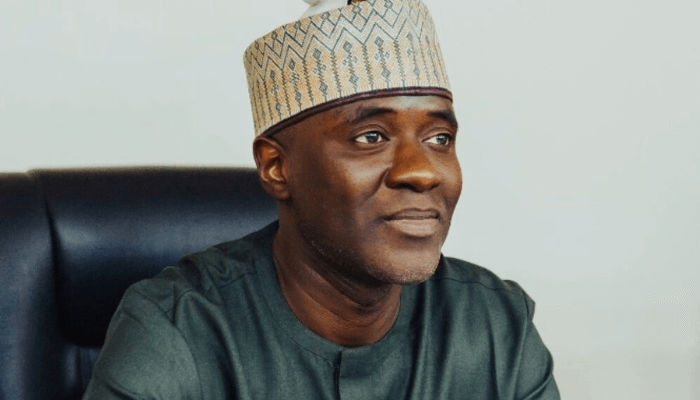
This is even as Dr. Aminu Maida, the executive vice chairman of the NCC, hailed the decision as a major breakthrough in aligning national and subnational digital priorities.
Speaking at a joint engagement with the Nigeria Governors’ Forum (NGF), Maida commended the governors for their willingness to collaborate on shaping policies that directly impact broadband penetration.
“The openness of the NGF to engage with us reflects a shared belief in the impact digital solutions can have on subnational development,” Maida said.

He described alignment between state and federal digital infrastructure strategies as a game changer for Nigeria’s digital economy.
At the heart of the discussion was the RoW fee, currently set at N145 per linear metre, which telecom operators have long argued remains a significant burden on network expansion.
Maida urged states to waive or reduce these fees, stressing that fibre optic deployment is essential for achieving Nigeria’s broadband and digital transformation targets. “The RoW is a critical element in opening up the digital economy, and this lies within the purview of the states,” he said.
Mr. Abdulateef Shittu, NGF director general, underscored the importance of broadband as a foundational public good, noting that while connectivity has grown rapidly, broadband penetration remains below the threshold required for inclusive digital transformation.
“Broadband and secure information infrastructure are no longer optional inputs to development. Expanded fibre coverage raises productivity, supports job creation, broadens access to education and health services, and enlarges the taxable base available to state governments,” Shittu said.

To fast-track progress, Shittu proposed four areas of partnership with the NCC: establishing State Broadband Coordinating Councils for institutional alignment, harmonising RoW rules across states, developing resilience plans for critical information infrastructure, and expanding information-sharing platforms for capacity building.
He cited the World Bank’s SABER initiative as a model, pointing to states that had harmonised or waived RoW fees and adopted coordinated trenching practices, which in turn attracted private investment and accelerated fibre rollout.
“These policy choices have produced rapid increases in fibre kilometres and improved access to high-capacity networks,” he said, linking the outcomes to socio-economic gains such as improved productivity and stronger state revenues.
Both Maida and Shittu stressed that easing RoW barriers would unlock wider economic opportunities by enabling telecom companies to expand value chains, create jobs, and deepen service delivery in health and education.
The NGF has also proposed leveraging the upcoming NCC Business Roundtable to secure state-level pledges, alongside follow-up workshops aimed at turning commitments into measurable outcomes.
For Maida, the emerging consensus with state leaders signals a turning point. “With the governors’ support, we can accelerate fibre deployment, expand access, and ensure that every Nigerian is part of the digital economy,” he said.