Imagine receiving a text message from an unknown stranger, detailing all your activities for the day, including where you’d be per time (cyberstalking). This is the frightening case of most women and girls across the globe in recent times.
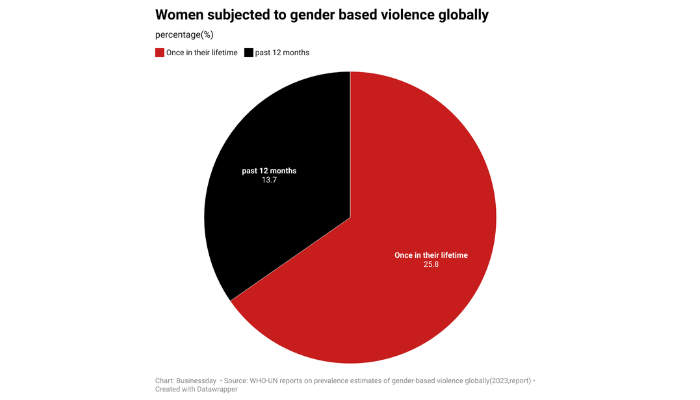
According to the latest WHO–UN report, one in four women aged 15–49 or 25.8 percent have experienced atleast one or more forms of gender-based violence once in their lifetime with their intimate partners, while 13.7 have faced it within the past 12 months.
Digital- based violence is becoming a growing trend as experts have called for the protection of women and girls from this menace globally.
Read also: French Embassy, others move to tackle digital gender-bases violence in Kwara

Gender-based violence remains a global emergency and experts have highlighted the need to protect women and girls from all forms of violence.
Each year, from 25 November to 10 December, the world observes the 16 Days of Activism against Gender-Based Violence.
This year’s theme, tagged “unite to end digital violence against all women and girls,” underscores the rising threats women face online, from cyberbullying, sexual harassment and cyberstalking.
The selected dates are crucial as it falls between the international day for the elimination of violence against women (25th November) and human rights day (10th December) every year.
Experts warn that these realities demand collective action. As the WHO notes, “Violence against women is a major public health and human rights crisis, affecting almost one in four women in their lifetime. Behind every statistic lies the story of a woman or girl whose health, safety, and rights have been violated.” Yet the report emphasizes that prevention is possible, stating that , “Across the world, communities are challenging unequal gender norms, governments are strengthening policies and laws, and health systems are stepping up to provide care and support for survivors.”

The UN defines violence against women as “any act of gender-based violence that results in, or is likely to result in, physical, sexual, or mental harm or suffering, whether occurring in public or in private life.”
In Nigeria, the Medical Women Association of Nigeria (MWAN) has joined the global call.
Francess Ayaebene, a member of MWAN, have stressed the need for safety in all spaces. “Every woman and girl deserves safety at home and on her phone,” she shared.
Statistics
More than 840 million women aged 15 and above have experienced gender-based violence (GBV) at least once in their lifetime. A 2023 global prevalence report shows that women and girls continue to face physical, sexual, and increasingly digital forms of abuse.
One of the most troubling trends is the rise in intimate partner violence (IPV), the form of GBV women are most likely to encounter. In Sub-Saharan Africa(SSA), the prevalence of IPV among women aged 15–49 stands at 31.9 percent, meaning nearly one in three women has been harmed by a partner at least once.
The report also notes that 19 percent of women and girls experienced GBV in just the past year. Countries with the highest IPV rates in the region include Sierra Leone (55.2 percent), South Sudan (54.3 percent), and Equatorial Guinea (53.3 percent). SSA also recorded the lowest rates of non-partner violence (7.2 percent) globally.
Overall, 18 of the 33 countries with the highest GBV levels in the last 12 months are in Sub-Saharan Africa.
Globally, the highest IPV rates per lifetime among women aged 15-49 were recorded in Oceania (56.9 percent), excluding Australia and New Zealand. High levels also persist in Central Asia (30.8 percent) and Southern Asia (20.1 percent).
The report warns that “despite minimal reductions in GBV globally since the year 2000, progress still remains slow.” “This highlights an urgent need to eliminate all forms of violence on women and girls in the nearest possible future,” the report stated.