Nigeria’s ambitious Presidential Power Initiative (PPI) has been starved of funding, with the federal government executing just 3.66 percent of its 2025 capital budget for the project.
Analysts say the shortfall will entrench blackouts and choke economic growth.
Data from BudgIT’s analysis of the federal government’s 2024 budget performance shows that the PPI, which was launched in February 2024 with an $800 million commitment to strengthen transmission capacity and ultimately deliver 25,000MW by 2025, has “struggled to meet its targets, particularly the critical goal of generating 6,000 megawatts by the end of 2024.”
Out of the N411.15 billion allocated for power infrastructure, only N15.03 billion was released, leaving about N396.12 billion unspent.

Read also: The power question: Will settling gas debts finally stabilise Nigeria’s electricity market?
BudgIT described the overall 5.21 percent budget execution rate for the power sector as ‘massive underspending’ that effectively stalled key generation, transmission and distribution projects needed to stabilise the national grid.
While personnel and overhead costs recorded utilisation above 90 percent and nearly 100 percent respectively, capital expenditure, which made up more than 98 percent of the ministry’s total budget, saw just 3.6 percent deployment.
“This failure represents a massive underspending of approximately N396.12bn in crucial capital funds,” the BudgIT report said. “Such a monumental variance signifies that virtually every major planned generation, transmission, and distribution project… was not fully implemented.”
Aisha Mohammed, an energy analyst at the Lagos-based Centre for Development Studies, described the situation as catastrophic.

“When you have a 3.66 percent capital expenditure execution rate in the power sector, you’re essentially saying the government has abandoned infrastructure development,” Mohammed said in an interview.
“Every naira not spent on power infrastructure translates to billions lost in productive capacity across manufacturing, services, and agriculture.”
The implications extend far beyond darkened homes and offices. Nigerian businesses spend an estimated $22 billion annually on alternative power sources, primarily diesel generators, according to data from the Manufacturers Association of Nigeria.
Chinenye Ajayi, team lead for power and infrastructure at Olaniwun Ajayi LP, said the core problem is that budgeting does not guarantee funding.
“Having a budget is not equal to having money,” she said, noting that fiscal constraints and weak execution capacity continue to undermine delivery.
The BudgIT analysis said that while the power ministry maintained ‘basic administrative function,’ it failed to deploy nearly 96 percent of developmental funds allocated for capital expenditure.
“The sector prioritised maintaining basic administrative function over making the necessary capital investments,” the report noted.
Read also: Reps hail NDPHC for safety standards at Calabar power plant
BudgIT said the failure to deploy these funds “directly guarantees the continuation of low supply, infrastructural deficiencies, and poor service delivery, making the overall 5.21% execution rate a critical indicator of stagnation in Nigeria’s most vital infrastructure area.”
Ajayi said the execution gap is not inevitable, pointing to instances where the government has mobilised funds quickly for other priorities.
What is lacking, she stated, is consistent political will, competent project prioritisation and credible frameworks to attract private capital.
“The government must be clear about what must be delivered, how the funding will be raised, and what assurances investors will receive,” she said.
“Without that, power sector reform will continue to exist on paper, while the grid keeps failing in practice.”
The power sector’s failure cascades through Nigeria’s economy. The manufacturing sector, already grappling with high foreign exchange (FX) costs and high inflation, faces energy costs that can consume 30 percent -40 percent of production expenses, according to industry data.
“Expensive energy costs from diesel and other alternatives have fundamentally undermined Nigeria’s industrial competitiveness,” Mohammed said.
“While our regional competitors benefit from relatively stable, affordable power, Nigerian manufacturers are essentially running their own mini-utilities. You cannot build a competitive economy on a generator-powered industry.”
Impact of poor power supply
The agricultural processing sector faces similar constraints. Cold chain logistics, essential for reducing post-harvest losses, remain prohibitively expensive, with diesel-powered refrigeration forcing many agricultural products to rot before reaching markets.
The telecommunications sector, despite its relative success, spends billions annually powering over 30,000 base stations with diesel generators, costs ultimately passed to consumers through higher tariffs.
Failure of power plan
The Presidential Power Initiative was designed to be transformative. The 272 megawatts transmission capacity enhancement, announced at launch, represented just the first phase of a broader strategy to add 6,000MW by end-2024.
“However, despite these significant investments and ambitious plans, the PPI has struggled to meet its targets,” the BudgIT report concluded, noting that while the ministry maintained administrative stability with near-perfect recurrent expenditure execution, “this stability was fundamentally superficial.”
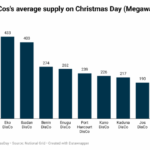
Industry watchers note that Nigeria’s power generation has actually declined in recent years, with the national grid frequently collapsing and generating capacity hovering between 3,000 MW-4,500MW for a population exceeding 200 million, among the lowest per capita electricity generation rates globally.