…Product availability excites Nigerians
…Experts say ‘it’s major gain of deregulation’
…From Dangote Refinery, more petrol at less pump price
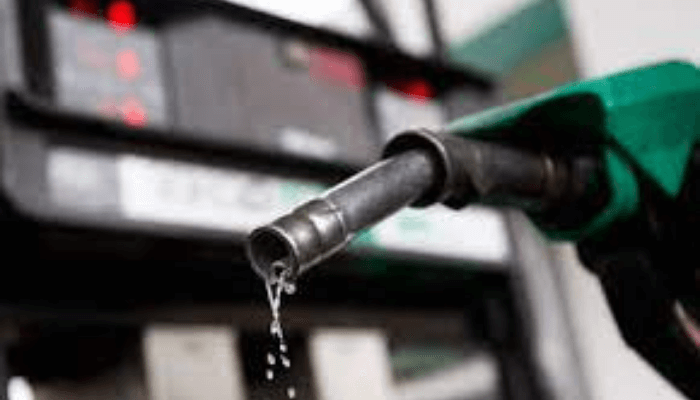
From today, it is nine days to Christmas, and with the look of things, Nigerians will celebrate another yuletide without the usual fuel scarcity.

When this happens, which is most likely, the citizens can then boldly sigh in relief as the decades-long jinx of fuel scarcity, especially during yuletide, has finally been broken.
“Yes ooh. It has finally been broken,” Marcel Ovieghi, a lawyer, who couldn’t travel for a burial in 2023 due to fuel scarcity, said.
Gladly, as he puts it, his concern is no longer the usual fear of the unavailability of premium motor spirit (PMS), which is popularly called petrol, but genuine spare parts to fix his Lexus SUV for a family trip to Ugheli, Delta State his hometown, this Christmas.
Speaking from his Anthony Village chambers in Lagos, the commercial lawyer expressed his excitement that fuel scarcity and its attendant long queues, which had held the country spellbound for decades has just ended, while hoping that corruption, another monster, will go the same way.
Hassan Abu, an Abuja-based civil servant, echoed the same sentiment with Ovieghi, saying that the availability of petrol, and especially the relative stability of the price has offered huge relief to families.

Abu, a native of Mokwa in Niger State, noted that apart from Christmas, traveling from Abuja to his hometown with his family of five, usually takes a huge toll on his finances due to fuel scarcity at every festivity in the country, whether Muslim, Christian or secular that skyrocket pump prices and transport fares.
“In 2023, I bought a litre of fuel about N2000 in black-market because filling stations were not selling due to scarcity. My neighbour lost a farm to fire from drums of fuel one of his workers hoarded in the farm without his knowledge. That era was horrible,” he lamented.
Read also: Relief as Dangote cuts petrol to N699/litre
Abu prayed that Nigerians will not witness fuel scarcity again because they used it as a weapon, for quick money, economic sabotage and all manner of wickedness in the name of business and hustling.
“Oil marketers, petrol stations, commercial drivers and even black-market dealers all pray for fuel scarcity at every festivity just to make money.
“So, hearing some of my colleagues planning to drive to their various destinations this festive season, apart from the big men who fly for the fear of being kidnapped, testifies to the fact that the jinx of fuel scarcity has truly been broken,” Abu, who is planning a family outing to nearby Keffi this festive season, said.
Sharing her sad experience during the scarcity era, Abidemi Labinjo, a banker, said it was horrible.
“I lost an engine of a new car I have barely driven to adulterated fuel. Due to the long queues, the stress and extortions, I gave my car to a relative, who connived with my mechanic to fill my tank with adulterated, yet expensive fuel in August 2024,” she decried.
“So, the availability of the products is a big relief any time, not just for the yuletide”.
But with the respite being experienced now, the banker enthused that Nigeria can be fixed and only by Nigerians.
“I am one of those who believe in help from within. We have incredible pull of talent in the banking sector, oil and gas, business and others. It is just the will to change things that we lack, but a single man has ended decades of fuel scarcity with his enviable investment in a refinery,” she said.
The senior banker insisted that Nigerians can break all their seeming perpetual plagues, one after another following the Aliko Dangote style and passion.
Dangote Refinery to the rescue
Of course, credit goes to the Dangote Refinery, Africa’s largest and the world’s largest single-train refinery. Since September 15, 2024, when the Lekki, Lagos-based refinery made the first significant deliveries of petrol at N898 per litre to the Nigerian National Petroleum Company Limited (NNPC), there has been incremental impact on Nigeria’s fuel supply and prices, a development has resulted in not just curbing scarcity of products, but putting an end to it and gradual reduction in the price.
Since then, there has never been scarcity of fuel and other petroleum products refined by Dangote.
Trailing the history of fuel scarcity in Nigeria, Aliko Dangote, president, Dangote Group, noted that the annual fuel crisis had bedeviled the nation since 1982.
Briefing the State House media after a recent meeting with President Bola Tinubu, Dangote assured that he is out to end the scarcity crisis with steady supplies from his refinery.
Read also: “Our price cut drove drop in petrol prices, not 15% tariff reversal” – Dangote Refinery
“If you look at it, in Nigeria we have been having fuel queues since 1972 and you know, we have actually removed those queues. It is not about actually relying on imports,” Dangote said.
For those who still fear that there could still be scarcity, Dangote is stepping up his assurance with a further promise of regular supply of petrol this yuletide season, while insisting that his refinery can supply 50 million litres of premium motor spirit daily.
Apart from the yuletide, Nigerians are likely not going to experience any scarcity going forward as the Dangote Refinery targets to become the world’s biggest refinery with a production capacity of 1.4 million barrels per day to overtake Reliance Refinery capacity of 1.2 million barrels per day.
However, Clement Odiri, an oil and gas expert, attributed the sustained availability of PMS and other petroleum products to not just the Dangote Refinery, but other modular refineries, though small.
“The modular refineries are scattered all over the Niger Delta and they are also helping to stablise supplies, though Dangote Refinery does over 80 percent of the supplies today. There are some that are yet to take off, but we need more refineries,” Odiri said.
He also attributed the feat to the Naira for Crude, which he described as a laudable initiative by the Tinubu administration.
“We know the politics in the oil business and efforts to frustrate Dangote Refinery, but President Bola Tinubu saved the day with his timely intervention,” he said.
Odiri also noted that the feat is possible because of the deregulation of the oil and gas sector, though Nigerians, according to him, would have suffered less and long adjusted if they had allowed the previous administration to deregulate the sector earlier.
“So, our subsidy regime finally ended. It brought this era of doing business according to the international oil market, hence when crude oil price rises or falls in the international market, it impacts pump price and nobody complains.”
But Odiri thinks that though the price is relatively stable, it is still high.
“Yes, petrol is available, but it is very high. We thought that with a refinery backdoor, the price would have been far cheaper than what the NNPC and its collaborators were forcing us to buy during the peak of petrol importation.
“I plead with Dangote to still reduce the price. We know it is priced at the international market rate, but we have home advantage, cost of importation is out and crude oil is guaranteed and even sold in naira to him,” he said.