The 700-kilometre Lagos-Calabar coastal highway has been described as the Federal Government of Nigeria’s most ambitious project yet, in terms of scale and cost, but it is also the most steeped in controversy and concerns.
Close watchers of the project note that every inch of the way in its construction progression, the project raises dust that refuses to settle. Contract award without open bidding, the project’s cost, changes in the original alignment, property demolition, and lack of fair compensation are just a few of the sources of controversy.
Quite early in the life of the project, concerns were raised about the manner the contract for its construction was awarded by the government. Funso Doherty, the Alliance for Democracy governorship candidate in the 2023 election in Lagos State, faulted the award of the contract, saying that it lacked due process.
Doherty added that the contract award lacked transparency and accountability, stressing that “in matters such as this, process is particularly important and it should involve wide-ranging good faith consultation and open communication.”

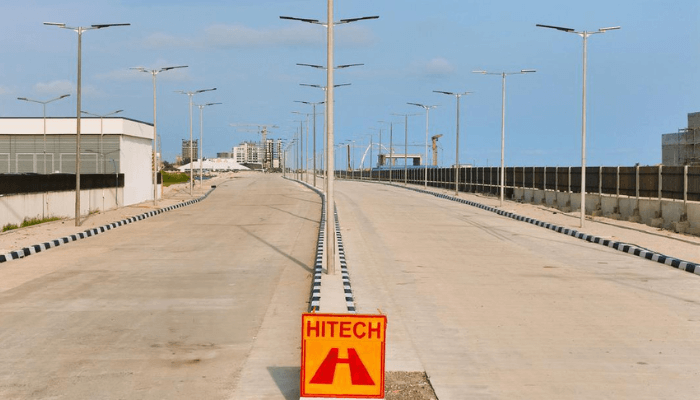
Atiku Abubakar, Nigeria’s former Vice President, also faulted the process that led to the choice of the contractor, Hitech, which, according to him, is owned by President Bola Tinubu’s business ally.
Atiku faulted the project’s cost, estimated at N15 trillion, describing it as the most expensive project in the world, lacking transparency and accountability.
Nigerians are also worried that almost three months after what they now call “phantom commissioning” of the first 30 kilometres of the highway, it remains uncompleted.
“There are lots of unanswered questions on this project; good governance requires transparency; the end does not justify the means,” a Lagos resident who took a trip on the commissioned stretch of the highway told BusinessDay.
Asked how many kilometers, in his estimation, had been done, he said what he saw was about 11 kilometres, noting that only one side of the carriageway had been done and still in need of more work. “What was ‘commissioned’ is not at all ready for use,” he said.

Read also: Nigeria plans fresh $347m loans for Lagos-Calabar highway, others
More citizens are taking interest in what is happening on this coastal highway, in terms of what has been done and how it has been done, which explains the recent outrage over the highway’s alignment and drainage gaps.
According to the Lagos resident, who did not want to be named, there is confusion about the alignment of the road, explaining, “at some points, it was 4 lanes and then 2 lanes, and so a bit confusing. But, maybe, that is because it is not yet completed.”
A couple of days ago, more concerned Nigerians raised the alarm on what they called “drainage gaps” on the highway. One of them, writing on his X (formerly Twitter), called on David Umahi, the Works Minister, to take action and save the N15 trillion highway.
“Your excellency, the Minister of Works, please, sir, I am on the coastal road, and I do not know why drainage has not been put in the right position here. I just want to show you to let you know if this is not going to be a problem. I would advise that you call your engineer to rectify this.
This is not the only place; we have this on several parts of the road, but this one is behind the Charterhouse School on Ogombo Road, Ajah, very close to Landmark Estate Meridian Boulevard,” the concerned citizen said.
Another citizen, in reaction, noted, “Nigeria has proper engineering problems. Most times, it looks like they don’t put weather and environment into consideration when embarking on projects, or else this problem would have been foreseen and put into consideration when constructing the road.”
Ola Olaniyan, an architect and infrastructure development consultant who is also a lecturer and researcher at the University of Ibadan, was quoted as saying that earthworks and drainage works are critical parts of road construction.
“In best practices, the structural drainage works should be concluded before soil stabilisation and before the construction of base and sub-base courses.
The Lagos-Calabar coastal road is situated in a relatively unstable terrain predominantly inundated with swamps and marshland. In consideration of the peculiarities of the terrain, the road was designed and constructed with reinforced concrete,” he said.