Beyond the allure of the runway, Africa Fashion Week Nigeria (AFWN) has solidified its position as a formidable economic catalyst, bridging the historical chasm between raw creativity and sustainable commercial opportunity.
The platform’s 2025 cycle serves as a case study in professionalizing the creative arts, empowering designers to transition from passionate artisans to industry-ready entrepreneurs.
The impact of this growth is most evident in its contribution to the labor market; the 2025 edition alone has directly and indirectly facilitated employment for over 500 young Nigerians. This workforce spans the entirety of the fashion ecosystem, effectively operationalizing a network that connects AFWN’s sister platforms in London and Lagos.
This infrastructure reaches deep into the industry’s bedrock—from the precision of master tailors and indigenous fabric makers to the strategic eyes of stylists, photographers, and digital content creators. The result is a testament to the fact that while fashion is the medium, creativity is the primary currency of Nigeria’s future economy.

Speaking during the event, held at J Randle Centre for Yoruba Culture and History—a venue that underscores the marriage of heritage and modern commerce—Queen Aderonke “Ronke” Ademiluyi-Ogunwusi, Founder of AFWN, offered a stark reminder of the industry’s untapped potential. She highlighted that the fashion value chain is an expansive frontier where Africa has, until now, only scratched the surface of its true capacity.
“With the African fashion industry now valued at an impressive $31 billion, we are seeing the validation of a vision we championed 15 years ago,” Ogunwusi remarked. “At a time when global confidence in African fashion was a rarity, we chose to invest in talent, nurture the ecosystem, and build the infrastructure required to turn runway brilliance into sustainable economic rewards.”
She said AFWN is not just showcasing platform but creating an ecosystem that fosters growth, innovation and employment as well as shaping the future of the fashion industry one runway at a time.
She noted that the platform is putting African fashion on a global map and telling the world that Africa is creative, Africa is stylish and Africa is open for business.
“Through Africa Fashion Week Nigeria, we’re catalyzing economic growth, promoting cultural exchange and inspiring the new generation of African designers.

“We’re breaking stereotypes, pushing boundaries and celebrating the diversity and richness of African fashion. I want to say a big thank you to all of you who supported the growth of African Fashion Week Nigeria,” Ogunwusi added.
Themed ‘The Naija December Experience’, AFWN 2025 showcased African design into a full-blown fashion festival in Lagos.
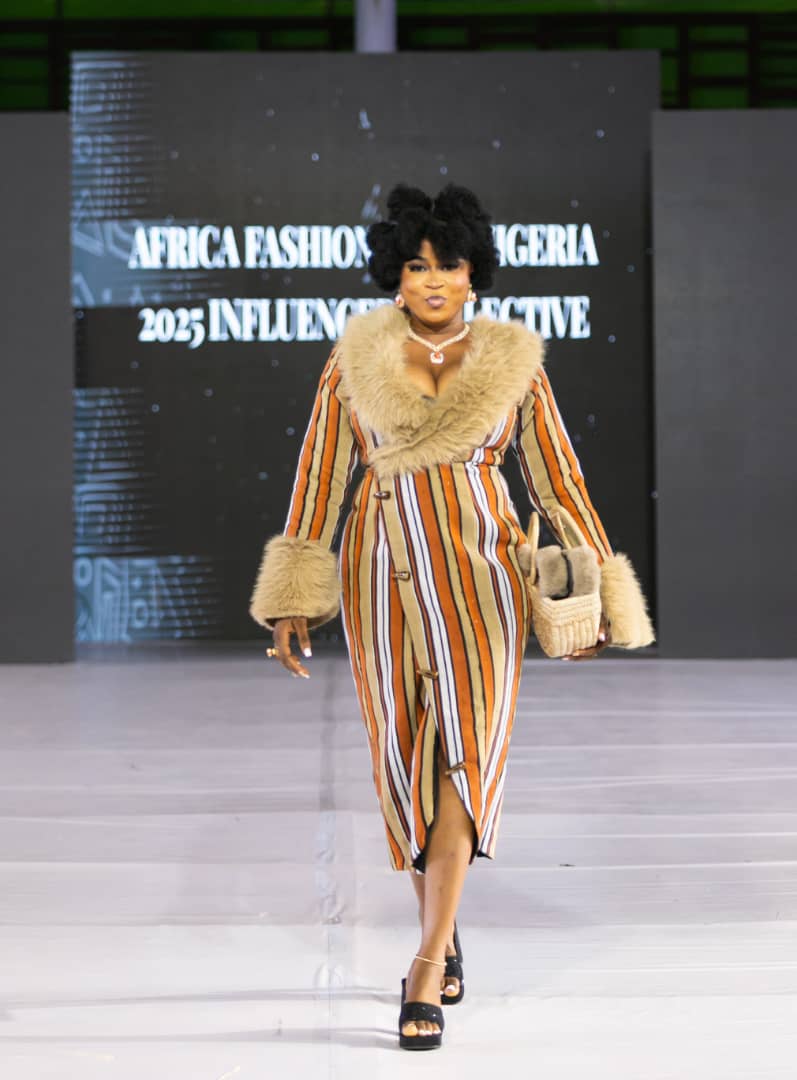
There were curated runway shows from established and emerging designers, a designer marketplace, live DJ sets and musical performances, sustainable design activations and exclusive after-party experiences that showcased Lagos nightlife and hospitality.
With The Naija December Experience, AFWN turned Lagos into a festival ground — where heritage, commerce, innovation and celebration meet under one roof.
This year’s edition reunited designers, buyers, creatives and international guests to celebrate African creativity in a festival format, while amplifying new voices and commercial opportunities for our designers.
AFWN has in previous years served as a showcase and launchpad for designers across Nigeria and the African continent. More than 3,000 designers have participated in AFWN and its sister events to date, drawing more than 90,000 visitors including industry buyers, media and stakeholders.