Forum for African Women Educationists (FAWE), Lagos chapter has advocated for more enrolment of girls in Science, Technology, Engineering and Mathematics (STEM) field to enhance their problem-solving skills which in turn would make them financially independent.
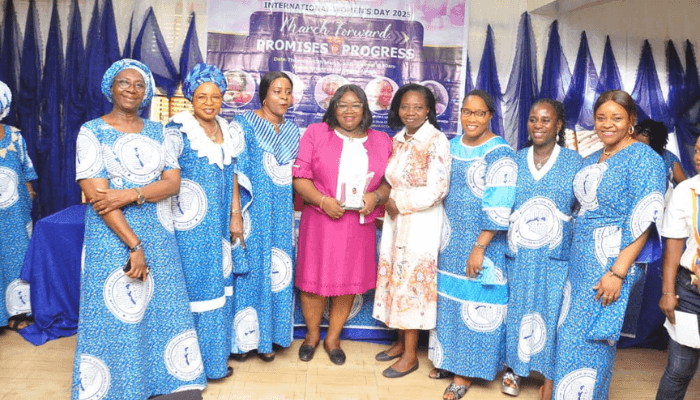
The Coordinator, FAWE Lagos chapter, Ruth Lawal who made the call while speaking during a forum organised by the group in Lagos to mark the 2025. International Women’s Day observed that more females were taking back bench in certain STEM disciplines.
Lawal therefore, advised women and girls not to think that STEM discipline is for men alone, adding, “the way the world is going with discoveries, artificial intelligence, the technology boom, the females should be encouraged to come in to STEM area, and nothing will stop them to become what they desired to be not even child bearing nor society norms can stop them.’’
On what FAWE is doing to reduce the increased number of out-of-school girls in the state, she said her organisation has been into advocacy where they move around Lagos to pick indigent girls and train them in school.

She however, called on well-meaning women in society to train not only their own female children, but also the needy girls who are not in school due to poverty.
Speaking on the theme of the event, ‘March forward from promises to progress’, held at the University of Lagos, Aderonke Lawal-Are of the Department of Marine Sciences, Unilag, defined “promises to progress’’ as a commitment or declaration to actively move forward and make positive improvements in a particular area.
While acknowledging that women often make certain self-promises to improve their lives, Lawal-Are who is a professor stressed the need for them to take action so as to achieve better results in the future.
She said: “It emphasises the idea of not just making empty promises, but actively working towards advancement.’’
On transformation of commitments into action for women’s education in Africa, the professor said that it required a multi-faceted approach that goes beyond words.

For her, it involves policy changes, resource allocation, community involvement, and systemic transformation to ensure real progress.
Also, she emphasised the need to provide scholarships and grants for girls from low-income families, eliminate school fees and other hidden costs like uniforms, books, and transportation.
Stressing the need to invest in school infrastructure, especially in rural areas, the Prof. affirmed that there need to change mindsets around girls’ education; promote female role models who inspire young girls and enforce laws against early marriage and gender-based discrimination.
Enumerating the importance of women’s education in Africa, she said: “When women are educated, they contribute to national economies, boosting GDP and innovation.
“Educated women make better health choices for themselves and their families, reducing maternal and child mortality rates.’’
“Education equips women with the tools to lift themselves and their families out of poverty.
“More educated women mean more female leaders in politics, business, and communities.’’
On the other hand, she said that women face a multitude of challenges when trying to accelerate action for progress, and advised that they should believe in themselves, build self -confidence and develop a growth mindset.
On her part, a founding member of FAWE, Esther Muoka said the organisation which came into existence some years ago aimed to impact the girl child and empower indigent women with skills that would change their economic status.