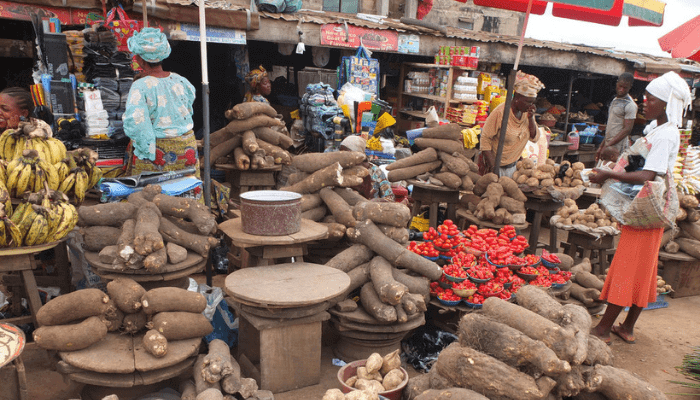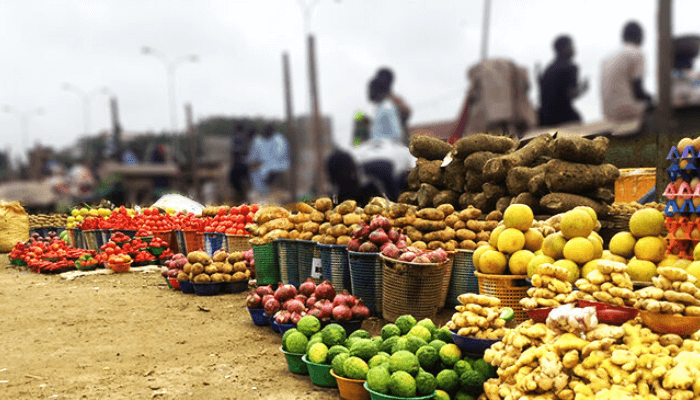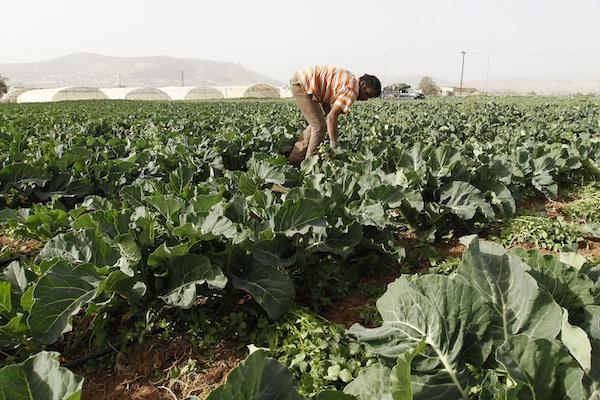
Despite Nigeria’s economy contracting for the third straight consecutive times, food production increased in 2016 on Anchor Borrower’s Programme and new entrants in the agricultural sector, stakeholders say.
Key players in the sector, who spoke with BusinessDay, attribute the increase in food production to bumper harvest, government-renewed commitment to the sector through the Anchor Borrower’s Programme (ABP) and new entrants of people into farming.
“The government is now giving priority to the agric sector with a lot of commitment. With this, more people are going into agriculture and this has increased crop production,” Kabiru Ibrahim, president, All Farmers Association of Nigeria (AFAN), says in a telephone response to question.
“There was bumper harvest for farmers, as most of them harvested their crops within the last three months and made good profits,” Ibrahim says.

Tola Faseru, national president, National Cashew Association of Nigeria (NCAN) said “The Federal Government is really doing a lot through the anchor borrowers’ scheme for farmers and it has increased our crop production output especially for rice and wheat.”
“If the momentum is maintained, the agric sector will bring the country out of recession,” Faseru said.
In the last one year, the Buhari-led government devoted a lot of energy to deepening agriculture with initiatives like the ABP.
The ABP is aimed at creating economic linkages between smallholder farmers and reputable large-scale processors with a view to increasing agricultural output and significantly improving capacity utilization of integrated mills.
Sani Dangote, president, Nigeria Agribusiness Group (NABG) and vice president, Dangote industries said, “A lot of credit has to be given to the Buhari-led government in terms of what we have seen under this administration through the Central Bank of Nigeria anchor program on rice and they are setting similar one for tomato and other crops.”
Third quarter figures from the National Bureau of Statistics (NBS) show that the contribution of agriculture to the gross domestic product (GDP) jumped from 22.5 percent in the second quarter of 2016 to 28.7 percent.

Growth in the agriculture sector was driven by output in crop production accounting for 95 percent of overall nominal growth of the sector.
The APB has boosted rice production in Kebbi State with more than 65,000 farmers involved in Kebbi State alone.
BusinessDay’s findings in Kebbi State, the pioneer location for the APB revealed that about 200,000 farmers participated in the just concluded farming season, leading to the realisation of 1.1 million metric tonnes of rice paddy which was based on an average yield of 5.5 tonnes per hectare.
The Federal Government is focused on making Nigeria self sufficient in local staples like; rice, sorghum, maize, millet, wheat within the next 36 months, as well as in milk and meat over the same timeline, Nigeria’s agricultural road map states.
The 2016 budgetary allocation of the ministry of agriculture increased by 96 percent to N76.8 billion with capital project accounting for N47 billion and recurrent expenditure will gulp N29.8 billion.
Abiodun Olorundenro, chief executive officer, Green Vine Farms said “a lot of people are now going into farming than we have ever had in the past and existing farmers are increasing their farming areas to produce much more due to high demand.”
“Our patronage has increased tremendously from manufacturing companies. Some of the crops we farm like dry maize were being imported into the country before the foreign exchange crisis,” Olorundenro added.
According to Abdurahaman Modibbo Girei, president of Adamawa Chamber of Commerce and Industry, more people in the state and its neighbors have left the cities for farming in rural areas.
Climate change
Output for 2016 planting season was threatened by changing rainfall patterns and higher temperature resulting from climate change.
The Nigerian Meteorological Agency (NIMET) had rather gloom projections at the beginning of 2016, that the rainfall patterns would pose a great risk to farmers across the country, urging concerned government ministries to carefully manage the situation.
The adverse weather condition was predicted to affect not just crop production, but also fish production, expected to be adversely affected as a result of warmer-than-normal conditions, especially in the coastal parts of the country.
“The climate change is an issue confronting us. The rain fall patterns are changing and we as farmers are also working with the support of NIMET to adjust to these demands,” said Ibrahim.
Herdsmen attacks
Apart from the impact of Boko Haram in the North-East, that has displaced thousands of agrarian communities, farming activities have also come under threat in the middle belt region and other regions in Nigeria due to conflicts between farmers and herdsmen.
The attacks by herdsmen in Benue, Enugu, Bayelsa, Ekiti and Adamawa among others impeded agric output in the affected states.
“The crisis has implication for the agricultural sector and employment generation. It is a major risk to the growth of the sector,” said Muda Yusuf, director general, Lagos Chamber of Commerce and Industry.
“This is also a threat to raw materials for industries. The agric sector provides the raw materials that feed on industries especially the food and beverage industries. This conflict is happening in a period of FX shortage,” said Yusuf.
Pest invasion and disease outbreaks
There was bird flu, reported at the beginning of the year, but then, it was not a fresh outbreak, rather one which was a ‘carry over’ from 2015. It was recorded in at least 24 states including the FCT and claimed damages in several billions of naira from the destruction of millions of birds.
Also, there was Tuta Absoluta, known as “Tomato Ebola”, a pest invasion that ravaged 80 percent of tomato crops in April, May and June.
The invasion reduced locally available fresh tomato in the market, and forced consumers to buy puree and pastes which were relatively cheaper. The situation also made sellers import the commodity from neighbouring countries in order to meet the high demand.
Maize production also suffered some setback as the Armyworm outbreak saw farmers recording a lot of losses as well.