Nigeria’s food inflation has been on a downward trajectory for the fifth consecutive month as agricultural production continues to rise owing to renewed government commitment to the sector.
The food inflation marginally dropped by 0.9 percentage points to 17.6 percent in February 2018, from 18.5 percent recorded in January 2017 on a year on year basis, according to data from the National Bureau of Statistics (NBS).
On a month-on-month basis, it declined by 1.3 percent points to 17.6 percent in February 2018 from 18.9 percent in January 2018.
“There has been increase in production of staple crops like rice and maize. That is why the prices are low and it will remain low till the end of the year but may not be the case in January,” said Sanni Dangote, president, Nigeria Agribusiness Group (NABG) and vice president, Dangote Industries.

“The government needs to address the fundamental issues in the country to sustain the current low food prices,” Dangote said.
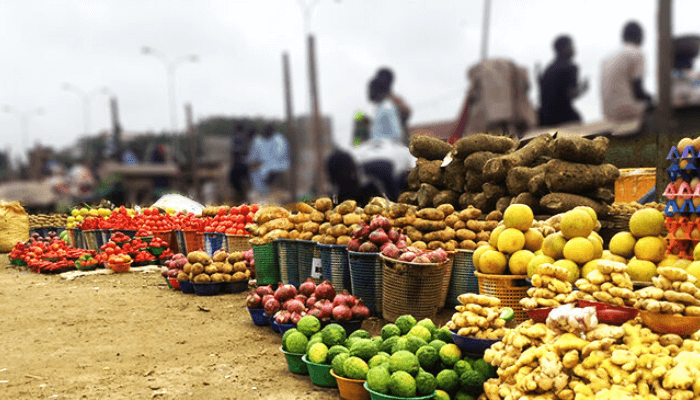
Findings show that prices of major foods such as tomatoes, onions, palm oil are declining.
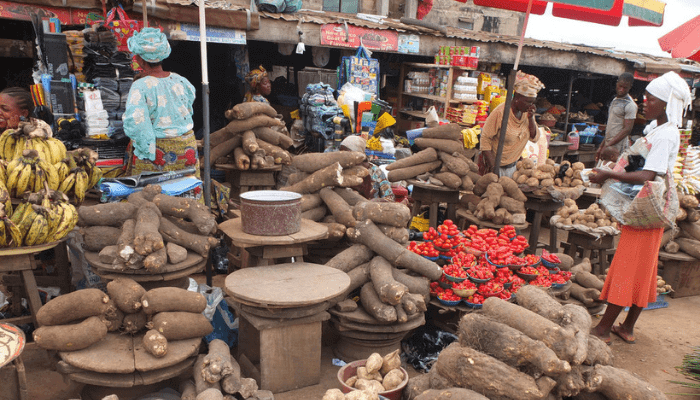
“Right now there is cassava glut in the market which has affected the prices of other staple crops like garri to be cheaper. Abiodun Olorundenro, operations manager Aquashoot Farms said.
“In the last 12 months, there has been an increase in the yield of production which could be the reason for the low prices,” Olorundenro said.
Similarly, global food prices have also been declining as the United Nations Development Agency (UNDA) food agriculture commodity price watch forecasted in 2017, inflationary food costs on some of the largest food commodities will ease in 2018 due to higher production levels and relatively strong us dollar in the market.

But with the decline in food prices, analysts still see a rise in food prices due to early planting season.
“Food inflation has been trending down but will spike up due to the early planting season. And usually when that happens, there is pressure on food prices, so I think that food prices might come up a little bit in the near term,” Yemi Kale, Statistical General, National Bureau of Statistics(NBS) said.
BUNMI BAILEY