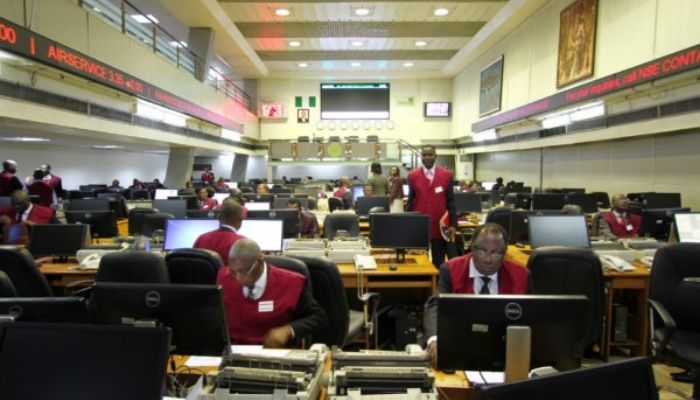
Market falls as investors book profit on penny stocks
Nigeria’s stock market on Wednesday failed to sustain the previous day’s gain as investors chose to take profit from the preceding day’s gain. Penny stocks mostly occupied the top decliners list on Wednesday as the market dipped by 0.02percent or N6billion.
NPF Microfinance Bank Plc recorded the highest decline on the Bourse after its share price decreased by 22kobo or 9.78percent, from N2.25 to N2.03.
RT Briscoe also decreased from a preceding day’s high of 56kobo to 51kobo, losing 5kobo or 8.93percent, while Prestige Assurance dropped from 49kobo to 45kobo, losing 4kobo or 8.16percent.
Also, Niger Insurance Plc dropped from day-open low of 21kobo to 20kobo, losing 1kobo or 4.76percent, followed by Chams Plc which dipped from 21kobo to 20kobo, shedding 1kobo or 4.76percent.

Fidelity Bank, Transcorp, GTCO, Access Holdings, and Zenith Bank were the most traded stock on Wednesday. At the close of trading session, investors in 4,668 deals, exchanged 261,592,386 units valued at N2.434billion.
The market’s year-to-date (YtD) positive return decreased to 9.48percent. The Nigerian Exchange Limited (NGX) All Share Index (ASI) decreased to 46,766.16 points from preceding day’s high of 46,777.37 point while the value of listed stocks on the Exchange decreased by N6billion to N25.212trillion from N25.218trillion. Read more
Dangote Cement set to issue another bond under the N300 billion DI programme

Dangote Cement Plc has obtained approval from its board of directors to access the capital market for medium-to-long-term debt funding.
The firm which sent a statement about this bond to the Nigerian stock exchange said, “the company has submitted an application to the securities and exchange commission in respect of the bonds, and relevant approvals have now been received.”

This proposed bond issuance is a part of the company’s “N300 Billion Debt Issuance Programme” aimed at providing financial support to assist the company meet its funding expansion projects, among others.
The statement signed by the company’s deputy secretary, Edward Imoedemhe, read, “The bonds will be issued imminently, subject to favourable market conditions.”
The company, which has a 61% market share in the cement industry, hopes to use these funds to consolidate its leadership position by refinancing existing short-term debts, expanding its several expansion projects, and for general corporate purposes.
Capital market analysts see this bond issuance as an opportunity for bondholders to increase their debt holdings of the company.
Banks allowed to set forex rates to tame Zimbabwe’s black market
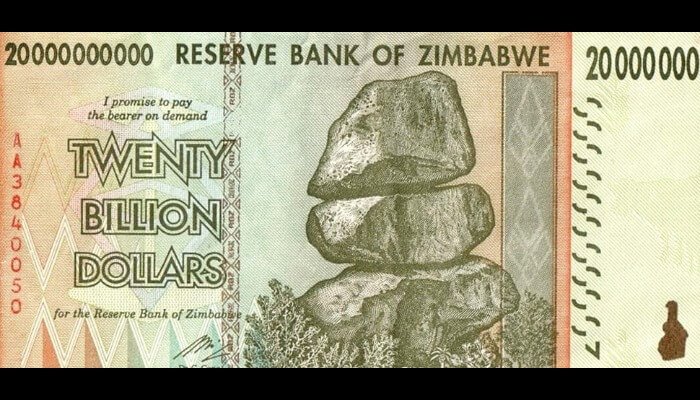
Deposit money banks in Zimbabwe have been granted permission to set their own rates for exchanging U.S. dollars in transactions of up to $1,000.
This move is one of the latest measures taken by the Reserve Bank of Zimbabwe to ease the pressure on the Zimbabwe dollar, which has been in a free fall in the parallel market.
According to Bloomberg, John Mangudya, the central bank governor, while speaking in an interview in Harare, said that FX dealers can now use “a willing-buyer, willing-seller basis” rather than being restricted to the official exchange rate for the local dollar. What that means is that the rate of exchange will be determined by an agreement between both parties.
He explained on Wednesday that “it’s a second window outside of the auction market. We hope it will give confidence in the market and people will go to banks to exchange their dollars instead of going to the streets.”
At the current exchange rate, the Zimbabwean dollar is exchanged at Z$145.87 and Z$260 per U.S. dollar in the official and parallel markets, respectively, according to ZimPriceCheck.com, a website that tracks both official and unofficial rates.
This move by Mangudya is a quick-fix solution to address the current exchange rate crisis, which pushed inflation to 73% in March.
The governor wants to meet with bankers to learn more about how the plan, which was first announced by the Monetary Policy Committee on Monday, is being put into place.
US stocks continue decline
On the New York Stock Exchange, the Dow Jones fell 100 basis points, while the Nasdaq and S & P fell 7% and 1%, respectively. These losses represent a second-day loss for Wall Street as investors reacted to the proposed monetary policy tightening by the Federal Reserve.
The Federal Open Market Committee (FOMC), a body similar to the MPC of the CBN of Nigeria, gave a hawkish signal of raising interest rates by 50 basis points, so as to address the worsening inflation situation.
Some analysts in the US have projected that inflation is likely to hit 10% before the end of the year, which would make it the worst in over a decade.
Tradingeconomics.com, had reported that FOMC officials had agreed that monthly caps of about $95 billion in the balance sheet reduction would likely be appropriate, higher than the $50 billion a month trim the FED made back in 2017-2019.
The worst hit from this announcement was the consumer discretionary (non-essential consumer goods and services) and tech stocks that sustained losses, with traders moving their funds to consumer staples, utilities, and real estate stocks.
Russia’s Sberbank Disassociate Itself from ‘Sbercoin’
Sberbank, which is regarded as the largest bank in Russia, has disassociated itself from a new cryptocurrency called “sbercoin”. The sbercoin is a cryptocurrency project launched after the Bank of Russia granted Sberbank permission to issue digital currencies.
According to bitcoin.com, Sbercoin, which promises extraordinarily high returns, was launched shortly after Russia’s invasion of Ukraine and is traded on Pancakeswap, a cryptocurrency exchange.
Specifically, the sbercoin cryptocurrency, like any other scam financial product, promised investors up to 383,025.80% yearly return on money saved in their wallet allegedly linked to Sberbank.
Unfortunately for the promoters of this scam project, the coin has since lost more than 80% of its value. According to Coinmarketcap, it’s currently trading at $0.00006674 per coin.
The Sbercoin token is a product of the current western sanctions on Russia after the country invaded Ukraine. The token went live on March 17, the day the Central Bank of Russia (CBR) granted Sberbank permission to issue digital financial assets, which includes cryptocurrencies under Russian law.
The promoters of this coin had linked an article about this coin to Sberbank on Twitter by “The Business Insider” to try to create legitimacy and acceptance by the Russian federation.
However, the bank denied any kind of association with sbercoin and therefore advised the Russian public to avoid investing in the digital token.